If someone forwarded you this email you can subscribe. View in web browser.

Hi ,

What do the new immigration reforms mean for migrants to the UK? And what does the research have to say about Labour's plans?

The changes will lead to permanent insecurity, excluding a generation from full civic rights, according to researchers from the Glasgow Refugee, Asylum and Migration Network.

Read more below.

- openDemocracy

 
EDITOR'S PICKS
 
1
‘My heart is in pieces’: How UK government’s migration policy shatters lives

Behind the headlines and rhetoric, what do Labour’s immigration plans mean for those affected? Read more... 

2
Would Epstein victims have been denied help after changes to UK slavery system?

Policy change on modern slavery could block victims of Epstein-style trafficking from getting help, experts fear Read more... 

3
PODCAST | The AI Panopticon: How Big Tech and the State are Watching You

"My ultimate vision... was to achieve by means of AI and technology, what Jeremy Bentham tried to do with his panopticon." — UK Home Secretary Shabana Mahmood.

When the state openly admits it wants its eyes on you at all times, how do citizens fight back? Spotify | Apple


FEATURED STORY

What the research says about the UK’s proposed immigration reforms

Researchers at the Glasgow Refugee, Asylum and Migration Network (GRAMNet)

In 2020, as he campaigned for the Labour leadership, Keir Starmer set out ten pledges to party members. Among them was a promise to “defend migrants’ rights” and to create an immigration system grounded in “compassion and dignity”. Fast-forward six years, and his government is instead making sweeping changes to UK immigration law that mark a sharp escalation of the ‘Hostile Environment’ policy he once promised to dismantle.

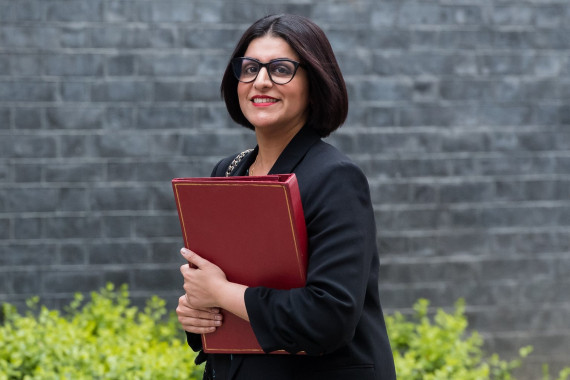
Since entering office in September last year, home secretary Shabana Mahmood MP has advanced a series of reforms aimed at “restoring control over the immigration system”, which target some of the UK’s most vulnerable people. These include reassessing refugee status every 30 months; removing the legal duty to provide asylum support; offering payments to refused families to leave the UK; and extending settlement routes from five to ten years, or up to 20 in some cases.

As researchers from the Glasgow Refugee, Asylum and Migration Network (GRAMNet), we are deeply concerned by these proposed reforms. Drawing on extensive evidence, we argue that the Home Office’s vision will lead to permanent insecurity, deepen destitution, and lock out a generation from full civic rights in the UK.

Ultimately, despite the government’s rhetoric, these policies won’t stop vulnerable people from being forced to flee to the UK – they will only serve to make their lives harder once they arrive.

 
SUPPORT OUR INVESTIGATIONS INTO THE MILITARY INDUSTRIAL COMPLEX
 
When I saw that the UK government had seconded an official to work with Rothschild & Co on defence policy, all paid for by you and me, I knew this was something I had to look into. The revolving door between government, private finance and lobbying firms needs to be exposed if we are to understand how money and power work in our politics. Nowhere is this more urgent than on questions of defence and national security, at a time when the government is investing more and more of taxpayers’ money on rearming Britain.
 
You can help keep me on this beat, as I dig into the contracts and cosy relationships between Labour, defence, and big finance. Will you donate to support my work today?
Please donate now
 

Permanent insecurity

One key change to asylum is to reassess refugee protection every 30 months instead of every five years. Driving this reform is the argument that more frequent checks will increase the number of returns, reducing the need for refugee protection in the UK. Denmark tried a similar policy, and the results tell a different story: only 1,200 of 300,000 cases were reassessed, and not a single person was returned. This approach created huge uncertainty for many, with no real benefit.

This proposed reform assumes that home country risks quickly diminish, are reliably and rigorously reassessed, and that the Home Office has the capacity to complete this work with due diligence. We know that the dangers people flee do not disappear within months, and short-term protection pushes people back into life-threatening circumstances.

Individuals returned to states designated as â€œsafe”, such as Syria, frequently encounter the same insecurity, lack of basic services, and absence of rule of law that forced them to flee in the first instance. The short reassessment window also threatens victims of human trafficking, who face the danger of being re‑trafficked upon return to countries that have been labelled as “safe”.

The UK asylum process already creates instability and re-traumatisation. A 30-month review cycle freezes refugee lives, making access to work and education more difficult, and exacerbates feelings of non-belonging – the very opposite of the integration the UK government claims to seek.

Justifying forced returns of families

The Home Office plans to give families seven days to decide whether to accept “incentive payments” of £10,000 per family member (up to a total of £40,000) to return voluntarily or face deportation. Yet this proposal cannot be substantively described as voluntary.

There is no robust evidence that payment schemes meaningfully increase voluntary return, as research from Germany, Denmark and Sweden shows. Decisions to return are shaped by personal, political, social, and historical factors, not cash offers. Safety is paramount in these decisions. Voluntary return schemes offer only limited safeguards. Many returnees face renewed persecution, severe hardship, or impossible reintegration. With no improvement on return, many migrate again – often through irregular routes, because these are the only options available.

Deepening destitution

The government wants to shirk its statutory duty to provide accommodation and financial support to asylum-seeking people in favour of a conditional approach that risks deepening destitution. Under this new approach, support can be revoked for persons who “illegally work, have the ability to support themselves, have the right to work or have broken the law”.

The government will also limit access to asylum support for those who have had their asylum claims rejected, with refused claimants offered a grace period of just 21 days to demonstrate that they face a ‘genuine obstacle’ to leaving the UK (90 days for those with dependents). However, research by the Asylum Support Appeals Project shows that most applications for this form of support occur outside the 21-day grace period. This is because significant obstacles to return often develop after this period or take time to demonstrate. As a result, people with genuine obstacles to return, such as health grounds, will be made destitute.

Combined, these changes represent an intensification of the UK government’s strategy of deliberate impoverishment of people seeking asylum. Those who do receive asylum support are expected to live on ÂŁ49.18 a week – 70% of basic benefit levels, nowhere near enough to lift anyone above the poverty line – and most are not permitted to seek employment.

 
Is MAGA a religion? Why has protest been criminalised in England and Wales? Who is profiting from anti-immigration sentiment? And how can we engage with young men who’ve fallen down the alt-right pipeline? 
 
These are just a few of the questions that we’ve put to leading thinkers, frontline activists, and global experts on our new podcast, In Solidarity, over the past six months.
 
In Solidarity is a podcast for people who understand that politics doesn’t just happen in the halls of power. Every show, we tackle a new theme to uncover how authoritarianism spreads, who is benefiting from fear, and how solidarity is evolving into resistance movements around the world.
 
To ensure you never miss an episode of In Solidarity, subscribe to get an email notification whenever a new one is released. 
Subscribe to episode notifications
 

Homelessness and destitution are already widespread among people seeking asylum, and the changes to asylum support are designed to deepen this crisis. The UK government has said it expects local authorities to conclude that they have no obligation to support people seeking asylum and families made destitute by these policy changes – but this is not its decision to make. Instead, shifting to discretionary support simply displaces responsibility from central government onto councils, charities and communities that are already overstretched.

What’s more, those currently receiving asylum support already fear that it will be taken away from them for perceived failures to follow the rules. The proposed policy changes will exacerbate these everyday fears and anxieties by making it easier for the Home Office to remove support.

A generation locked out of settlement

The proposed “earned settlement” model would extend the route to Indefinite Leave to Remain in the UK from five to 10 years, and in some cases 20 years, depending on a person’s mode of entry.

This decision is misleading in suggesting that refugees are dismissing available resettlement paths to instead arrive in the UK via unauthorised routes to claim asylum (these cannot be called illegal under the Refugee Convention). In reality, there are very few UK resettlement routes currently operational – and even these limited options have been hampered by delays, restrictive eligibility, and inconsistent political support.

Extending the time that most refugees in the UK will have to wait to apply for settled status, therefore represents a calculated punitive action aimed at encouraging people to leave the UK – even if they have refugee status. The earned settlement route to Indefinite Leave to Remain risks locking refugees into prolonged uncertainty and hardship simply based on their means of arrival.

As mentioned above, people seeking asylum are not normally allowed to work whilst they await a claim outcome; most people who gain refugee status in the UK are legally destitute, and it is therefore common for them to rely on public funds and housing support as they face eviction from their asylum accommodation. Under the new earned settlement model, however, any use of public funds would automatically add five years to their baseline qualifying period. As a result, we are likely to see refugees and their families refuse the support they are entitled to — and endure destitution or risk exploitation — simply to shorten their earned‑settlement waiting time.

The government justifies its proposed policy changes by invoking economic “pull factors”, such as the welfare system. Yet decades of research show that people who risk their lives coming to the UK are largely unaware of welfare benefits or settlement timeframes. Where choice exists, people come to the UK because it is seen as ‘safe’, due to family ties, shared language, historic connections – much of which links directly to Britain’s colonial past – and has a reputation for upholding human rights.

The evidence is also unequivocal: secure status is one of the strongest predictors of successful integration. Moreover, integration extends far beyond financial contributions or volunteering, presented by the government as ways to shorten settlement waiting times. Instead, integration works in many directions at once â€“ involving people, communities, institutions, and government all playing a part.

What is at stake?

The UK government’s proposals risk harming refugees, undermining integration, and eroding social cohesion. Rather than “restoring control”, they will make systems more disorganised and put more strain on local services. They will push people further into unsafe conditions and hinder opportunities for settling into their communities. They risk intensifying the everyday violence and harm that already shape the lives of refugees and their families.

We urge the home secretary to withdraw these proposals. The record of successive UK governments promoting a hostile environment has shown that chasing quick fixes to reduce immigration based on false assumptions does not deliver control over the immigration system or support integration. Instead, we urge a shift toward long‑term evidence-based solutions centred on humane, effective integration programmes that are led and delivered by regional and local actors – including charities and civic organisations – but underpinned by sustained financial support, infrastructure and accountability from central government.

No credible migration management system can justify practices that continue to expose people to harm, instability, or the deprivation of liberty. Ensuring safety, dignity, and lawful treatment for everyone in the asylum system is not simply compassionate policy – it is the minimum standard of a just society.


This piece was co-authored by Karolina Benghellab, Dan Fisher, Kate Botterill, Teresa Piacentini, Meg Wishart, Gareth Mulvey, Giovanna Fassetta, and Mirna Solic at the Glasgow Refugee, Asylum and Migration Network (GRAMNet)

 

COMMENTS

Sign in 💬

Our award-winning journalists can now respond directly to your comments underneath the articles on our site!

Just sign in or register underneath any of our articles to start leaving your thoughts and questions today.

Sign in and join the conversation

MORE FROM OPENDEMOCRACY

Weekly Newsletter
The Dark Arts
Bluesky Facebook X / Twitter Mastodon Instagram YouTube


openDemocracy, 18 Ashwin Street London, E8 3DL United Kingdom

Unsubscribe