If someone forwarded you this email you can subscribe. View in web browser.

Hi ,

Use of force against women in English prisons more than doubled in three years from 2021/2022 to 2024/2025.

Women are being handcuffed, restrained or subjected to “pain-inducing techniques”. Use of force has even occured against pregnant women and during hospital examinations.

Read more below.

- openDemocracy

 
EDITOR'S PICKS
 
1
Inside the battle between Chile’s salmon industry and its Indigenous peoples

A multi-billion-dollar industry backed by Chile’s new president threatens the KawĂ©sqar peoples’ right to the sea Read more... 

2
Iran is Binyamin Netanyahu’s war. Will Donald Trump end it?

Israel can’t surrender, but will Trump’s dwindling popularity be enough to deliver an early end to the conflict? Read more... 

3
PODCAST | Iran, Oil, Inflation, Unrest: The Global Fallout of the US-Israeli War on Iran

As the US-Israeli war on Iran continues to escalate, there is much that we do not know. Listen to our editor-in-chief's interview with Mihir Sharma wherever you get your podcasts. Spotify | Apple


FEATURED STORY

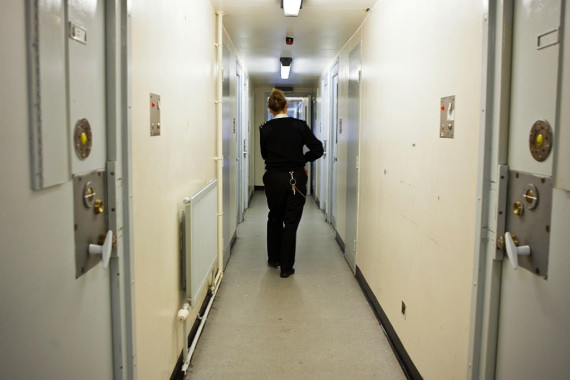
Restrained, handcuffed and in pain: Use of force in women’s prisons doubles


Nic Murray and Sian Norris

Women in English prisons are being increasingly handcuffed, restrained or subjected to “pain-inducing techniques” by staff, including while pregnant or during hospital examinations, openDemocracy can reveal.

Prison guards’ use of force against women more than doubled in three years, rising from 3,268 incidents in 2021/22 to 6,932 in 2024/25, according to data we obtained from His Majesty’s Prison and Probation Service (HMPPS) under Freedom of Information laws. The government says such measures should be used only as â€śa last resort”.

Instances where a woman was physically restrained, which could include her being held face down to the floor, rose by 70% over that time period, while handcuff usage rose by 264%, from 502 occasions to 1,826.

“Use of force” against pregnant women also increased, with 11 cases in 2024/25. It is not clear from the data whether this includes non-contact interventions such as positive communication, and HMPPS refused to answer questions on this, although such techniques would usually fall under “de-escalation” rather than “use of force”. The rest of our data does not include non-contact interventions.

 
SUPPORT OUR INVESTIGATIONS INTO THE MILITARY INDUSTRIAL COMPLEX
 
When I saw that the UK government had seconded an official to work with Rothschild & Co on defence policy, all paid for by you and me, I knew this was something I had to look into. The revolving door between government, private finance and lobbying firms needs to be exposed if we are to understand how money and power work in our politics. Nowhere is this more urgent than on questions of defence and national security, at a time when the government is investing more and more of taxpayers’ money on rearming Britain.
 
You can help keep me on this beat, as I dig into the contracts and cosy relationships between Labour, defence, and big finance. Will you donate to support my work today?
Please donate now
 

One former prisoner, who was subject to the use of force during a medical appointment, despite having been sentenced for a non-violent offence and posing no risk to herself or anybody else, told openDemocracy: “The staff are following protocols designed for violent, strong male offenders.”

Responding to our findings, Andrea Coomber KC, the chief executive of the Howard League for Penal Reform, urged the government to “properly investigate” the increased use of force in women’s prisons.

Lucy Russell, the head of policy and public affairs at Women in Prison, suggested the rise may be linked to the high turnover of staff, with inexperienced prison guards resorting to force too quickly.

“We know there is a trend in increasing numbers of newer and less experienced prison staff, and this seems to shift the culture,” Russell said. “Where an experienced member of staff was skilled to de-escalate a situation or judge risk, newer staff may lack that knowledge.”

Almost 30% of full-time prison staff have been in post for less than three years, including a third of band 3 to band 5 prison officers – intended to be mid-career staff responsible for security, rehabilitation and management – according to Ministry of Justice data.

As of June 2024, only 25% of band 3-5 prison officers had been in the job for more than 10 years, down from 30% the year before.

Russell described this staff inexperience, combined with “the fact we imprison seriously mentally ill women, even though we shouldn’t”, as a “perfect storm”.

More than 80% of women in prison struggle with mental ill health, and self-harm is nine times more prevalent than in the male prison estate. A Ministry of Justice review found women account for a quarter of all self-harm incidents in English and Welsh prisons, despite making up just 4% of the prison population.

Self-harm was the third most reported reason for using force in women’s prisons, after non-compliance (specifically an individual refusing to return to their cell) and preventing harm to others, according to the MoJ review.

Handcuffed in hospital

Beatrice spent just over a year in prison in 2023/24.

Despite having been sentenced for a non-violent crime, she was taken to HMP Bronzefield – a category A women’s prison that houses offenders who pose the highest threat to the public – while awaiting transfer to an open prison, a minimum-security facility focusing on resettlement and rehabilitation.

It was while she was in Bronzefield that she had to attend a hospital appointment for an intimate examination. Under that prison’s escort policy, she was handcuffed for the appointment – a measure that would not have been automatically used had she already been moved to an open prison.

“I was handcuffed to two female officers and escorted through the hospital,” Beatrice told openDemocracy. “It was very degrading and humiliating. It was the first time I had been out of the prison, and everyone was staring at me, thinking, what has she done?”

 
Is MAGA a religion? Why has protest been criminalised in England and Wales? Who is profiting from anti-immigration sentiment? And how can we engage with young men who’ve fallen down the alt-right pipeline? 
 
These are just a few of the questions that we’ve put to leading thinkers, frontline activists, and global experts on our new podcast, In Solidarity, over the past six months.
 
In Solidarity is a podcast for people who understand that politics doesn’t just happen in the halls of power. Every show, we tackle a new theme to uncover how authoritarianism spreads, who is benefiting from fear, and how solidarity is evolving into resistance movements around the world.
 
To ensure you never miss an episode of In Solidarity, subscribe to get an email notification whenever a new one is released. 
Subscribe to episode notifications
 

Once in the examination room, the officers fitted Beatrice with handcuffs attached to a metre-long chain so they could stand behind the modesty curtain while she was examined. “Before I took my leggings down, the officers said they had to attach a long handcuff,” she said. “It was very clumsy; it took them ages to do it. I was feeling very humiliated.

“You are stripped of your dignity in prison, but this is a hospital and I am pulling my leggings down and I am attached to a stranger. I felt like the doctor was embarrassed, and therefore everything was very rushed.”

The process was “unnecessary,” said Beatrice, pointing out that she posed no risk to the staff or the public.

But she also warned that the lack of privacy and dignity could risk women’s health. “It was dangerous,” she said. “When you are in a medical appointment, particularly an intimate appointment, it should just be you and the doctor. You don’t want to share medical information with someone who locks you in your cell every day.”

Thankfully, Beatrice’s health was fine. But “if it wasn’t, and I had to go to a follow-up, I don’t know if I would have gone. It was so humiliating.”

Proper risk assessments should be carried out before the use of restraint. Had this been the case, Beatrice said, she would have been spared the humiliation she endured during the hospital visit.

“It was so unnecessary, especially for women. Because women are not there for violent offences, they are not a risk to the public,” she said.

“When I talk about my time in prison, I feel very accountable, I feel deep remorse, and my sentence was fair. But at the same time, the treatment of women in prison does not make sense. There is no common sense because if there was, then what happened to me would not have happened. We would see a different way for women in prison.”

Russell of Women in Prison said: “Handcuffing a woman for a medical examination is humiliating, degrading and unnecessary. It will harm her relationship with her medical professional and may reduce her willingness to attend medical appointments. We know medical screening rates for women in prison are poor and this is exacerbating the situation.”

Disproportionate and retraumatising

As well as restraint and handcuffing women, our investigation revealed an increase in the use of “pain-inducing techniques”, from 232 incidents in 2021/22 up to 397 in 2024/25.

The data shows that PAVA, a synthetic form of pepper spray, has been used at least three times since 2023. The controversial spray is a prohibited weapon under the Firearms Act, and its use against children was subject to judicial review.

The Howard League’s Coomber said our figures underline “the need to ensure that staff receive appropriate training in de-escalation and in how best to support women. This has become increasingly important in recent years due to staffing pressures and levels of experience.”

"Many women in custody have been victims of crime themselves, and the use of force that is disproportionate and retraumatising typifies how prisons fail routinely to meet their complex needs,” Coomber added.

More than half (57%) of women in prison report having experienced domestic abuse, according to a report by the Prison Reform Trust, although it added that this is “likely to be an underestimate”.

“Women are spending prolonged periods locked in their cells, and use of force is too often deployed as a response to prisoner-on-prisoner bullying, to prevent self-harm, or because of complex and unmet mental health needs,” said Emily Evison, women’s programme lead at the Prison Reform Trust.

But there are “signs of progress”, Evison said, with the prison services introducing a use-of-force specialist to strengthen training and improve practice across women’s prisons.

“Recent HM Inspectorate of Prisons reports show positive steps in reducing restrictive practices,” she said. “But continued attention is required to embed consistent, safe practice across the women’s estate.”

A Ministry of Justice spokesperson said: “The prison system this Government inherited is not working for most women and we are committed to reducing the number of women in custody by expanding safer, community‑based alternatives.

“Our staff only use force when there is a clear need, such as an imminent and serious risk to someone’s safety or to preserve life, and always only when it is lawful and a genuine last resort.”

 

COMMENTS

Sign in đź’¬

Our award-winning journalists can now respond directly to your comments underneath the articles on our site!

Just sign in or register underneath any of our articles to start leaving your thoughts and questions today.

Sign in and join the conversation

MORE FROM OPENDEMOCRACY

Weekly Newsletter
The Dark Arts
Bluesky Facebook X / Twitter Mastodon Instagram YouTube


openDemocracy, 18 Ashwin Street London, E8 3DL United Kingdom

Unsubscribe