If someone forwarded you this email you can subscribe. View in web browser.

Hi ,

Tech firms such as the Tony Blair Institute are embedding staff in government, sparking fears AI policy is being ‘outsourced’.

One staff member even boomeranged between roles – from civil servant to the TBI and back.

Read more below.

- openDemocracy

 
EDITOR'S PICKS
 
1
Oil, Inflation, Unrest: The Global Fallout of the US-Israeli War on Iran

“The only coordinated mechanism that most policy makers across the global South are indulging in right now is prayer.” Read more... 

2
For Trump and Netanyahu, the Iran war is a problem of their own making

The US president’s claim that the war is ‘very complete’ was little more than wishful thinking Read more... 

3
PODCAST | Iran, Oil, Inflation, Unrest: The Global Fallout of the US-Israeli War on Iran

As the US-Israeli war on Iran continues to escalate, there is much that we do not know: How will spiking energy prices affect developing economies in Asia and Africa? What are the long term impacts of the destabilisation of the Gulf, a region that has served as a magnet for labour and capital from around the world? What does the conflict in Iran reveal about the latest chapter in the relationship between international finance capital and nation states? Spotify | Apple


FEATURED STORY

Top civil servant boomeranged between government and Tony Blair Institute

Ethan Shone

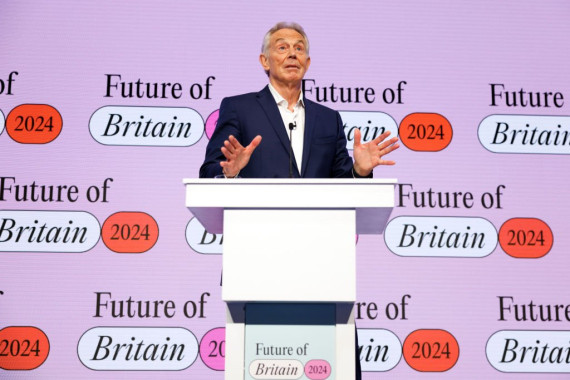
The Tony Blair Institute and the Ellison Institute of Technology sent senior staff members to work in the government department tasked with developing AI policy, openDemocracy can reveal.

UK tech firm Faculty, which has links to the TBI, also embedded a member of staff in the Department of Science, Information and Technology (DSIT).

In one case, the TBI hired a senior civil servant tasked with leading the government’s AI programme, then seconded them straight back to their old job in the department – a potential loophole in rules intended to stop former civil servants from using their connections to lobby old colleagues.

In another, a different TBI staffer wrote on LinkedIn that he had played a key role in drafting the government’s flagship AI Opportunities Action Plan, its far-reaching blueprint for AI policy, during an 11-month secondment to DSIT.

 
SUPPORT OUR INVESTIGATIONS INTO THE MILITARY INDUSTRIAL COMPLEX
 
When I saw that the UK government had seconded an official to work with Rothschild & Co on defence policy, all paid for by you and me, I knew this was something I had to look into. The revolving door between government, private finance and lobbying firms needs to be exposed if we are to understand how money and power work in our politics. Nowhere is this more urgent than on questions of defence and national security, at a time when the government is investing more and more of taxpayers’ money on rearming Britain.
 
You can help keep me on this beat, as I dig into the contracts and cosy relationships between Labour, defence, and big finance. Will you donate to support my work today?
Please donate now
 

The government is not required to declare secondments, meaning there is no public record of the companies that gain significant access and influence through these arrangements – nor the policies their secondees advocate for.

But openDemocracy has found that arms firms Thales and Qinetiq, tech consultancy Capgemini, and pharmaceuticals giant AstraZeneca have also sent staff members to work in DSIT.

Responding to our findings, Kamila Kingstone, programme lead at Spotlight on Corruption, said: “When individuals with close ties to vested commercial interests are embedded at the heart of policymaking, it creates real risks of conflicts of interest. It enables Big Tech to capture and help set the very rules that should regulate it.

“At a minimum, the government should publish annually a list of who has been brought in on secondment, their conflicts of interest, and any mitigations in place. At a time when public trust in politics is at rock bottom, the government should be going the extra mile to be sure it is transparent about who is influencing policy behind the scenes"

Green Party deputy leader Rachel Millward told openDemocracy: "Starmer’s Labour Party has no values or vision, so it has outsourced its policy development process to corporate interests. Unethical companies have funnelled dirty money through 'think tanks' and agencies to shape the government's positions in favour of Big Tech.”

A government spokesperson told openDemocracy: “We make no apologies for bringing cutting-edge expertise from UK academia and industry into the heart of Government.”

‘Smooth transition’

Dr Laura Gilbert left her position as the director of the UK government’s Incubator for Artificial Intelligence programme in December 2024, ending a four-year career in the heart of government.

Less than four weeks later, she was back in the Department of Science, Information and Technology – the department tasked not only with developing the regulation of AI tech in the wider economy but also with its rollout across government.

This time, though, Gilbert was not on the civil service payroll, but working for the Tony Blair Institute, a consultancy founded by the former Labour prime minister to advise governments on various policy areas – particularly tech – and the Ellison Institute of Technology, an organisation founded by US billionaire tech mogul Larry Ellison, reportedly the world’s second-richest man.

The two firms had recruited her to run their joint AI for Government project before immediately seconding her back to her old office.

Gilbert’s secondment suggests a loophole in the business appointment rules, which state that senior civil servants leaving government to work in the private sector should “not become personally involved in lobbying the UK government on behalf of your new employer and/or its clients” for two years.

But there is no rule preventing their new employers from sending them straight back to work in government, where they can directly influence policy.

 
Is MAGA a religion? Why has protest been criminalised in England and Wales? Who is profiting from anti-immigration sentiment? And how can we engage with young men who’ve fallen down the alt-right pipeline? 
 
These are just a few of the questions that we’ve put to leading thinkers, frontline activists, and global experts on our new podcast, In Solidarity, over the past six months.
 
In Solidarity is a podcast for people who understand that politics doesn’t just happen in the halls of power. Every show, we tackle a new theme to uncover how authoritarianism spreads, who is benefiting from fear, and how solidarity is evolving into resistance movements around the world.
 
To ensure you never miss an episode of In Solidarity, subscribe to get an email notification whenever a new one is released. 
Subscribe to episode notifications
 

Gilbert told openDemocracy she was sent back to the department “to support the smooth transition of my dedicated and talented technical AI team into DSIT… working with my (interim) replacement to hand over for a short period via a secondment from the Ellison Institute”.

The TBI said Gilbert had “agreed to help oversee the transfer of her team into DSIT”, while the Ellison Institute did not respond to a request for comment.

After four months, Gilbert left DSIT again to take up her current role as head of AI in the TBI. But openDemocracy has uncovered that her secondment is part of a broader pattern of tech firms sending staff to shape Labour’s tech policy – a pattern that began when the party was still seen as the government-in-waiting.

In 2023, the Tony Blair Institute paid for Labour’s shadow tech secretary, Peter Kyle, to travel to Brussels to attend its programme on science and tech policy. The following year, he visited the US on a trip paid for by Lord Sainsbury, a Labour donor, and consulting firm Hakluyt & Company, which has interests in AI through an investment fund. There, Kyle met with tech giants, including Ellison’s Oracle.

Kyle also benefited from tech companies seconding staff to him. During the 2024 election campaign, Faculty, a company that provides software and consultancy on AI, sent a staff member to support his work.

While Labour reported that the staffer was in Kyle’s office on one day a week for two months, it valued the arrangement – a donation-in-kind – at £36,000. Based on a standard seven or eight-hour working day, this suggests their hourly salary was around £600.

Tech consulting firm Public Digital also seconded a senior member of staff to work for Kyle before the election. Emily Middleton, the staffer in question, was later brought into DSIT as a senior civil servant on a salary of between £125,000 and £208,000 after Kyle was appointed to lead it. She had previously been seconded to Labour Together.

In October 2024, Faculty sent a mid-level staffer to Kyle’s Department of Science, Innovation and Technology on a four-month secondment. It is not clear whether this was the same person who had been seconded to Kyle’s office earlier in the year.

Faculty has grown its government business since Labour took office, including winning its two largest ever public contracts: a £6m deal with the Department for Education and another worth £4.5m with the Ministry of Housing, Communities and Local Government.

The government declined to answer openDemocracy’s questions on the nature of the Faculty staffer’s work, while the firm did not respond to our request for comment.

The following month, in November 2024, the Tony Blair Institute paid for its senior policy adviser, Tom Westgarth, to be installed in DSIT.

Westgarth remained in the department for 11 months, with his LinkedIn page suggesting he held significant influence over public AI policy. It says he advised the government “on delivering the AI [Opportunities] Action Plan” and provided “strategic steer across a range of AI Action Plan priorities”.

“Labour are currently doing everything they possibly can to bring predatory Big Tech into the UK economy, on Big Tech’s terms,” said Jim Killock, the executive director at Open Rights Group. “They have collapsed competition regulation, shifted data protection to favour business needs over personal data, and promised Big Tech all the help they need to establish themselves at every level of government.

“Adding in senior officials who know how to do Big Tech’s bidding is just one more sign that the UK is being asset-stripped and locked into a future of permanent rent extraction by Big Tech. There is an alternative – a strategy for digital sovereignty that prioritises UK open source. We won’t get that by asking staff from the TBI and Ellison Institute to help write UK tech policy.”

A government spokesperson said: “We make no apologies for bringing cutting-edge expertise from UK academia and industry into the heart of government. We are determined to drive momentum on policies supporting some of the most important research and technologies of the future, by drawing on Britain's wealth of science and tech expertise, and our secondment schemes are a key part of this.

“This government is a champion for our science and technology sectors across the board – not individual companies. The usual propriety and ethics rules apply for all of our secondees.”

The TBI said: “Tom Westgarth’s secondment is public knowledge, he announced it at the time.”
 

COMMENTS

Sign in 💬

Our award-winning journalists can now respond directly to your comments underneath the articles on our site!

Just sign in or register underneath any of our articles to start leaving your thoughts and questions today.

Sign in and join the conversation

MORE FROM OPENDEMOCRACY

Weekly Newsletter
The Dark Arts
Bluesky Facebook X / Twitter Mastodon Instagram YouTube


openDemocracy, 18 Ashwin Street London, E8 3DL United Kingdom

Unsubscribe