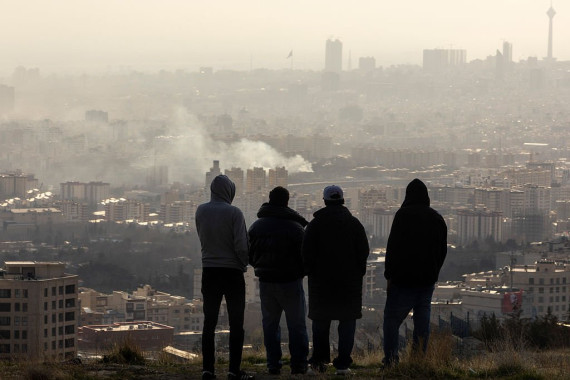
It is precisely when multilateralism is most weakened that its existence proves vital. The UN Security Council held an emergency session over the US and Israeli attacks on Iran. World leaders are calling for a ceasefire. Even if its effectiveness may seem limited, international law remains the only common language available when weapons roar.
Without spaces for mediation and international law, what mechanism will remain to contain the escalation of conflicts, regulate the arms trade, or establish minimum standards of collective security? Returning to a system based purely on power alliances and military deterrence would lead us to an even more unstable, unequal, and violent world, where the most vulnerable would suffer the most. Disarmament, therefore, ceases to be an idealistic agenda and becomes a pragmatic necessity for survival, collective security, and the maintenance of global order.
President Donald Trump views the United Nations as a costly and bureaucratic body, which is trapped in a postwar mindset, ineffective at addressing contemporary challenges and presents an obstacle to direct competition between nations. From his perspective, the US bears an unfair financial burden for the UN with no equivalent return, within a multilateral structure that dilutes national sovereignty in exchange for slow and insubstantial consensus. He advocates instead for bilateral relations and the primacy of force.
But this stance disregards the transnational nature of problems such as pandemics, climate change, regional security issues and illicit financial flows, which necessarily demand coordinated and collective solutions.
The events of the past few days reveal that the logic of force without mediation does not lead to lasting security, but escalation, retaliation, and the expansion of the conflict to countries that were outside the original dispute. The explosions at American bases in the Gulf are a clear demonstration that, in a globalised and interconnected world, war is never truly local.
Brazil, with its diplomatic tradition of peaceful dispute resolution and its concrete experience in confronting domestic armed violence, is uniquely positioned to lead this agenda, particularly within the Global South.
Latin America, marked by illegal flows of small arms and light weapons and the sophistication of transnational organised crime, is a critical laboratory for transparency measures that actually work. In this complex context, the Brazilian experience, more specifically, the expertise developed at the intersection of civil society and the state, is a valuable asset.
Over the course of more than two decades, we at the Instituto Sou da Paz (meaning I Am for Peace, in English) in São Paulo have learned that effective public policies, especially in the sensitive area of security, do not arise from unilateral decrees, but rather from the patient cultivation of trust and respectful dialogue among the parties involved.