If someone forwarded you this email you can subscribe. View in web browser.

Hi ,

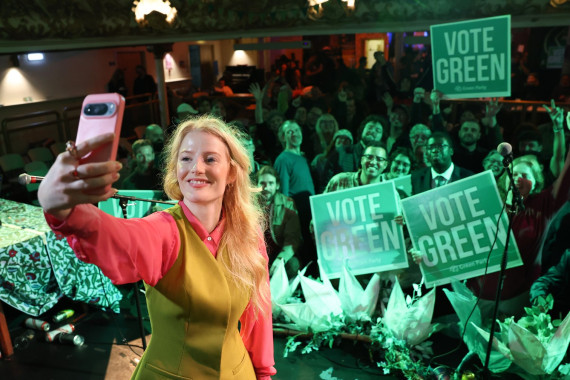
The Greens’ historic win in the Gorton and Denton by-election should serve as a wake-up call for Labour.

A dramatic 25-point swing suggests voters in deprived urban areas are turning toward parties offering bold, redistributive solutions rather than cautious economic orthodoxy.

Read more below.

- openDemocracy

 
EDITOR'S PICKS
 
1
As Bolivia’s left fractured, the Kremlin sent ex-Wagner agents

Exclusive: New dossier exposes how Russian operatives sought to ensure their ally won Bolivia's presidential election Read more... 

2
The Greens’ real fight has begun – and the establishment will be out for blood

After a stunning victory in the Gorton and Denton byelection, Green activists are preparing for a major establishment backlash Read more... 

3
PODCAST | The "Danish Model" of Asylum Explained: Cruelty by Design?

Why are British and European politicians obsessed with Denmark's immigration strategy? We uncover the dark reality of the "Danish Model" and how it punishes asylum seekers by design Spotify | Apple


FEATURED STORY

Why the Green Party just broke Labour's “filthy rich” orthodoxy

Danny Sriskandarajah

There will be lots of lessons drawn from the Greens' historic win in the Gorton & Denton by‑election. Here's mine. 

It used to be said that voters were primarily concerned with "the economy, stupid": Grow the economy and people will elect you, fail and they will punish you. However, these days, growing numbers of voters want solutions to how our economy works. 

Gorton and Denton is one of England’s most deprived constituencies, with 45% of children living below the breadline. In this context, it is no surprise the Greens' focus on tackling poverty, inequality, and cost‑of‑living pressures clearly resonated more than the mainstream offer. 

The 25‑point swing away from Labour shows that many voters, especially in deprived urban areas, are turning toward parties offering bold, redistributive, people‑centred solutions rather than cautious managerialism.

 
SUPPORT OUR INVESTIGATIONS INTO THE MILITARY INDUSTRIAL COMPLEX
 
When I saw that the UK government had seconded an official to work with Rothschild & Co on defence policy, all paid for by you and me, I knew this was something I had to look into. The revolving door between government, private finance and lobbying firms needs to be exposed if we are to understand how money and power work in our politics. Nowhere is this more urgent than on questions of defence and national security, at a time when the government is investing more and more of taxpayers’ money on rearming Britain.
 
You can help keep me on this beat, as I dig into the contracts and cosy relationships between Labour, defence, and big finance. Will you donate to support my work today?
Please donate now
 

The by‑election is a wake‑up call not just for Labour but all parties that support the economic orthodoxy. Incremental tweaks can’t meet the scale of people’s financial pressures, while bold alternatives that address structural inequality can mobilise new coalitions of support.  

The policies offered by the current government seem to be little more than incremental changes to the status quo, rather than fundamental changes to how our economy works. Centrist politicians in Labour and the Conservative party seem unwilling to accept responsibility for the status quo and the role they’ve played in bringing us to this point. There is little mea culpa for the privatisation, liberalisation and financialisation that lies at the heart of a broken economic system. 

There has been no better manifestation of the challenge for Labour than Peter Mandelson's infamous line that he was “intensely relaxed about people getting filthy rich, as long as they pay their taxes.” This may have been important to win credibility for New Labour in the 1990s amongst markets and investors. The problem is that wealth inequality has sky-rocketed since then and the super-rich pay ridiculously low levels of effective tax. All this is made worse by what we now know about the allegedly close links Mandelson had with Jeffrey Epstein and other super-rich people. Instead of the state disciplining capital, many now feel that in recent decades it has too often been the other way around. 

No wonder then that More in Common’s Shattered Britain report found seven in ten Britons say the country is on the wrong track. What's more, many are starting to conclude the problems lie not in one party or political leader, but with the system itself. Many Britons increasingly say they are willing to 'roll the dice' on something new entirely.

 
Is MAGA a religion? Why has protest been criminalised in England and Wales? Who is profiting from anti-immigration sentiment? And how can we engage with young men who’ve fallen down the alt-right pipeline? 
 
These are just a few of the questions that we’ve put to leading thinkers, frontline activists, and global experts on our new podcast, In Solidarity, over the past six months.
 
In Solidarity is a podcast for people who understand that politics doesn’t just happen in the halls of power. Every show, we tackle a new theme to uncover how authoritarianism spreads, who is benefiting from fear, and how solidarity is evolving into resistance movements around the world.
 
To ensure you never miss an episode of In Solidarity, subscribe to get an email notification whenever a new one is released. 
Subscribe to episode notifications
 

This is the phenomenon that has clearly underpinned Reform UK’s rise in popularity. The key question there is whether Reform offers the sort of radical economic shifts people want. Probably not. 

For a start, Reform’s candidate in Gorton and Denton Matt Goodwin has talked in general terms about wanting “to invest in our own people and prioritise the British hard-working majority” but stopped short of detailing the economic strategies to achieve this. Moreover, Reform’s economic policies may not depart much from orthodoxy — the Economist this week argues that the policies outlined by Reform’s Treasury spokesperson Robert Jenrick “sound like a covers album of Rachel Reeves’s greatest hits”. My own colleagues at NEF have shown that some of Reform’s policies would be very costly in terms of jobs.  

This is perhaps why the Greens’ ability to “join the dots” between the cost of living, climate action, housing, and economic justice, and their willingness to challenge key economic assumptions that have underpinned Labour and Conservative policies of recent years, seems to have such traction. 

This might also explain why, despite being ridiculed by the mainstream, some of the ideas of the new Green Party leader Zack Polanski around wealth taxes and fiscal policy are cutting through in ways others are not. 

In her victory speech early Friday morning, the newly elected MP for Gorton and Denton, Hannah Spencer, talked about people in her constituency working hard only “to line the pockets of billionaires”. She's right: Only by acknowledging and addressing the extractive ways our economy works can we deliver meaningful change to people's lives.  

Keir Starmer and Rachel Reeves often talk about ‘working people’ - indeed there were no fewer than 17 and 16 mentions of working people in their last party conference speeches, respectively. But I cannot recall them joining the dots between an economy that worsens the everyday struggles of increasing numbers of people but delivers everyday windfalls for a small elite.

 

COMMENTS

Sign in 💬

Our award-winning journalists can now respond directly to your comments underneath the articles on our site!

Just sign in or register underneath any of our articles to start leaving your thoughts and questions today.

Sign in and join the conversation

MORE FROM OPENDEMOCRACY

Weekly Newsletter
The Dark Arts
Bluesky Facebook X / Twitter Mastodon Instagram YouTube


openDemocracy, 18 Ashwin Street London, E8 3DL United Kingdom

Unsubscribe