If someone forwarded you this email you can subscribe. View in web browser.

Hi ,

The UK’s competition watchdog has a new chief — and he’s a former Amazon UK boss.

After facing questions from MPs about potential conflicts of interest, Doug Gurr was officially appointed to lead the Competition and Markets Authority for the next five years.

Fiona Scott Morton, an economics professor at the Yale School of Management, described the appointment as “very positive” if you’re Big Tech — and less so “if you’re everybody else”.

Read more below.

- openDemocracy

 
EDITOR'S PICKS
 
1
Why the Green Party just broke Labour's “filthy rich” orthodoxy

The 25‑point swing away from Labour shows voters want people‑centred solutions rather than cautious managerialism Read more... 

2
As Bolivia’s left fractured, the Kremlin sent ex-Wagner agents

Exclusive: New dossier exposes how Russian operatives sought to ensure their ally won Bolivia's presidential election Read more... 

3
PODCAST | The Secret Pipeline: How the Far-Right is Radicalising Gen Z

Are you interested in how the far-right uses 1950s messaging and social media to radicalise Gen Z? Well, platforms like YouTube seem to think you're not. Listen today to form your own opinion. Spotify | Apple


FEATURED STORY

Nothing to see here: Ex-Amazon UK boss to lead competition watchdog

Jade-Ruyu Yan

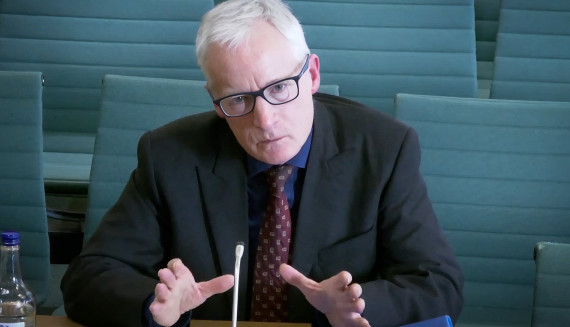
On Tuesday, former Amazon UK boss Doug Gurr arrived at the UK Parliament in a suit and tie, ready to defend himself against MPs’ concerns over his ability to lead the UK’s competition watchdog.

Over the course of nearly two hours, the Business and Trade Committee landed a series of blows. The committee’s chair, Labour MP Liam Byrne, felt Gurr’s past as a Big Tech executive could present a “conflict of interest” at the Competition and Markets Authority, which is supposed to promote competitive markets and protect consumers. He noted that in the year that Gurr had already been the CMA’s interim head, the watchdog had not blocked any mergers – a first since 2017. Liberal Democrat MP Joshua Reynolds suggested Gurr’s former Amazon colleagues could be “jumping for joy” at his appointment.

Three days later, the government officially appointed Gurr to lead the CMA for the next five years, in a move that is “very positive” if you’re Big Tech, Fiona Scott Morton, an economics professor at the Yale School of Management, told openDemocracy  – and less so “if you’re everybody else”.

The UK’s CMA was “the best competition authority in the world” up until a few years ago, said Scott Morton. It sought to block mergers likely to give firms market dominance and lead to higher prices for consumers; this, she said, is no longer the case – and the situation may worsen still under Gurr’s permanent leadership.

 
SUPPORT OUR INVESTIGATIONS INTO THE MILITARY INDUSTRIAL COMPLEX
 
When I saw that the UK government had seconded an official to work with Rothschild & Co on defence policy, all paid for by you and me, I knew this was something I had to look into. The revolving door between government, private finance and lobbying firms needs to be exposed if we are to understand how money and power work in our politics. Nowhere is this more urgent than on questions of defence and national security, at a time when the government is investing more and more of taxpayers’ money on rearming Britain.
 
You can help keep me on this beat, as I dig into the contracts and cosy relationships between Labour, defence, and big finance. Will you donate to support my work today?
Please donate now
 

Tim Cowen, the chair of antitrust practice at law firm Preiskel&Co, raised similar concerns. “Why would [a former Amazon executive] want to join the Competition and Markets Authority?” he asked. “He woke up…one morning and thought, ‘That’s the job for me?’ Why? Just keep asking why.”

Concerns about Gurr were initially raised when he was appointed to lead the CMA on an interim basis in January 2025, a move seen as a push by the Labour government for the watchdog to make more business-friendly decisions and encourage private investment. His predecessor, who also came from big business, had been ousted over criticisms that he did not sufficiently prioritise growth and business interests.

One year on, Gurr’s permanent appointment comes as the US has been criticised for exerting political pressure and executive branch control over its financial regulators. Earlier this month, the US’s antitrust chief resigned after clashes with the Trump administration, with experts worried that the White House is pushing for weaker antitrust enforcement.

“The situation in the US is far worse,” said Scott Morton, describing it as “a different order of magnitude”. Still, she said that the UK could be moving towards the US model: “Obviously, a person from Big Tech becoming the enforcer of Big Tech is moving in the direction of government capture.” 

These fears were also evident in this week’s Business and Trade Committee hearing. 

“Our view is that enforcement action has been quite weak,” Byrne said. “We are concerned about whether you might pull your punches and leave the new powers available to the CMA unused,” he added later, referring to the Digital Markets, Competition and Consumers Act, which came into effect last year and has significantly expanded the regulator’s powers, enabling it to give companies specific regulatory rules and engage in proactive enforcement, impose stronger penalties, and directly enforce consumer protection laws. 

Gurr, MPs suggested, had not been “proactive in deploying the big stick” of this legislation.

 
Is MAGA a religion? Why has protest been criminalised in England and Wales? Who is profiting from anti-immigration sentiment? And how can we engage with young men who’ve fallen down the alt-right pipeline? 
 
These are just a few of the questions that we’ve put to leading thinkers, frontline activists, and global experts on our new podcast, In Solidarity, over the past six months.
 
In Solidarity is a podcast for people who understand that politics doesn’t just happen in the halls of power. Every show, we tackle a new theme to uncover how authoritarianism spreads, who is benefiting from fear, and how solidarity is evolving into resistance movements around the world.
 
To ensure you never miss an episode of In Solidarity, subscribe to get an email notification whenever a new one is released. 
Subscribe to episode notifications
 

Other concerns included Gurr’s “time management” (he seems set to continue in his role as director of the Natural History Museum); the CMA’s historic slowness in launching market investigations to protect consumers, despite its staff body having doubled to 1,200 members in 10 years; and, in particular, Gurr’s ties to Amazon. 

MPs pressed him on whether he would step back from an upcoming decision on whether or not to impose bespoke and proactive regulatory rules reserved for companies with “substantial and entrenched market power” and annual sales of over £1bn in the UK, or over £25bn worldwide, known as “Strategic Market Status”, on Amazon’s web services subsidiary. This decision comes after an investigation found that Amazon and Microsoft alone dominate the UK’s cloud services market, which could be landing people with higher costs and less choice, as well as leading to less innovation and lower quality of service for businesses.

On whether he’d recuse himself from the Amazon decision, Gurr answered: “We will take it on a case-by-case basis.” (“You will understand why we are concerned by that answer,” replied Byrne.)

Throughout his responses to MPs, Gurr struck a humble tone, with a lot of nodding and thank yous. “Thank you, chair, for setting those points out so clearly; that is incredibly helpful,” he said, before launching into an explanation of “why growth matters.” (“You don’t need to plug that too much,” Byrne responded. “We are all pretty keen on growth on this side of the table, too.”)  He spoke at length about the importance of business investment and the factors hindering it, as well as the need for a “predictable” regulatory environment. He emphasised his intentions to focus more on consumer protection.

Tim Cowen of Preiskel&Co told openDemocracy that Gurr’s appointment was “a bad look”, adding that the appointment process and selection had been “bizarre”.

The Business and Trade Committee raised similar concerns over the hiring process. In a report published after the hearing, it concluded that Gurr “has the professional competence and independence required to be appointable”, but issued a warning over the fact that he was the only candidate being considered. This is “not the hallmark of a robust recruitment process,” it said.

“We do not accept these criticisms,” a spokesperson for the Department of Business and Trade told openDemocracy. “Doug Gurr brings a wealth of experience from multiple sectors, and over the past 12 months has worked in lockstep with CMA leadership to reform the organisation. The Government has reaffirmed the CMA’s independence while ensuring it defends consumers, supports fair competition and helps to grow the economy.”

When openDemocracy followed up to ask the department whether Gurr was the only candidate considered for the role, a spokesperson declined to comment.

Representatives for the CMA declined to comment, and Gurr did not respond to a request for comment.

Representatives for the Commissioner for Public Appointments directed openDemocracy to the Department for Business and Trade, but confirmed that “the Commissioner was consulted – as required under the Code – on the Senior Independent Member for the panel.”

 

COMMENTS

Sign in 💬

Our award-winning journalists can now respond directly to your comments underneath the articles on our site!

Just sign in or register underneath any of our articles to start leaving your thoughts and questions today.

Sign in and join the conversation

MORE FROM OPENDEMOCRACY

Weekly Newsletter
The Dark Arts
Bluesky Facebook X / Twitter Mastodon Instagram YouTube


openDemocracy, 18 Ashwin Street London, E8 3DL United Kingdom

Unsubscribe