If someone forwarded you this email you can subscribe. View in web browser.

Hi ,

For years, Venezuela has appeared in Spanish-language headlines mainly in moments of rupture — disputed elections, protests, or waves of migration. Then it fades again.

When US helicopters landed in Caracas targeting Nicolás Maduro, the spotlight returned. But the renewed attention raises a broader question: what has Latin America’s press been missing about Venezuela all along?

Read more below.

- openDemocracy

 
EDITOR'S PICKS
 
1
Not just oil, the Venezuela invasion is about preserving the petrodollar

Money is power, and oil is a commodity – one that was once solely reliant on the dollar. The US knows that’s shifting Read more... 

2
Venezuela and the journey from Monroe’s Doctrine to Trump’s Jungle Law

The US has a long history of military intervention in Latin America, but never before has it been so brazen Read more...

3
PODCAST: After Maduro: Storm Warnings in Venezuela

Oil, Trump, an entrenched regime and a discontented populace make for an uncertain future in Venezuela Spotify | Apple


FEATURED STORY

What Latin America’s press misses about Venezuela

Angelina de los Santos

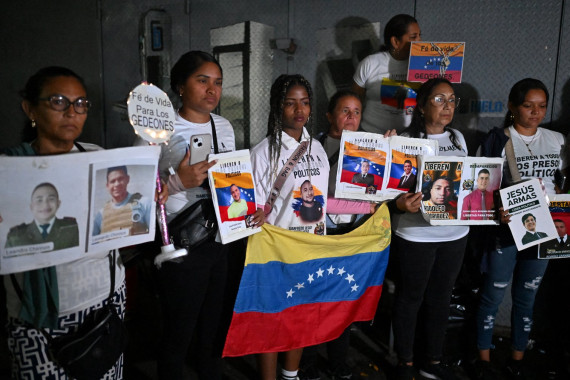
Before US helicopters landed in Caracas to kidnap Nicolás Maduro last month, Venezuela occupied an intermittent place on the international news agenda – even in Spanish-language media. Its political, economic, and humanitarian crises surfaced only at moments of high impact – elections fraud, protests, migration spikes – before fading back into the global background hum.

“This is the first time in a long while that so many voices are commenting on, opining about, and analysing what is happening here,” Venezuelan journalist Valentina Gil, who specialises in fact-checking and digital content production, told openDemocracy.

Latin America’s Spanish-language media is incredibly diverse and reflects the region’s complex history and the multitude of present interests. There are national outlets and regional outlets in each country, but also a wide array of Hispanic media based in the United States, the region’s military hegemon, ‘media in exile’ scattered through North and Central America and Europe and also the major Spanish-language online newspaper from Spain, the region’s former colonial power.

Before the US incursion, Gil said, Spanish-language media covered Venezuela almost exclusively through the story of its displaced population: the 7.9 million people who have left the country in recent years. Front pages focused on those crossing on foot through the “hell” that is the DariĂ©n Gap (the dense rainforest along the Colombia-PanamĂĄ border that South American migrants must cross to reach the North), the last-minute visa requirements for people merely transiting through countries, and the deportations from the United States.


The world is watching Venezuela. Are you getting the full story?
 
When US helicopters landed in Caracas, the global media finally paid attention. For years, Venezuela’s crisis was treated as background noise.
 
At openDemocracy, we don't wait for an invasion to start reporting. From migration fatigue to life under sanctions, our team has been on the ground, listening to the people actually living through the crisis — not just the politicians talking about it.

Whether it’s in Caracas, Gaza, or Ukraine, we cut through the propaganda to bring you independent, human-centered journalism.

But independent reporting is expensive. We don’t have billionaire owners. We only have you. If you value reporting that refuses to look away, please support our work today.
Please donate now
 

Coverage was not always neutral. Luz Mely Reyes, a Venezuelan journalist and co-founder of the digital outlet Efecto Cocuyo, believes that the country’s mass migration has been “criminalised” in the media in the region. This is particularly the case in Chile, where the far-right president-elect, JosĂ© Kast, is set to take office next month, and where Reyes has observed a clearly “biased” and openly “anti-migrant” framing in the conservative media.

After the widely documented electoral fraud of July 2024 and Maduro’s self-proclamation as re-elected president, the diverse Hispanic-language press – like the rest of the world’s media – briefly turned its gaze back to Venezuela. Media outlets, Gil said, discussed irregularities in the electoral system, attempts at regional mediation, and then the inaction of neighbouring countries. “After all that,” she said, “silence. Until now.”

Since then, Venezuela has been catapulted back into the spotlight by the US seizure and arrest of Maduro and his wife, Cilia Flores, on 3 January. The Hispanic-language media have amplified both conservative and progressive interpretations, ranging from narratives that frame the incursion and kidnapping as a blow against authoritarianism and a victory for US energy security, to others that liken the operation to past US interventions in Iraq and warn that it sets a dangerous precedent threatening sovereignty across Latin America.

Although Reyes said it remains difficult to assess the extent to which this coverage is shaping political decision-making on Venezuela across the region, she noted: “There are two major blocks of ‘narratives’: one that seeks to focus on how Maduro left, because of the implications this has for Latin American governments, and the other major block is that there is still no transition to democracy. The truth, as usually happens, is more nuanced.”

Reyes added that the visit of the US energy secretary, Chris Wright, to Caracas this week led the Trump administration to have “extensive contact with US media outlets of different leanings” – something that she noted “was not the case with Venezuelan media, nor even with those that write in Spanish”.

“This is something that should be corrected,” Reyes said. “Telling in Spanish, and telling well, what is happening in Venezuela is not only an exercise in memory but also a responsibility.”

The prelude to Maduro’s capture

To understand the current Spanish-language media coverage, you have to go back to September last year, when Donald Trump began attacking Venezuelan boats in international waters.

Back then, the US administration claimed it could “wage war” on the Venezuelan individuals and vessels, rather than detain and prosecute them, because they were allegedly trafficking drugs for cartels designated as terrorist organisations, placing them in the same category as Al Qaeda or ISIS. This was justified with reference to high overdose deaths in the US, despite the fact that rising fatalities are driven primarily by fentanyl, a substance largely trafficked from Mexico.
 

AUDIENCE DISCUSSION

openDemocracy will be hosting an hour-long call with members of our staff and our audience. The call will be an opportunity for you to meet some members of the team including our editor-in-chief Aman Sethi and will give participants the chance to share their thoughts on openDemocracy and what they like about our coverage and feel is important in the media. 
 
Click below to express your interest in joining the call!
Chat with our staff
 

The following month, in a confidential notice sent to Congress, Trump’s administration “determined” that the United States was engaged in an “armed conflict” with drug cartels and that their members could be targeted as “unlawful combatants”.

Spanish-speaking media based in Miami, Florida, amplified conservative US outlets’ support for the strikes and pushed for further military escalation in the region, according to an analysis by Media Matters for America, a non-profit monitoring misinformation.

Media Matters found that the Spanish-language television and radio programmes echoed and normalised this Trumpian rhetoric, suggesting that the lethal attacks on boats were legitimate and the only viable way to “neutralise” what they framed as the Venezuelan threat in the US war on drugs.

The US State Department had previously labelled Maduro as the leader of the so-called “Cartel of the Suns”. The term dates back to the 1990s and is used to describe a loose network of Venezuelan military officers and sectors allegedly involved in corruption or illicit activities, without unified command or necessarily coordinated operations, according to InSight Crime, which researches organised crime in Latin America and the Caribbean.

The claim that Maduro leads the network originated in March 2020, when the US Department of Justice charged him, officials in his administration and leaders of Colombia’s demobilised FARC guerrillas with “narco-terrorism”. The indictment alleged that Maduro systematically used Venezuelan state institutions to facilitate large shipments of cocaine to the United States.

Yet just three days after the US kidnapping of Maduro and his wife, the Justice Department revised its approach, issuing a rewritten indictment that removed almost all references to the Cartel of the Suns and reframed the case against Maduro as a scheme of state corruption rather than a structured drug cartel operation.

Competing narratives in the region

Washington’s framing was echoed across parts of Latin America. Right-wing political figures interpreted Maduro’s capture as a blow against authoritarianism, narco-trafficking, and Venezuela’s political crisis – often portraying it as an opportunity for a transition to democracy and economic rebuilding.

Yet journalist Luz Mely Reyes counters that this framing ignores a central issue: “You cannot talk about guaranteeing stability if that stability still rests on rifles.” Discussions of stability, sovereignty, or regional balance that ignore the fact that repression, censorship, and systematic state terror are still in place within Venezuela miss the core of the problem...

You can read the rest of this article here.


COMMENTS

Sign in 💬

Our award-winning journalists can now respond directly to your comments underneath the articles on our site!

Just sign in or register underneath any of our articles to start leaving your thoughts and questions today.

Sign in and join the conversation

MORE FROM OPENDEMOCRACY

Weekly Newsletter
The Dark Arts
Bluesky Facebook X / Twitter Mastodon Instagram YouTube


openDemocracy, 18 Ashwin Street London, E8 3DL United Kingdom

Unsubscribe