If someone forwarded you this email you can subscribe. View in web browser.

Hi ,

Across Somaliland and much of East Africa, access to mental health services is extremely limited. Professionals are scarce, services are overstretched, and refugees face additional barriers to care.

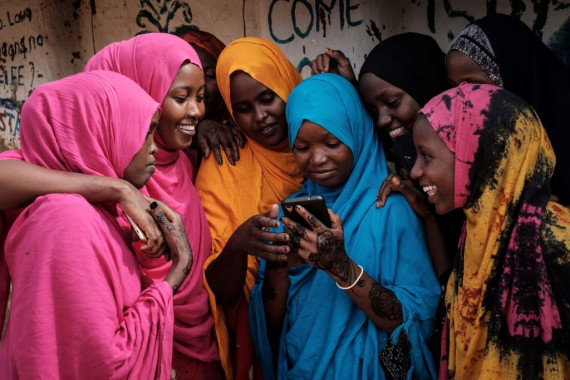
Mobile phone use is widespread across Somaliland and East Africa, allowing digital tools like MentalEase to offer a different path.

These tools can reach people across camps and borders, providing privacy, continuity and support in places where traditional services fall short.

Read more below.

- openDemocracy

 
EDITOR'S PICKS
 
1
A broken lifeline: Fixing humanitarian aid’s missing link

Refugees need phones to contact absent loved ones, for education, work, and healing. What happens when they break? Read more... 

2
Life beyond the stats: The refugees reclaiming their stories

Our lives are often reduced to numbers, our stories told without our consent. I wanted to change that Read more... 

3
PODCAST: After Maduro: Storm Warnings in Venezuela

Oil, Trump, an entrenched regime and a discontented populace make for an uncertain future in Venezuela Spotify | Apple


FEATURED STORY

Healing beyond borders: Digital mental health support for refugees

Aqila Abdelkarim Ali

My understanding of trauma did not begin with a textbook or a diagnosis. It grew little by little over many years; from the sounds of missiles and bombs we had to sleep through every night to watching my father be carried to us, soaked in blood, a collateral damage of war. 

In Somaliland, displacement was not a single event but a continuous state of being. We moved again and again, escaping danger or searching for so‑called stability across places that never felt like home. With each move, something was lost: peace, routine, normality, and a sense of belonging.

I did not immediately recognise what I was carrying. At first, it felt like constant exhaustion, fear without a clear reason, and an overwhelming sense of pressure to stay strong. Over time, I became numb, I withdrew, I felt lonely even when surrounded by people, trapped in a life shaped by uncertainty, and deeply desperate in moments I could not explain to anyone else. There were days when the weight of survival left no room to process grief, fear, or sadness.

Like many refugees, I did not have access to professional mental health care. Even if services had existed, I would not have known how to ask. Mental health was not something we spoke about openly. Pain was endured, not expressed. 

 
SUPPORT OUR INVESTIGATIONS INTO THE MILITARY INDUSTRIAL COMPLEX
 
When I saw that the UK government had seconded an official to work with Rothschild & Co on defence policy, all paid for by you and me, I knew this was something I had to look into. The revolving door between government, private finance and lobbying firms needs to be exposed if we are to understand how money and power work in our politics. Nowhere is this more urgent than on questions of defence and national security, at a time when the government is investing more and more of taxpayers’ money on rearming Britain.
 
You can help keep me on this beat, as I dig into the contracts and cosy relationships between Labour, defence, and big finance. Will you donate to support my work today?
Please donate now
 

What ultimately helped me was searching for understanding on my own. I began reading about psychology, trauma, and emotional well‑being, not because I planned a career in it, but because I was looking for a way to survive. Learning gave me language for what I was feeling. It helped me realise that my reactions were not weaknesses, but responses to prolonged stress, loss, and instability. 

This moment of recognition, of being able to name my pain, was the beginning of my healing.

From personal healing to community awareness

In recent years, Somaliland has achieved a hard‑won sense of stability and peace, but the past has not simply faded away. Decades of conflict, state collapse, and repeated environmental crises have forced families across the country and elsewhere in East Africa to flee, return, and flee again. Their displacement is not only a matter of movement; it is a story carried in memory.

Today, Somaliland hosts large populations of refugees and internally displaced people. While the humanitarian response understandably focuses on food, shelter, and physical safety, the emotional wounds are often unseen and untreated.

The echoes of war, violence, dangerous journeys, the loss of homes, livelihoods and loved ones, as well as prolonged uncertainty about the future, continue to live within people’s minds and bodies, causing mental health issues that thrive even when a person reaches relative safety. These can be worsened further by post‑displacement stressors, such as poverty, unemployment, social exclusion, and lack of legal security. 

Over time, untreated mental distress can affect physical health, family relationships, and community cohesion, reinforcing cycles of trauma and instability. 

As I began to understand my own mental health, I started noticing patterns in those living in the refugee settlements and host communities around me, even in people seemingly leading a normal life. I saw they were constantly tense, emotionally withdrawn, or overwhelmed, yet unable to name what they were feeling. I saw mothers silently carrying emotional burdens, young people struggling with hopelessness, and elders reliving untold memories.

I realised that my story was not unique, just rarely spoken about. The psychological impact of displacement is severe. Depression, anxiety, post‑traumatic stress, and chronic stress are widespread. In many communities, emotional suffering is normalised as a part of life, leaving individuals without the language or support to seek help. Women, youth, and elders are particularly vulnerable, often responsible for caring for relatives while suppressing their own distress.

I started to think about ways to reach people and help with their mental distress, even remotely. That was when ‘MentalEase’ was born. I created the platform to offer others what I did not have when I most needed it: a safe, accessible space to understand one’s emotions without judgment or exposure. 

Barriers to mental health support

Somaliland and much of East Africa have extremely limited access to mental health services. There are few trained professionals and services are often concentrated in urban areas, far from camps and informal settlements. 
 

AUDIENCE DISCUSSION

openDemocracy will be hosting an hour-long call with members of our staff and our audience. The call will be an opportunity for you to meet some members of the team including our editor-in-chief Aman Sethi and will give participants the chance to share their thoughts on openDemocracy and what they like about our coverage and feel is important in the media. 
 
Click below to express your interest in joining the call!
Chat with our staff
 

Where services do exist, they are frequently overstretched and under‑resourced – and there are barriers preventing refugees from accessing them. Stigma is a major one; mental health struggles may be associated with shame, weakness, or spiritual failure. In close‑knit communities, fear of judgment or exposure further prevents help‑seeking.

Language and cultural differences can also present barriers. Many existing mental health models do not reflect local understandings of distress or healing. Refugees may feel misunderstood or alienated by approaches that fail to acknowledge their lived realities. Financial and legal constraints add another layer of exclusion. For many refugees, mental health care feels unreachable in a daily life dominated by survival needs.

Digital tools such as MentalEase prevent a powerful opportunity to tackle these challenges. 

Mobile phone use is widespread across Somaliland and East Africa, even in displaced settings, meaning digital tools can reach large, dispersed populations without extensive physical infrastructure. For displaced individuals who may move frequently, digital platforms offer continuity of support across borders.

Digitally accessible mental health platforms can also overcome many other traditional barriers. They can offer privacy and anonymity, and, when designed properly, help to reduce stigma and encourage individuals to seek support. They can allow users to engage at their own pace and in moments when help is most needed. Importantly, they can be designed to function with low bandwidth and in multiple languages, ensuring inclusivity. 

Initial reactions to MentalEase are often cautious. Many people are unsure what mental health support actually means. They fear stigma, exposure, or misunderstanding. I frequently observe hesitation and quiet, distanced responses shaped by years of survival. But my own story – marked by loss, loneliness, and gradual healing – connects me to those I help, allowing me to approach people as a fellow traveller who has walked the same path. 

My experiences open the door to honest dialogue. When conversations focus on shared, everyday experiences such as poor sleep, constant worry, stress, and emotional fatigue, resistance softens. People respond when they feel seen rather than judged, and when they understand that seeking mental health support is not a sign of weakness, but an act of care. When they realise they are not alone, silence begins to break, and openness grows naturally.

Rooted in lived experience

MentalEase is not just a name, it’s the policy of our work. 

We provide grounding and stress‑relief tools, such as self-help articles, books and videos, to offer moments of emotional relief and safety in unstable circumstances, and create safe, anonymous online spaces where people can share their experiences with one another without fear. The platform is also designed to facilitate online access to accredited counsellors who share a user’s background and language. While this service is currently limited to users in Somaliland who speak Arabic, English or Somali, we hope to widen it out in the future.

Above all, we prioritise dignity and compassion, meeting users where they are rather than labeling or pathologising their experiences...

You can read the rest of this article here.


COMMENTS

Sign in 💬

Our award-winning journalists can now respond directly to your comments underneath the articles on our site!

Just sign in or register underneath any of our articles to start leaving your thoughts and questions today.

Sign in and join the conversation

MORE FROM OPENDEMOCRACY

Weekly Newsletter
The Dark Arts
Bluesky Facebook X / Twitter Mastodon Instagram YouTube


openDemocracy, 18 Ashwin Street London, E8 3DL United Kingdom

Unsubscribe