If someone forwarded you this email you can subscribe. View in web browser.

Hi ,

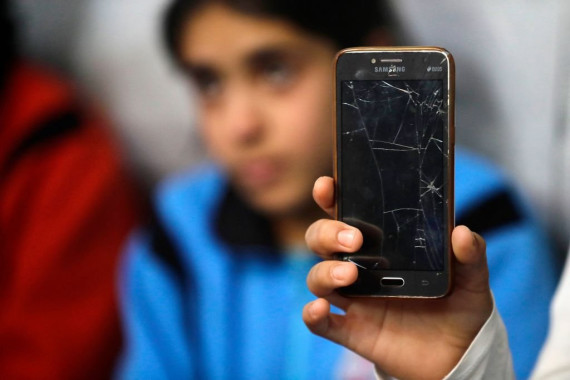
Refugees need phones to contact loved ones, access services, study and work. But what happens when they break?

For millions of refugees and migrants, technology is both a lifeline and a risk. Phones remain essential, but repair services are largely overlooked by aid programmes.

Read more below.

- openDemocracy

 
EDITOR'S PICKS
 
1
Life beyond the stats: The refugees reclaiming their stories

Our lives are often reduced to numbers, our stories told without our consent. I wanted to change that Read more... 

2
Healing beyond borders: Digital mental health support for refugees

Looking around a refugee camp in Somaliland, I saw silent mental health battles everywhere. So I decided to help Read more...

3
PODCAST: After Maduro: Storm Warnings in Venezuela

Oil, Trump, an entrenched regime and a discontented populace make for an uncertain future in Venezuela Spotify | Apple


FEATURED STORY

A broken lifeline: Fixing humanitarian aid’s missing link

Mathew Lubari

In late 2016, soon after I arrived at Uganda’s Rhino Camp Refugee Settlement, a friend of mine was charged 200,000 Ugandan shillings ($55) to regain access to a phone he’d been locked out of. It was more than he could afford, and the technician refused to explain how the repair was carried out.

That moment was a turning point for me. For refugees and migrants like myself, phones and other digital technologies are an invaluable lifeline; they’re vital for staying in touch with loved ones left behind, for learning, job opportunities, social cohesion, and healing. Yet repair and maintenance services remain largely overlooked in humanitarian aid – and replacing a broken phone isn’t a realistic option for many refugees. 

Broken devices are often discarded prematurely or carried long distances to cities in the hopes of finding someone to fix them at a somewhat affordable price, worsening refugees’ digital exclusion, financial strain and data loss. As Peter Gift, a member of the Refugee Welfare Council, said: “A damaged phone means no contact with loved ones, lost memories. A faulty solar lamp means a child studies in the dark.”

I knew I had to do something. I secretly observed the repair, later retracing his steps to check I could redo the fix myself if needed. That moment sparked a journey of learning through YouTube videos and hands-on practice. 

 
SUPPORT OUR INVESTIGATIONS INTO THE MILITARY INDUSTRIAL COMPLEX
 
When I saw that the UK government had seconded an official to work with Rothschild & Co on defence policy, all paid for by you and me, I knew this was something I had to look into. The revolving door between government, private finance and lobbying firms needs to be exposed if we are to understand how money and power work in our politics. Nowhere is this more urgent than on questions of defence and national security, at a time when the government is investing more and more of taxpayers’ money on rearming Britain.
 
You can help keep me on this beat, as I dig into the contracts and cosy relationships between Labour, defence, and big finance. Will you donate to support my work today?
Please donate now
 

For millions of refugees and migrants, digital technology is not always positive; it can also be a tool of surveillance, exclusion, and control. Navigating this contradiction is often a lonely journey. 

In March 2018, for example, Uganda’s government, in partnership with the United Nations High Commissioner for Refugees and the World Food Programme, launched a nationwide biometric verification and profiling exercise for refugees. We were forced to register in order to access humanitarian assistance and basic services, such as receiving food rations or opening a bank account or registering a SIM card, but it posed serious privacy risks, and at the time, we were not given the option to consent or refuse the collection of our data, and most refugees had little or no visibility into how their personal data was managed or shared. Some people were reluctant to raise concerns about the system during community meetings, worried that their identities could be traced and that they might be denied essential services if they were seen as critical.

Despite the challenges technology can present, it remains vital. Months after I taught myself how to repair my friend’s phone, a woman approached me desperately asking me to fix hers so she could contact her son, who was still in Yei, South Sudan. Soon, more people came forward looking for help with their broken devices. Armed with just a screwdriver, a toothbrush, a wire cutter, and scissors carried in a zip-lock bag, I began repairing devices under a tree in the camp. Each repair restored more than hardware; it restored connection, dignity, and hope.

The following year, in 2018, the idea of a repair café emerged during a digital skills training in Rhino Camp organised by the #ASKnet project, a cross-border consortium of community-driven organisations. When we organised such an event weeks later, more than 300 refugees brought radios, phones, and computers, as well as solar lamps and other basic electronics that refugees receive upon registering at the camp, which don’t come with instructions for maintenance or repairs.

This experience led me to found the Community Creativity for Development (CC4D) and the Community Repair Café Center in Eden Zone, Rhino Camp. Today, we provide daily repair services, access to tools and computers, and training in electronics repair, upcycling, and digital skills. 

Our mission is simple yet transformative: to connect communities through creativity, technology, and repair. Whether fixing a broken radio or co-designing an open-source Internet of Things project, we use practical innovation to connect people across divides of displacement, nationality, and experience. 


AUDIENCE DISCUSSION

openDemocracy will be hosting an hour-long call with members of our staff and our audience. The call will be an opportunity for you to meet some members of the team including our editor-in-chief Aman Sethi and will give participants the chance to share their thoughts on openDemocracy and what they like about our coverage and feel is important in the media. 
 
Click below to express your interest in joining the call!
Chat with our staff
 

Repairing together is more than fixing things; it's how we rebuild trust, share knowledge, and remind each other that sustainability starts with care. Each repaired item represents restored communication, renewed access to information, financial services, safety, entertainment/edutainment, continued education, job opportunities, and extended livelihoods for families who depend on these tools daily. It also reduces e-waste, a growing cause of environmental harm.

Take Mawa, a university student living in Rhino camp, who was reliant on his laptop for studying and staying connected. When it stopped working, Mawa “lost hope”. With our support, the laptop is fixed, and Mawa has the tools and knowledge to repair it themselves if it breaks again. “Seeing it repaired gave me strength again,” he said. “I can now resume my online studies and stay connected.”

So far, we have trained over 300 refugee youth on basic electronics repair, safe use of the internet, data safety and security, job search, and online learning, hosted 23 repair cafés, repaired more than 2,500 devices and created 10 open educational resources that enable access to online and offline learning resources.

One project participant, Rose, said: “Before the electronics repair training, I couldn’t fix even simple devices and often relied on others, spending money I didn’t have. The hands-on sessions taught me to identify faults, use tools, and repair items like lights, radios, solar panels, and phones. Now, I not only fix my own devices but also help neighbours, saving money and reducing e-waste. This training gave me skills, confidence, and hope for a sustainable future. I’m grateful to CC4D for empowering me and transforming my life.”

The Community Creativity for Development has also conducted two online campaigns, including the one responding to Microsoft’s end of support for Windows 10. Many refugees rely on older computers that cannot run Windows 11, leaving them exposed to security risks and data loss. This global tech transition has become a silent digital crisis for displaced communities with limited internet access and low digital literacy. 

Some of the challenges we have faced include limited funding and a lack of repair forums in Africa. We were able to get a small amount of funding to conduct our activities through connections with organisations in the global repair community, including The Restart Project, a London-based charity that helps people learn how to repair electronics and r0g Agency, a Berlin-based nonprofit. We also raised funds through crowdfunding campaigns with the help of Sweden’s Repair Café Malmö, which helped to set up our GoFundMe, as the website doesn’t operate in Uganda.

Today, our work extends beyond repair services to policy advocacy, calling for the inclusion of repair in humanitarian aid and building the Africa Repairers Network (ARNet) to promote, protect and revitalise Africa’s repair culture.

We believe repair is a digital right, an act of care, a tool for empowerment, and a pathway to sustainability. Repairing together rebuilds trust, restores dignity, and reminds us that sustainable futures begin with care. Repair is healing. Repair is connection. Repair is justice. Repair has no boundary, whether fixing things, systems, or societies.
 

COMMENTS

Sign in 💬

Our award-winning journalists can now respond directly to your comments underneath the articles on our site!

Just sign in or register underneath any of our articles to start leaving your thoughts and questions today.

Sign in and join the conversation

MORE FROM OPENDEMOCRACY

Weekly Newsletter
The Dark Arts
Bluesky Facebook X / Twitter Mastodon Instagram YouTube


openDemocracy, 18 Ashwin Street London, E8 3DL United Kingdom

Unsubscribe