If someone forwarded you this email you can subscribe. View in web browser.

Hi ,

Exploitation isn’t always violent or visible. Sometimes, it’s digital.

From Saudi Arabia to Nepal and the UK, migrant workers are being trapped by systems they’re told are there to protect them. Platforms and financial tools quietly shape their lives, and can just as quietly erase years of hard work.

In Nepal, the government’s foreign employment database records everything from salary details to family contacts. But when information is entered incorrectly — an email, a phone number, a job title — those errors travel across systems, creating long-term consequences for workers who often have little power to challenge them.

Read more below.

- openDemocracy

 
EDITOR'S PICKS
 
1
Healing beyond borders: Digital mental health support for refugees

Looking around a refugee camp in Somaliland, I saw silent mental health battles everywhere. So I decided to help Read more...

2
Nothing about us, without us: Reclaiming power in an age of border technology

People-on-the-move met to discuss how tech is shaping movement, borders and power. This is what they think must happen Read more...

3
PODCAST: After Maduro: Storm Warnings in Venezuela

Oil, Trump, an entrenched regime and a discontented populace make for an uncertain future in Venezuela Spotify | Apple


FEATURED STORY

Fake visas and complex databases: Tech’s role in exploiting migrant workers

Rajendra Paudel

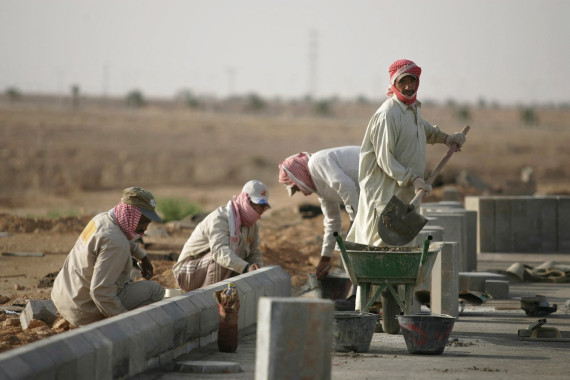
When I first left Nepal to work as a salesman in Saudi Arabia, my contract said my new employer would provide accommodation. It didn’t state what kind of accommodation, but I didn’t give it much thought. I assumed it would be reasonable, perhaps a shared room offering basic dignity.

On arrival, I found I was expected to sleep on the floor of one room with five other people. At that moment, I realised that the problem was not only the company’s treatment of its migrant workers, but also my own lack of clarity and awareness. 

My contract had been vague, and I did not know how to ask the right questions.

That day was the start of my understanding of how important it is for migrant workers to have information, clarity, and awareness. Since then, I have worked closely with migrant communities across South Asia, the Gulf, and Southeast Asia, delivering training and awareness programs on workers’ rights, employment contracts, digital safety and fraud risks. 

 
SUPPORT OUR INVESTIGATIONS INTO THE MILITARY INDUSTRIAL COMPLEX
 
When I saw that the UK government had seconded an official to work with Rothschild & Co on defence policy, all paid for by you and me, I knew this was something I had to look into. The revolving door between government, private finance and lobbying firms needs to be exposed if we are to understand how money and power work in our politics. Nowhere is this more urgent than on questions of defence and national security, at a time when the government is investing more and more of taxpayers’ money on rearming Britain.
 
You can help keep me on this beat, as I dig into the contracts and cosy relationships between Labour, defence, and big finance. Will you donate to support my work today?
Please donate now
 

Above all, these experiences have taught me that exploitation is often not violent or visible. It is digital and financial, and it’s usually hidden inside everyday systems. 

Migrant workers’ lives are no longer shaped only by borders, visas, or airports; they are managed by platforms, contracts, data systems, financial tools, and social media. If workers do not fully understand what is written – or not written – in their contracts, they unknowingly accept conditions that directly affect their dignity and well-being. If data is recorded incorrectly, workers pay the price. If awareness is missing, years of hard work can disappear silently.

Take Nepal. Like many other countries across the world, its government increasingly promotes digital systems as solutions to migration problems. The Department of Foreign Employment runs a database for Nepali workers leaving the country for foreign employment, which stores everything from a worker’s pre-departure approval to their final clearance, as well as data such as their salary, company name, job position, and even family contact details.

In theory, if the correct data is entered, it is linked to other systems, such as the Social Security Fund. But if details such as email addresses, phone numbers, or employment information are incorrect, inaccurate data moves across systems and creates long-term problems.

In practice, I have seen many cases where recruitment agents or agencies enter incomplete or incorrect information, either accidentally due to poor digital literacy or negligence, or internationally to speed up processes, bypass requirements, or align records with recruitment or employer interests, often without the worker’s informed consent. This means migrant workers often do not know what data has been uploaded under their name, nor do they understand the consequences of errors. 

When problems arise abroad, the system protects the paperwork – not the person.

Technology itself is not the main problem; lack of awareness and accountability is. When workers understand how these systems work and insist on correct data, the same technology can become a tool for protection.

Harder than leaving? Returning

Two realities often ignored in migration policy: migrant workers have a limited earning window and little financial literacy.


AUDIENCE DISCUSSION

openDemocracy will be hosting an hour-long call with members of our staff and our audience. The call will be an opportunity for you to meet some members of the team including our editor-in-chief Aman Sethi and will give participants the chance to share their thoughts on openDemocracy and what they like about our coverage and feel is important in the media. 
 
Click below to express your interest in joining the call!
Chat with our staff
 

Most migrants work abroad for a fixed number of years. Employment contracts end, renewals are uncertain, and many workers are abroad without their children or families. Over time, this family separation, combined with visa limits, job insecurity, health concerns, or the need to care for ageing parents, pushes workers to return home.

But while they are living away from home, workers face long working hours, family pressure, rising expenses, and emotional stress. Saving and investing are often postponed. Many think, पहिले कमाउँछु, पछि सोचौँला – first I will earn, later I will think.

But ‘later’ often comes too late.

I regularly meet migrant workers who earned consistently for years but returned home with little savings, no regular income and no updated skills. As one returnee put it, “going abroad was hard, but coming back was harder.” Another told me: “I sent money every month, but I never learned how to save or invest.” By the time he returned, inflation had already reduced the value of his earnings, and his daily expenses had doubled.

In both cases, the issue was not a lack of hard work. It was a lack of financial guidance while they were earning. When the salary stops and the cost of living continues to rise, the absence of planning turns return into a crisis rather than a transition. Even basic inflation-beating saving or investment knowledge could change outcomes.

This is why financial planning and skill development are critical. Migration should not only be about sending remittances; it should be about preparing for life after migration.

Awareness is protection

A close friend of mine once received a job offer for seasonal work in the UK. The documents looked professional, and the opportunity sounded promising, so he quit his job and sent over the necessary personal documents and $400 for a “work permit processing charge”, which he was told would be refunded upon arrival.

When he shared the details with me, I immediately recognised signs of fraud.

Days later, the same people asked him for another $600 for “visa processing”. This follows a familiar pattern, with fraudsters making an initial request for a smaller amount of money and gradually inventing new reasons to demand more. I shared similar cases with him to stop the process before further harm.

Many migrants are not as lucky. Fraud related to job and visa offers has become increasingly common. Similar scams appear through fake lottery wins, parcel messages, and cheap shopping offers. These scams thrive not because migrants are careless, but because trusted information is limited and pressure to find opportunities is high.

One thing is clear: awareness changes outcomes...

You can read the rest of this article here.
 

COMMENTS

Sign in 💬

Our award-winning journalists can now respond directly to your comments underneath the articles on our site!

Just sign in or register underneath any of our articles to start leaving your thoughts and questions today.

Sign in and join the conversation

MORE FROM OPENDEMOCRACY

Weekly Newsletter
The Dark Arts
Bluesky Facebook X / Twitter Mastodon Instagram YouTube


openDemocracy, 18 Ashwin Street London, E8 3DL United Kingdom

Unsubscribe