If someone forwarded you this email you can subscribe. View in web browser.

Hi ,

Women are bearing the brunt of England and Wales’ spiralling court backlog, with a growing number imprisoned without having been tried or sentenced.

New analysis of Ministry of Justice data shows that while one in five people in prison is now held on remand, the figure rises to a quarter for women – a stark increase over the past decade, despite only minimal growth in the overall prison population.

Read more below.

- openDemocracy

 
EDITOR'S PICKS
 
1
How a US/Israeli strike on Iran could ignite a wider conflict

What would a US/Israel operation in Tehran look like? Research carried out two decades ago offers some answers Read more...

2
Al Fayed survivors urge Harrods not to share their data with abuser’s estate

Change to the Harrods redress scheme risks personal information being shared with the Fayed estate, warn survivors Read more...

3
PODCAST: After Maduro: Storm Warnings in Venezuela

Oil, Trump, an entrenched regime and a discontented populace make for an uncertain future in Venezuela Spotify | Apple


FEATURED STORY

Revealed: Women suffer most from spiralling court backlog

Sian Norris

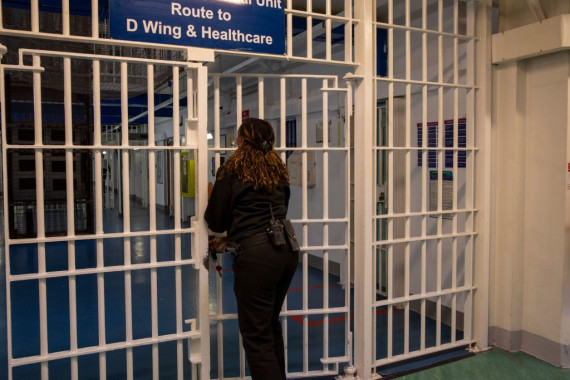
A fifth of prisoners in England and Wales have not been tried or sentenced, with that figure rising to a quarter of all women in prison, openDemocracy can reveal.

Of the approximately 87,000 people imprisoned in England and Wales, more than 17,000 were held on remand while awaiting trial or sentencing as of June 2025. This is a 44% rise in the decade since June 2015, when 11,785 were on remand, according to Ministry of Justice data analysed by openDemocracy. The overall prison population increased by 2% in that time.

In some prisons, more than half of prisoners are on remand, according to data collected by the MoJ during prison inspections. Inspectors visiting HMP Leeds and HMP Lewes last year found that 70% of prisoners in both prisons were on remand.

As ‘innocent until proven guilty’ is a fundamental principle of UK law, the Bail Act 1976 states that a defendant in England or Wales should generally be bailed and allowed to remain in the community until their trial, except when they are charged with serious offences, such as murder, manslaughter or rape, or in a handful of other specific cases, such as if they have previously breached bail conditions or are at risk of absconding.

 
SUPPORT OUR INVESTIGATIONS INTO THE MILITARY INDUSTRIAL COMPLEX
 
When I saw that the UK government had seconded an official to work with Rothschild & Co on defence policy, all paid for by you and me, I knew this was something I had to look into. The revolving door between government, private finance and lobbying firms needs to be exposed if we are to understand how money and power work in our politics. Nowhere is this more urgent than on questions of defence and national security, at a time when the government is investing more and more of taxpayers’ money on rearming Britain.
 
You can help keep me on this beat, as I dig into the contracts and cosy relationships between Labour, defence, and big finance. Will you donate to support my work today?
Please donate now
 

Our investigation reveals that this legislation is increasingly not being followed, particularly for women, who are more likely to be denied bail than men, including for non-violent crimes. More than 25% of all women in prison are on remand, compared to 19% of men, according to the most recent Ministry of Justice data. Almost 60% of women arriving into prison on remand between October 2023 and June 2025 had been charged with non-violent crimes, compared to 51% of men.


As the court backlog reaches record highs, many of these people will spend weeks or even months in prison – often, as we have found, in poor conditions and while their mental health spirals – before even being tried, let alone found guilty. Despite this, when their cases are finally heard before a court of law, many will ultimately not be sentenced to prison, with two-thirds of women held on remand later found not guilty or handed a non-custodial sentence, according to research by the prison reform charity The Howard League published in 2020.

Women in Prison CEO, Sonya Ruparel said “Women are being disproportionately put on remand and this picture becomes even worse when you look at the numbers for black and racially minoritised women. Yet many are there for non-violent crimes. Almost nine in 10 women on remand are assessed as posing only low to medium risk of serious harm to the public, and the majority of women on remand are there for low level, non-violent offences.

“Remand separates women from their children, can mean they lose their home and jobs, and it can mean poorer health outcomes for women, including if they are pregnant. The women we work with tell us it's unjust and they often experience anxiety and depression whilst on remand, describing a feeling of being ‘in the dark’ about their case, and ‘left in limbo.’”

While the Ministry of Justice does not publish the length of time people spend on remand, a parliamentary question by Labour’s Lord Bradley found that, on 30 September 2022, 770 people on remand had been incarcerated for more than two years. The custody time limit – the maximum period a defendant can be held in custody before trial – is six months.

Such delays risk violating people’s rights under the protections outlined in the European Convention of Human Rights, which states that a person being detained must be brought to trial within a reasonable time or released pending trial.

Alice Edwards, the UN special rapporteur on torture told openDemocracy: “Holding people for months or years without trial risks violating fair trial rights, the presumption of innocence and the prohibition of ill-treatment. The UK prison system has been neglected for too long – basic tools such as electronic records and regular public reporting are still not in place, yet they are essential to monitor overcrowding, excessive use of remand and the applicability of alternatives to detention. It is time for a comprehensive, not piecemeal, approach to justice reform.”

Nadia* was held on remand, but the charges against her were dropped before the case even went to trial. The uncertainty and the experience of being imprisoned alongside women who were mentally unwell and struggling to cope with substance abuse issues left her feeling depressed and anxious. “I have PTSD,” she said. “I have nightmares. If a door bangs or I hear keys jangling, my heart goes.”

Women on remand appear to disproportionately suffer poor mental health while in prison. Of the 17,000 people held on remand, just 5% are women, yet they account for 38% of all self-harm incidents in the remand population, according to data from the charity JUSTICE.

“The indefinite nature of remand – where there is uncertainty about the length of time you will be held in prison – coupled with the experience of those first days in a prison environment can have a serious impact on mental health,” said Helen Churcer, senior research and policy officer at the Howard League.

“This is evident in the higher rates of self-harm in the remand population. For women, who have higher self-harm rates, this is even more pronounced.”

Our investigation also found that prisons that had a high number of people on remand during their most recent inspections also had some of the worst living conditions and the most overcrowding. Two-thirds of those held at HMP Leeds said they were confined to their cells for more than 22 hours a day, with more than half saying their cell was “very dirty”, and 26% saying they were not able to shower every day. Almost 60% reported feeling unsafe in the prison.

In Belmarsh, where the June 2024 inspection reported that 60% of inmates were on remand, nearly half described their cell as “very dirty” and 45% reported being victimised and bullied by staff.

 
Is MAGA a religion? Why has protest been criminalised in England and Wales? Who is profiting from anti-immigration sentiment? And how can we engage with young men who’ve fallen down the alt-right pipeline? 
 
These are just a few of the questions that we’ve put to leading thinkers, frontline activists, and global experts on our new podcast, In Solidarity, over the past six months.
 
In Solidarity is a podcast for people who understand that politics doesn’t just happen in the halls of power. Every show, we tackle a new theme to uncover how authoritarianism spreads, who is benefiting from fear, and how solidarity is evolving into resistance movements around the world.
 
To ensure you never miss an episode of In Solidarity, subscribe to get an email notification whenever a new one is released. 
Subscribe to episode notifications
 

On the women’s estate, 58% of prisoners were on remand in HMP Bronzefield in August 2025. Only 81% of prisoners said they could get a shower every day and 70% felt unsafe.

In response to these figures, a Ministry of Justice spokesperson said: “This government inherited a crisis in our justice system and the unacceptable remand population is yet another example of that. The Sentencing Bill will help address this while ensuring public safety, by expanding electronic monitoring and reducing the exceptions for refusing bail.”

Why the rise?

The ongoing Crown Court backlog is one driver of the rise in the number of people held on remand.

More than 79,000 criminal cases in England and Wales were awaiting trial as of December 2025 – a record high, despite the previous government setting a target to reduce the backlog to 53,000 by March 2025, according to government data.

The BBC has reported that around 25% of violence and drug offences, and 30% of sexual offences have been in the backlog for at least a year, with prisoners held on remand for months or even years at a time while awaiting their trial date.

Proposed reforms on the use of jury trials are aimed at helping reduce the backlog, although the plans have proven controversial.

“People should not be waiting for such a long time on remand and the current proposals – temporarily at least – to remove juries from some trials are worthwhile in part because they will shrink the remand population and reduce pressure on local prisons where the poorest conditions are tolerated by those who are not convicted,” former head of the prisons service Martin Narey told openDemocracy.

“And victims, waiting for justice and retribution for their suffering, should not have to wait so long for trials to begin.”

Longer sentences are also leading to more people in prison for longer, contributing to the rise of overcrowding, which impacts the welfare of all prisoners, including those on remand.

Narey suggested that one way to meet overcrowding is to “address sentencing inflation. Time served in prison needs to be reduced for certain long-term prisoners: those who take part in education and work in order to be prepared for release.”

“There are multiple factors driving the court backlog and subsequent increase of remand, including the impact of the Covid-19 pandemic, and the barristers' strike,” said Churcher.

“Policy-makers could also consider the impact of potential deficits in services in the community on remand decision-making – for example, a lack of housing or bail accommodation, community support for mental health issues, or substance abuse. So as well as reducing the court backlog, we need to see policy changes on a much broader level.”


COMMENTS

Sign in 💬

Our award-winning journalists can now respond directly to your comments underneath the articles on our site!

Just sign in or register underneath any of our articles to start leaving your thoughts and questions today.

Sign in and join the conversation

MORE FROM OPENDEMOCRACY

Weekly Newsletter
The Dark Arts
Bluesky Facebook X / Twitter Mastodon Instagram YouTube


openDemocracy, 18 Ashwin Street London, E8 3DL United Kingdom

Unsubscribe