If someone forwarded you this email you can subscribe. View in web browser.

Hi ,

This week we're sharing our staff's highlights from 2025. Today, Latin America editor Diana Cariboni shares one of her favourite articles from the year.

"When my colleague Angelina de los Santos told me she wanted to dig into why rising numbers of suicide, depression and other emotional illnesses were happening in Argentina despite a landmark mental health law passed 15 years ago, I thought it was going to be tough, and enlightening.

Her findings were devastating. It was about one government after another neglecting the funding required to fully apply the law. Milei's savage budget cuts have left almost nothing standing. Angelina got into the nuts of this process and still found some hope. So, yes, her findings were also enlightening."

Read more below.

And finally, the daily newsletter will take a break for the festive season before returning in the new year. We’re wishing you happy holidays!

- openDemocracy

 
EDITOR'S PICKS
 
1
Police take ‘no further action’ in more than half of rape reports

Revealed: Majority of rape allegations in England and Wales are closed due to lack of ‘evidence’ or ‘public interest’ Read more...

2
Europe is paying Libya to torture migrants on its behalf

On a rescue ship in the Mediterranean, a survivor tells of their detainment in Libya, which the EU helped to support Read more...

3
PODCAST: Inside the Your Party conference

Investigative reporter Ethan Shone tells what the mood was like among the party members following months of public spats and PR disasters. Spotify | Apple


FEATURED STORY

In Milei’s Argentina, austerity economics manifests as a mental health crisis

Angelina de los Santos

In her nine years at the Laura Bonaparte national mental health hospital in Buenos Aires City, Julieta Chevallier has seen suffering widen and deepen.

“When people finally come to see us, it’s usually because they’ve reached the end of their rope,” the social worker told openDemocracy. “What we used to see has now grown sharper, heavier: deeper hopelessness, more suicide attempts, more violence, more acute crises, and a constant anxiety about the economy – even about something as basic as securing food.

“People who had managed to stop using drugs after partially rebuilding their lives with support from social programs are falling back into old patterns.”

At the José A. Esteves neuropsychiatric hospital in Buenos Aires Province, director María Rosa Riva offers a similar warning.


Will you help defend democracy?

A world in turmoil needs fearless, independent investigative journalism that can overcome censorship and hold power to account. 
That’s the kind of media you deserve – and you can support it when you donate to openDemocracy today. When you give today, you can:
  • Keep openDemocracy free to read for everyone
  • Provide our team with the support they need to work safely in a dangerous world
  • Deliver the reporting that matters to you – and that reaches as many people as possible
Please support independent non-profit journalism by donating today.
Please donate now
 

“People are arriving utterly shattered,” said Riva, who has worked at the hospital since 1997 and led it since 2020.

In the 1990s, she said, the emergency room was mainly filled with patients in the grip of severe psychotic episodes, such as schizophrenia. Now, visitors are often experiencing psychomotor agitation linked to problematic drug use, or depression that runs so deep it reawakens latent psychotic breaks, or suicidal thoughts and self-harm – both of which are rising especially sharply among children and adolescents across the country.

Argentina’s mental health began a steep decline after the pandemic, which the World Health Organisation estimated increased global rates of depression and anxiety by between 25% and 27%. In Argentina, this downward trend has deepened since President Javier Milei took office in December 2023 and began drastically shrinking the state.

“Demand for mental health care in the country has risen between 12% and 20% in the past year,” Julieta Calmels, the undersecretary for mental health, problematic substance use, and violence at the Buenos Aires provincial Ministry of Health, told openDemocracy.

“We don’t believe this surge is due to a shift in psychopathology or purely psychic causes,” she added. Instead, mental health authorities from 16 of Argentina’s 23 provinces, including Buenos Aires, which together account for more than half of the country’s population, have written a report putting the blame squarely on Milei’s government.

The document, which openDemocracy has been given exclusive access to and has translated from Spanish, says: “The deterioration of living conditions, growing individualism, the subjective impact of new technologies, and the violent discourse come from political power.”

Across the world, politicians of all stripes continue to gut social services in their respective countries by preaching a simplistic, and false, dogma: That governments must slash spending on social services and shrink the state at all costs. Yet in Argentina, which 15 years ago made a legislative push to improve its citizens’ wellbeing and approved one of the most groundbreaking reforms in the region, austerity-based economics have now worsened the mental health crisis, leaving many service providers under extreme strain as the number of highly vulnerable people soars.

The Milei chainsaw

Since taking office, President Milei has taken his much-discussed ‘chainsaw’ to the country’s healthcare system. His approach has been so extreme that in May this year, Argentina ratified a decision to withdraw from the World Health Organisation.

The budget for the agency overseeing health services was slashed by 70% in the first nine months of 2025. The regulator for medicines, food, and medical products saw its budget cut by 28%. Funding for national hospitals – including Bonaparte – fell by between 30% and 38%. And the National Cancer Institute, which had already suffered a 19% cut in 2024, ceased to exist in 2025.

The government funding allocation for the National Disability Agency, which manages pensions and supports for people with disabilities and is now embroiled in accusations of overpricing and corruption, was cut by 18% this year.
 
Is MAGA a religion? Why has protest been criminalised in England and Wales? Who is profiting from anti-immigration sentiment? And how can we engage with young men who’ve fallen down the alt-right pipeline? 
 
These are just a few of the questions that we’ve put to leading thinkers, frontline activists, and global experts on our new podcast, In Solidarity, over the past six months.
 
In Solidarity is a podcast for people who understand that politics doesn’t just happen in the halls of power. Every show, we tackle a new theme to uncover how authoritarianism spreads, who is benefiting from fear, and how solidarity is evolving into resistance movements around the world.
 
To ensure you never miss an episode of In Solidarity, subscribe to get an email notification whenever a new one is released. 
Subscribe to episode notifications
 

In February of this year, Milei’s government launched an audit into more than a million disability benefits (formally known as non-contributory pensions for ‘work disability’). More than 110,000 have already had their payments cancelled, and the government expects to cut as many as 400,000. Those affected will also lose the health coverage that was tied to their benefits.

The government has also imposed new requirements for applying for the benefit, some of which had previously been ruled unconstitutional.

Even for those who do manage to receive it, the monthly payment is already well below the extreme poverty threshold: last month, it was roughly $206, while the basic food basket cost $365. The basket is the estimated value of a set of basic and essential foods for two adults and two children, but does not include other household costs, such as housing, transport, health and education.

Around 200,000 people have also lost access to private health insurance because they could not afford the premiums after the Milei government deregulated prices. The result was even greater pressure on the public hospital system.

Authorities also suspended the free distribution of medicines for retired workers, including psychiatric drugs and other essential treatments for chronic conditions, although this measure was later overturned by the courts. Meanwhile, the price of medicines has soared, with multiple surveys by industry groups and consumer organisations finding cumulative increases of more than 200% in 2024.

The surge in prices and the collapse of purchasing power under Milei – the minimum wage fell 35% and pensions 23% – triggered a steep drop in medicine sales. Essential treatments suddenly became unreachable for an ever-growing share of the population.

Occupational therapist Celeste Romero knows firsthand how these deep cuts have devastated Argentinian society.

Romero, a professor at the National University of Córdoba and president of the Civil Association Collective Action for Mental Health and Urban Social Integration, works with artisans and entrepreneurs from across the country who face marginalisation, such as disability, homelessness and having been recently released from prisons or discharged from psychiatric hospitals. She helps them to sell their products in a shop in Buenos Aires City.

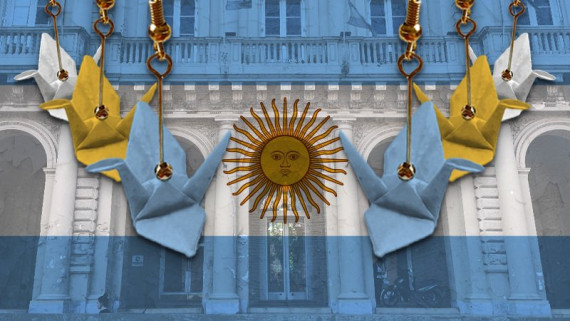
One of the entrepreneurs is a 29-year-old man who makes origami earrings: cranes, boats, flowers, and hearts that hang delicately from the ears.

“His medication alone costs 900,000 pesos a month (more than $620), “ Romero said. “He gets a 280,000 pesos (about $193) benefit. He has a family who supports him; otherwise, he would fall into a tremendous crisis and hospitalisation… And these situations repeat themselves, again and again and again.”

A landmark law turned into dead letter

It wasn’t supposed to be like this.

Fifteen years ago, in 2010, Argentina adopted its Law on the Right to Mental Health Protection, a landmark reform intended to usher in a community-based model focused on prevention, territorial care, and the closure of neuropsychiatric institutions...

You can read the rest of this article here.


COMMENTS

Sign in 💬

Our award-winning journalists can now respond directly to your comments underneath the articles on our site!

Just sign in or register underneath any of our articles to start leaving your thoughts and questions today.

Sign in and join the conversation

MORE FROM OPENDEMOCRACY

Weekly Newsletter
The Dark Arts
Bluesky Facebook X / Twitter Mastodon Instagram YouTube


openDemocracy, 18 Ashwin Street London, E8 3DL United Kingdom

Unsubscribe