If someone forwarded you this email you can subscribe. View in web browser.

Hi ,

This week we're sharing our staff's highlights from 2025. Today, senior investigative reporter Sian Norris shares one of her stand-out investigations from 2025.

"When I was contacted by two survivors of child sexual abuse at a British army run school in the 1980s, I was determined to expose the injustice they had endured, which, they told me, amounted to a “cover up”. The Royal Military Police closed their case, as they said they could not prove that the alleged abuser had been employed by the Ministry of Defence. I advised the two women to submit a subject access request to the police force, which revealed real concerns with the investigation. Two months of digging later, I travelled to a London-based archive where I found the alleged perpetrator’s name on a school staff list. The article exposed how the women had been failed by the police, and the scale of CSA in the military. The police have since apologised."

Read more below.

- openDemocracy

 
EDITOR'S PICKS
 
1
UK plans add ‘new layer of cruelty’ for asylum seekers, expert warns

The decision to end the automatic right to family reunion will intensify vulnerable refugees’ trauma and suffering Read more...

2
Police take ‘no further action’ in more than half of rape reports

Revealed: Majority of rape allegations in England and Wales are closed due to lack of ‘evidence’ or ‘public interest’ Read more...

3
PODCAST: Inside the Your Party conference

Investigative reporter Ethan Shone tells what the mood was like among the party members following months of public spats and PR disasters. Spotify | Apple


FEATURED STORY

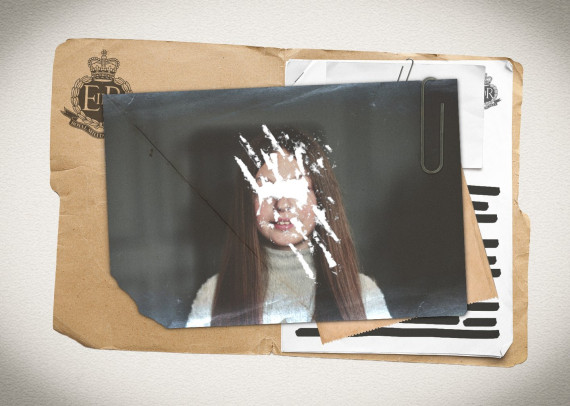
openDemocracy uncovers missed evidence in British Army child sex abuse case

Sian Norris

Trigger warning: this article discusses child sexual abuse.

The Royal Military Police last year closed an investigation into allegations of historic child sex abuse in a British Army-run school in Germany, telling victims it had been unable to prove that the alleged perpetrator was employed by the Ministry of Defence.

It took an openDemocracy reporter a few hours at a military archive to uncover an old MoD directory naming the individual as a member of the school staff. If he was directly employed by the MoD, the RMP would have jurisdiction to pursue the case.

“It feels like a cover-up,” one of the victims told openDemocracy. “It’s not in their interests to find him guilty because then they would have to admit that children were being abused at their schools and that the teachers enabled him. Now, the police have enabled him.”


Will you help defend democracy?

A world in turmoil needs fearless, independent investigative journalism that can overcome censorship and hold power to account. 
That’s the kind of media you deserve – and you can support it when you donate to openDemocracy today. When you give today, you can:
  • Keep openDemocracy free to read for everyone
  • Provide our team with the support they need to work safely in a dangerous world
  • Deliver the reporting that matters to you – and that reaches as many people as possible
Please support independent non-profit journalism by donating today.
Please donate now
 

The victims believe the RMP’s failings were deliberate.

“It was too messy for them, if it came out,” the other said. “We needed to be shut down. They don’t want to find him guilty because then they would be liable.”

Our discovery throws into doubt the military’s decision to claim it could not prove jurisdiction and drop its investigation. While the document we uncovered is not definitive proof of employment, it raises serious questions about the extent and effort of the RMP’s inquiries in this case, and in other cases of child sex offences in army schools that we have reviewed.

Grooming and abuse

In 1981, Anne* and Jane* were ten years old and attending a British Army-run primary school for the children of troops stationed in Germany. There, they recall, the charismatic and confident caretaker seemed untouchable.

“He had the run of the school,” Anne recalled. “There was a sense he had a lot of power. He would walk around with no top on, he would watch the girls’ dance rehearsals.”

Jane has similar memories. “He had free rein over the whole school,” she said. “He had so much freedom.” She described how the caretaker would “extract” them from their classrooms by telling teachers he needed helpers for a mundane task, then sexually abuse them.

“We would be taken out of that teaching environment,” Jane recalled. “He would lead us down the corridor to his room and abuse us. He was so good at it. There was no way we were the only victims.”

Members of a Facebook group for the school’s alumni also vividly remember the caretaker. In posts seen by openDemocracy, one recalled how, as girls, they would perform the 1979 Raceys’ hit Some Girls to him. Another woman posted how he would watch their dance routines, while others remembered him giving the girls’ sports teams lifts to and from fixtures in his car.

Besides each other, Anne and Jane told no one about the abuse they experienced, not even their parents. The pair moved on to separate schools and eventually lost contact, with Jane joining the armed forces and Anne pursuing a civilian career. Both had children of their own. But the legacy of abuse haunted them. “It’s affected me in so many ways,” said Jane.

Four decades later, Anne was ready to speak out. In 2018, she contacted the Truth Project, a public initiative that offered survivors of child sexual abuse at state-run institutions the chance to anonymously tell their stories as part of the UK government’s independent inquiry.
 
Is MAGA a religion? Why has protest been criminalised in England and Wales? Who is profiting from anti-immigration sentiment? And how can we engage with young men who’ve fallen down the alt-right pipeline? 
 
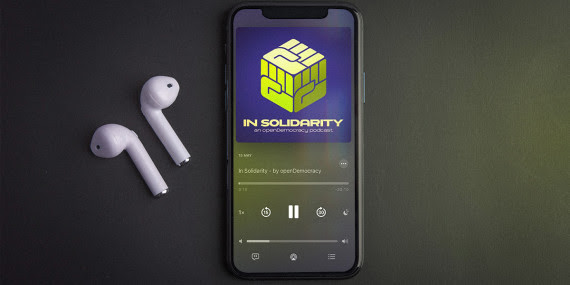
These are just a few of the questions that we’ve put to leading thinkers, frontline activists, and global experts on our new podcast, In Solidarity, over the past six months.
 
In Solidarity is a podcast for people who understand that politics doesn’t just happen in the halls of power. Every show, we tackle a new theme to uncover how authoritarianism spreads, who is benefiting from fear, and how solidarity is evolving into resistance movements around the world.
 
To ensure you never miss an episode of In Solidarity, subscribe to get an email notification whenever a new one is released. 
Subscribe to episode notifications
 

Anne shared how she had been abused at the hands of the caretaker, gave the project permission to refer her statement to the police, and waited.

A catalogue of failings

An administrative error by the Truth Project meant it would be three years before Anne received a response. In 2021, the Defence Serious Crimes Unit – then known as Special Investigations Branch – of the Royal Military Police finally opened an investigation into her allegations.

“The whole process has been disempowering from the beginning,” Anne said. From the outset, she explained, officers seemed more concerned about establishing whether they had jurisdiction over the case than investigating what was going on in the school at that time.

“It feels deeply inhuman the way the police responded to us, which given the nature of the prolonged sexual abuse we suffered in the confines of a British military school adds insult to injury.”

The police told Anne that they needed a second victim to “clarify and confirm” her experience, so she told them about her schoolfriend.

It would be two years before the RMP located Jane. Out of the blue, a police officer turned up on the doorstep of her father, whom she had never told about the abuse, and asked for her whereabouts.

“It sent me into a spiral,” Jane said. “I then had to decide whether to lie to my parents and construct a scenario explaining why the police had come to their house. Or I would, after 43 years, have to tell them about the abuse.”

Jane described how she felt “ambushed”.

Anne had experienced something similar. At the start of the investigation, she told the RMP that she did not want them to speak to her parents until the jurisdiction issue was resolved.

“I didn’t want my elderly parents to know. The police then told me it was okay to go ahead with the interview, so I assumed this meant they had jurisdiction,” she said. “They hadn’t. They interviewed my parents for nothing.”

In July 2024, the RMP closed the investigation, informing Anne and Jane via a five-minute phone call. The case was referred to the German authorities, who in May 2025 said they could not investigate due to the statute of limitations on child sex offences.

The military police never interviewed the suspect – a decision that Anne and Jane have been given no explanation for. They told openDemocracy that they feel that the RMP was “running down the clock” on approaching the suspect, as he is now elderly with multiple health issues...

You can read the rest of this investigation here.


COMMENTS

Sign in 💬

Our award-winning journalists can now respond directly to your comments underneath the articles on our site!

Just sign in or register underneath any of our articles to start leaving your thoughts and questions today.

Sign in and join the conversation

MORE FROM OPENDEMOCRACY

Weekly Newsletter
The Dark Arts
Bluesky Facebook X / Twitter Mastodon Instagram YouTube


openDemocracy, 18 Ashwin Street London, E8 3DL United Kingdom

Unsubscribe