If someone forwarded you this email you can subscribe. View in web browser.

Hi ,

In November, the UK home secretary Shabana Mahmoud published a new asylum and returns policy which aims to end the automatic right to family reunion for people fleeing war, conflict and persecution.

The decision will intensify refugees’ trauma and suffering, creating “an additional level of cruelty” for refugees, a family therapist working with survivors of torture told us. 

Read more below.

- openDemocracy

 
EDITOR'S PICKS
 
1
Europe is paying Libya to torture migrants on its behalf

On a rescue ship in the Mediterranean, a survivor tells of their detainment in Libya, which the EU helped to support Read more...

2
‘A flash in the pan’: The end of Gabriel Boric’s government in Chile

Chile’s presidential run-off is looming, and the left’s hopeful, Jeanette Jara, is distancing herself from government Read more...

3
PODCAST: Inside the Your Party conference

Investigative reporter Ethan Shone tells what the mood was like among the party members following months of public spats and PR disasters. Spotify | Apple


FEATURED STORY

UK plans add ‘new layer of cruelty’ for asylum seekers, expert warns

Sian Norris

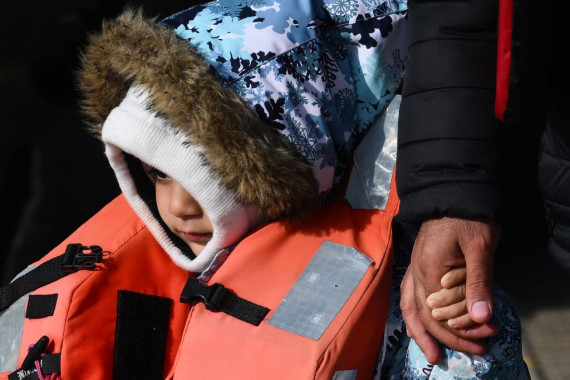
The government’s decision to end the automatic right to family reunion for people fleeing war, conflict and persecution creates “an additional level of cruelty” for refugees, a family therapist working with survivors of torture has told openDemocracy.

Shaheen Syedain, who works for Freedom from Torture, warned of the impact that Labour’s sweeping changes to the asylum system will have.

Under the previous rules, an individual who had been granted refugee status in the UK could apply for their family members to join them, which was one of the few safe and legal routes for people to travel to the UK to seek asylum.

But in September 2025, the government temporarily closed the family reunion route to new applications. Two months later, home secretary Shabana Mahmoud published a new asylum and returns policy, which aims to end the automatic right to family reunion. Going forward, cases will be assessed on an individual basis and will be linked to criteria such as earnings.


Will you help defend democracy?

A world in turmoil needs fearless, independent investigative journalism that can overcome censorship and hold power to account. 
That’s the kind of media you deserve – and you can support it when you donate to openDemocracy today. When you give today, you can:
  • Keep openDemocracy free to read for everyone
  • Provide our team with the support they need to work safely in a dangerous world
  • Deliver the reporting that matters to you – and that reaches as many people as possible
Please support independent non-profit journalism by donating today.
Please donate now
 

More than 20,800 people received refugee family reunion visas in the year ending June 2025, a 30% increase on the previous year. The majority were women and children, most of whom were arriving from Syria, Iran, and Afghanistan.

Many of those who applied to bring their family over arrived in the UK via irregular means, such as crossing the Channel on a small boat. As the journey is so dangerous, young men often travel alone to claim asylum, before bringing their families over safely on the reunification visa.

The far right has increasingly stigmatised the young men who make this journey as “fighting age men”, with the suggestion being that they are a threat or an “invasion”. But the reality is many are teenagers struggling with the trauma of “missing their parents and missing their families”, said Syedain.

Family separation, said Syedain, makes it harder for individuals to “concentrate on their own recovery because they are still inside the trauma of the separation from their families”.

“They’re so fearful for the safety of their families at home, and often rightly so,” she said. That fear, she added, is often combined with trauma linked to guilt “for having left family members behind, and guilt for not being able to look after them the way they want to”.

Syedain continued: “This is a huge part of what these young people experience and carry with them into adulthood. They have these experiences of both being emotionally quite young, because they've been torn away from their families at a very young age and had important attachments interrupted. On the other hand, they're incredibly mature and streetwise, because they've had to look after themselves in all sorts of ways.”

In some cases, it is the family member who is most at risk who journeys first to the UK, such as a parent who has faced persecution or torture. They can then struggle to explain to their children why they have been separated, because, Syedain explained, “most parents obviously don’t say to their children, ‘oh, your father was tortured, that’s why he escaped.’”

She added: “And then years later, they are reunited, and dad is nothing like he was before. Parents do their best to try and kind of tell a story about why it is, or say nothing. When that happens, children try to fill in the gaps.”
 
Is MAGA a religion? Why has protest been criminalised in England and Wales? Who is profiting from anti-immigration sentiment? And how can we engage with young men who’ve fallen down the alt-right pipeline? 
 
These are just a few of the questions that we’ve put to leading thinkers, frontline activists, and global experts on our new podcast, In Solidarity, over the past six months.
 
In Solidarity is a podcast for people who understand that politics doesn’t just happen in the halls of power. Every show, we tackle a new theme to uncover how authoritarianism spreads, who is benefiting from fear, and how solidarity is evolving into resistance movements around the world.
 
To ensure you never miss an episode of In Solidarity, subscribe to get an email notification whenever a new one is released. 
Subscribe to episode notifications
 

Similarly, those who travel to the UK, especially adolescent boys, can experience a sense of estrangement from parents and siblings who have stayed behind, as “they have had these incredibly different, different experiences,” explained Syedain.

“Families have so much hope for the coming together moment, and then find they've changed as people. Children have grown up without one parent. They don't really know the other parent. They've got to get to know that parent again.”

There is, she said, “so much to deal with, and in a situation where you have been looking forward to this thing for years and have invested so much into the reunion.”

To help families manage the complexities of reunion, Syedain offers family therapy sessions where “they have that space to think about what they can and can't share, and to help parents work out how to tell their children things that are truthful but are not necessarily the whole truth.” Children, she said, “don't need to know the details,” but they need a narrative that is coherent.

Alongside the changes to family reunion, the government’s paper on immigration includes reforms such as requiring refugees to wait longer before getting indefinite leave to remain and to reapply for their refugee status every two and a half years up until that point.

The government also plans to return refugees once their country is considered safe, a proposal modelled on Denmark’s controversial returns policy.

A Home Office spokesperson said: “Under this Government’s reforms to create a fairer asylum system, family reunion will no longer be automatic. Those seeking to bring family members to the UK will need to meet stricter criteria going forward. Other routes will be available for eligible individuals to apply to reunite with family.”

“People just want to be together with their families,” Syedain said. “There is this really strong desire, understandable desire, to be together with your family members. This will be devastating for some of our clients.” 


COMMENTS

Sign in 💬

Our award-winning journalists can now respond directly to your comments underneath the articles on our site!

Just sign in or register underneath any of our articles to start leaving your thoughts and questions today.

Sign in and join the conversation

MORE FROM OPENDEMOCRACY

Weekly Newsletter
The Dark Arts
Bluesky Facebook X / Twitter Mastodon Instagram YouTube


openDemocracy, 18 Ashwin Street London, E8 3DL United Kingdom

Unsubscribe