If someone forwarded you this email you can subscribe. View in web browser.

Hi ,

In Ghana’s markets, the oft-repeated claim that “Ghanaians and Nigerians are brothers” is under strain. The government has taken a customs and levies approach that is proving impossible to enforce.

In Accra’s Abossey Okai market, where Ghanaian and Nigerian traders work side by side, tensions have escalated as Nigerians find their businesses systematically locked up by local trade unions.

Read more below.

- openDemocracy

 
EDITOR'S PICKS
 
1
‘A flash in the pan’: The end of Gabriel Boric’s government in Chile

Chile’s presidential run-off is looming, and the left’s hopeful, Jeanette Jara, is distancing herself from government Read more...

2
UK plans add ‘new layer of cruelty’ for asylum seekers, expert warns

The decision to end the automatic right to family reunion will intensify vulnerable refugees’ trauma and suffering Read more... 

3
PODCAST: Inside the Your Party conference

Investigative reporter Ethan Shone tells what the mood was like among the party members following months of public spats and PR disasters. Spotify | Apple


FEATURED STORY

In Ghana’s markets, ‘brotherly bonds’ with Nigeria are being tested

Esther Appiah-Fei

While diplomats and locals alike repeat the mantra “Ghanaians and Nigerians are brothers”, in Accra’s major market centres, this bond of regional brotherhood is severely strained.

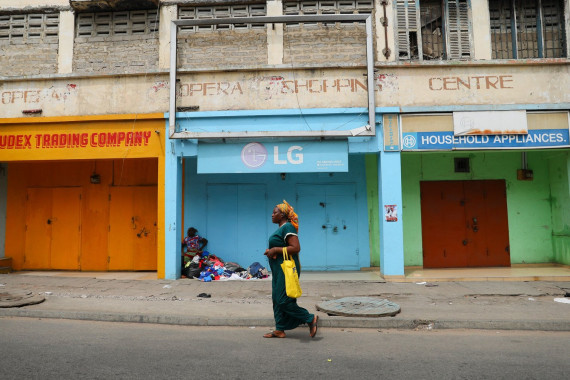
The Ghanaian capital’s sprawling Abossey Okai spare parts market, where Ghanaian, Nigerian, and other foreign traders operate inches apart, is now in a state of constant tension. Nigerians – the market’s single largest group of foreign retailers – are finding their businesses systematically locked up by frustrated local trade unions.

The friction is part of a historical pattern of retaliatory policy between the two West African nations. While the 1983 ‘Ghana Must Go’ expulsion from Nigeria is famous, the precedent for mass deportation was set by Ghana more than a decade earlier. In 1969, Ghana invoked the Aliens Compliance Order to remove millions of migrants, mostly Nigerians, citing their dominance in the local economy. This was followed in 1979 by state-led ‘house-cleaning’ exercises that targeted the retail class, effectively shifting much of the trade into the informal sector.

Under the Ghana Investment Promotion Centre Act 2013, foreign nationals must meet a $1m minimum equity to trade in Ghana. The law also explicitly bars non-citizens and businesses not wholly owned by citizens from participating in the country’s retail sector.


Will you help defend democracy?

A world in turmoil needs fearless, independent investigative journalism that can overcome censorship and hold power to account. 
That’s the kind of media you deserve – and you can support it when you donate to openDemocracy today. When you give today, you can:
  • Keep openDemocracy free to read for everyone
  • Provide our team with the support they need to work safely in a dangerous world
  • Deliver the reporting that matters to you – and that reaches as many people as possible
Please support independent non-profit journalism by donating today.
Please donate now
 

Yet, Nigerians are continuing to do so – and successive governments have struggled to stop them.

Tempting as it is to see the current tensions simply as a case of ‘uncontrolled migration’ and unenforced laws, Nigerian traders have dominated markets in much of Western Africa since the pre-colonial period.

“In the 1930s, a man’s cover cloth made of kejipa cost around 3/- in Nigeria,” writes the anthropologist J.S Eades in Strangers and Traders: Yoruba Migrants, Markets and the State in Northern Ghana. “This could be sold for 5/- in French territory or for 7/- in Ghana. After 1945 the price rose to 7/- in Nigeria and 15/- or more in Ghana.”

The trading communities and commodities traded across the borders of Ghana and Nigeria have changed, but the deep kinship networks supporting this cross-border continue to move goods, capital, resources and know-how far more efficiently than through official channels.

Ghana’s struggles to protect its local industry in the context of the relatively free movement of goods and people across West Africa will sound familiar to policymakers across the world as they struggle to impose outdated national legal frameworks in a world of globalised trade and transport.

The enforcement gap

In theory, Ghana’s imports and customs regime ought to help Ghanaian traders fight off competition from their peers in the rest of the region by forcing their Nigerian counterparts to rely on a grey market of middlemen who offer their services for a fee. But customs clearing agents, speaking to openDemocracy on the condition of anonymity, said the reality is more complex.

Despite Ghana’s long coastline, some of the Nigerian goods in Ghana’s markets reach the continent through ports in neighbouring Benin and Togo, where import fees are lower and are then hustled across the border, the customs agent said. “Then, when the goods reach Ghana Customs, we, the clearing agents, negotiate on their behalf for a lower amount because we know they cannot pay the full duty.”

Each stage in this complicated journey, academic research indicates, is driven by kinship networks between Nigerian traders dispersed across Ghana, Nigeria, Benin and Togo.

So even though the nationality of a trader in Ghana’s spare parts market should not give them any distinct advantage in the price of their goods, a mixture of taxes, travel routes, and informal negotiations favours Nigerian traders.

This difference makes it nearly impossible for the local industry to make as much money. As Benjamin Takyi Addo, spokesperson for the Abossey Okai dealers, told openDemocracy: “With all these dynamics, there is no way you can compete with the Nigerians.”

As a consequence, Ghanaian traders are urging their government to enforce local laws more rigorously.

As in Ghana’s housing market, where residential landlords often prioritise renting to returning diasporans who can afford higher prices, further pricing out locals, retail landlords prefer to rent their shops to the highest-bidding foreign trader, with many valuing their profits over compliance.

Ghanaian trade leaders say that the laws intended to combat this are rendered ineffective by a combination of domestic complicity and weak state enforcement.

One big issue the authorities face in any crackdown is obtaining accurate data on the number of foreign nationals trading spare parts at the market, says Takyi Addo. Some Nigerians register their businesses in their Ghanaian partners’ names, making it difficult to track who actually owns or manages the shops.

“When interministerial task forces from the National Intelligence Bureau, immigration, military, and customs try to close down shops, they get disappointed because the association does not have the accurate data for the government to carry out its mandate and operations,” Takyi Addo told openDemocracy.

 
Is MAGA a religion? Why has protest been criminalised in England and Wales? Who is profiting from anti-immigration sentiment? And how can we engage with young men who’ve fallen down the alt-right pipeline? 
 
These are just a few of the questions that we’ve put to leading thinkers, frontline activists, and global experts on our new podcast, In Solidarity, over the past six months.
 
In Solidarity is a podcast for people who understand that politics doesn’t just happen in the halls of power. Every show, we tackle a new theme to uncover how authoritarianism spreads, who is benefiting from fear, and how solidarity is evolving into resistance movements around the world.
 
To ensure you never miss an episode of In Solidarity, subscribe to get an email notification whenever a new one is released. 
Subscribe to episode notifications
 

Around 96% of Ghana’s retail activity takes place in the informal sector, and state agencies lack a centralised database or “clearer register of foreign players”. Government officials are forced to rely on the traders’ association for information, essentially handing the state’s authority over to those demanding the evictions.

Since the trade law is difficult to enforce without good data, Joseph Obeng, the president of the Ghana Union of Traders’ Association, suggests a more direct solution: focusing on immigration compliance. He argues that while business capital is hard to verify, a trader’s legal status is not. Under Ghanaian law, foreign nationals need work permits tied to a specific employer; they cannot simply set up their own shops without legal documentation.

Obeng also notes that landlords can be punished for renting to traders without proper documents. By targeting these permit violations and the landlords involved, he believes Ghanaian officials can legally clear the markets. This allows them to bypass the messy complications of the investment law.

However, the core weakness in Ghana’s enforcement effort is the political hesitation to pursue prosecution. “The problem is multifaceted and a lack of commitment from the policy makers,” Obeng told openDemocracy.

Although he frequently leads these task forces himself to shut down non-compliant shops, Obeng insists it is not the duty of traders to act as the police. “Theirs is to trade, make money, and support their families, but that has been the case for most GUTA associations because the Ghana Investment Promotion Centre Act isn’t being enforced.”

This reluctance is often reinforced by diplomatic pressure. Nigerian officials have previously swiftly intervened when Nigerian-owned shops have been shut down by the state’s inter-ministerial task force and GUTA, particularly during major enforcement exercises in recent years.

One of the most notable instances occurred in September 2020, after the extensive closure of Nigerian-owned shops in Accra and Kumasi. The Nigerian government responded by sending a high-level delegation to Ghana on a legislative diplomacy mission led by the then speaker of the Nigerian House of Representatives, Femi Gbajabiamila, who met with his Ghanaian counterpart, Alban Bagbin, as well as senior government officials, including the former minister of trade and industry, Alan Kyerematen.

Gbajabiamila’s delegation proposed a bilateral “friendship act” aimed at easing trade frictions between the two states, which faced strong opposition from GUTA. Despite the high-level parliamentary discussions, the proposed bill has stalled and has not been enacted into law.

Benjamin Kwaku Asiam, the national coordinator of the African Continental Free Trade Area’s (AfCFTA) National Coordination Office, an agency under Ghana’s Ministry of Trade and Industry, urged Ghanaian traders “not to engage in forcibly closing shops but rather report misappropriators to the law instead”.

Asiam said his office focuses on achieving a borderless Africa through increased exports and imports, adding that he “condemns the forcible closure of stores” and that only “governmental diplomatic dialogue with GUTA will advance the issue”.

While the AfCFTA encourages the free movement of goods, Asiam said the Ghana Investment Promotion Centre Act was mainly passed to promote international manufacturing and technology transfer, leaving retail as a sector mainly reserved for Ghanaians. He noted that even Nigeria has a prohibitions list for certain business activities by foreign nationals, which he acknowledged “is not ideal under World Trade Organisation protocols”.

openDemocracy contacted the Ghana Investment Promotion Centre 12 times for comment on the ongoing retail-sector disputes, but the centre did not respond.

In August 2025, President John Mahama announced at the Japan-Africa summit that the $1m requirement for foreign companies will be scrapped, much to the opposition of the Ghanaian Union of Traders Association. There is no announced timeline for when this will happen.

“The $1m threshold has been a blunt instrument, a deterrent that discouraged investment without meaningfully safeguarding local traders. Removing it will allow more diverse players into the market, stimulating growth and innovation in retail,” says the Imani Center for Policy and Education, a Ghanaian public policy think tank, in an editorial.

“The structure of retail trade is shifting away from open markets towards digital platforms and organized centers. In this context, GUTA’s insistence on protecting traditional trading turf appears increasingly counterproductive,” the editorial further explained.

The economic pressure

James Peter K’Duah is a Ghanaian auto spare parts retailer who joined his uncle in 2007 to learn the trade, before inheriting the business in 2012. K’Duah’s journey mirrors Ghana's shifting economic fortunes...

You can read the rest of this article here.


COMMENTS

Sign in 💬

Our award-winning journalists can now respond directly to your comments underneath the articles on our site!

Just sign in or register underneath any of our articles to start leaving your thoughts and questions today.

Sign in and join the conversation

MORE FROM OPENDEMOCRACY

Weekly Newsletter
The Dark Arts
Bluesky Facebook X / Twitter Mastodon Instagram YouTube


openDemocracy, 18 Ashwin Street London, E8 3DL United Kingdom

Unsubscribe