If someone forwarded you this email you can subscribe. View in web browser.

Hi ,

Your Party’s first-ever conference was messy and sometimes tense, but also a rare glimpse of real democratic engagement in UK politics. Instead of slick staging and scripted speeches, members debated and crowd-edited the party’s founding documents, voting on dozens of amendments both in person and online before final ratification.

It was chaotic, imperfect, and — to some — a sign of genuine political hope.

Read more below.

- openDemocracy

 
EDITOR'S PICKS
 
1
With UK politics in flux, Your Party may well surprise you yet

Last weekend, two very different Your Party conferences took place: the one reported on in the press, and the real one Read more...

2
The quiet crisis at the heart of British democracy

Our politics have changed, but our voting system remains the same – and it’s holding us back Read more... 

3
PODCAST: Inside the Your Party conference

Investigative reporter Ethan Shone tells what the mood was like among the party members following months of public spats and PR disasters. Spotify | Apple


FEATURED STORY

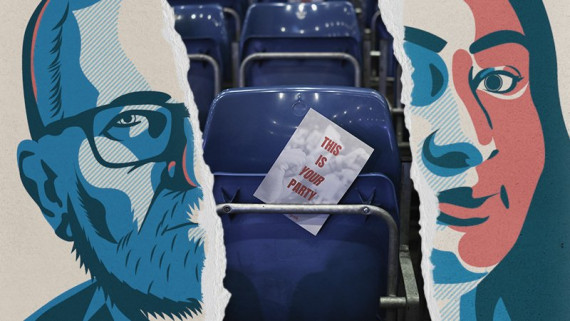
Hope amid chaos: Inside Your Party’s inaugural conference

Ethan Shone

Zarah Sultana quoted Gramsci twice last weekend: “The old world is dying, and the new world struggles to be born: now is the time of monsters.”

The first time she cited the Italian theorist was in a clammy conference room on the second floor of a Holiday Inn in Liverpool city centre, where she’d gathered her supporters on the eve of Your Party’s founding conference. The mood was tense and sparky, partly because, hours earlier, one of her co-speakers was among those expelled from the party and barred from the conference.

The second time was on the conference mainstage on Sunday afternoon: her supporters reinstated, her major party proposals accepted, and her will asserted over Britain’s biggest new socialist party in generations.

If 32-year-old former Labour MP Sultana saw her place in history as willing this new world into existence, and her monsters were easy to spot – the hard-right is ascendant as it has been in modern British history – it was hard not to see the ‘old world’ in her 76-year-old Your Party co-founder, the most successful and recognisable British socialist of the modern era, former Labour leader Jeremy Corbyn.


Will you help defend democracy?

A world in turmoil needs fearless, independent investigative journalism that can overcome censorship and hold power to account. 
That’s the kind of media you deserve – and you can support it when you donate to openDemocracy today. When you give today, you can:
  • Keep openDemocracy free to read for everyone
  • Provide our team with the support they need to work safely in a dangerous world
  • Deliver the reporting that matters to you – and that reaches as many people as possible
Please support independent non-profit journalism by donating today.
Please donate now
 

Over the course of a messy, fractious and difficult conference, Sultana sought to draw the curtain on Corbynism as the headline turn of the British left, and set the stage for its next act.

But last weekend was not a complete victory for Sultana the individual or Sultanaism, not least as Sultanism does not yet exist as a fully formed, coherent political platform. Some of her own supporters still have questions about the future of Your Party, and Corbyn remains an influential force; even among Sultana’s most ardent backers, there are few who would relish his complete exit from the project.

It was instead a victory for the members of this fledgling formation who, having watched in horror for months as it teetered on the brink of self-destruction, now voted for a new type of party, fronted by two charismatic and talented politicians but in theory free of the pitfalls of personality politics (members voted against having one leader, instead opting for a collective leadership model led by a Central Executive Committee).

There was still plenty of acrimony in the air over the blustery weekend in Liverpool, as Corbyn and Sultana’s various aides and supporters fought pitched battles via conference motions, WhatsApp groups and press briefings. But there was also genuine excitement and the oft-expressed hope that a better, different kind of political party could deliver a better, different kind of future.

Though in the face of this at-times chaotic conference, it would be easy to write off the whole experiment as typical leftie grandstanding, it should be noted that it is not every day that a political project arrives quite so fully formed. Your Party has a growing number of councillors, only one fewer MP than Nigel Farage’s Reform UK (and there are rumours of it gaining more with impending defections), and similar membership figures to the long-established Green Party before its recent surge.

A different kind of conference

Contrasted with a conventional political conference, the main hall at the Your Party conference looked ramshackle: a handful of makeshift stands and hospitality carts around its perimeter, a smattering of chest-height silver tables in one area and two banks of 60 or so seats arranged in front of a projector screen in another.

The last major conference I attended was Reform’s, back in August, where the first conversation I’d had was with a man employed by Direct Bullion, who directly tried to sell me gold bullion. He was manning a huge conference stand for which his employer, who also has Farage on its payroll, had paid tens of thousands of pounds.

The only private company with a visible presence at the Your Party conference was the radical publisher Pluto Press. It had a small table laid out with books about the history of the left in the Labour Party.

Beyond the main hall was the auditorium, where a few thousand socialists faced a large stage adorned with Your Party banners and a giant screen.

Liverpool nurse and councillor Lucy Williams opened the proceedings with a rousing speech in which she described the party as being “Scouse enough to terrify the establishment”.

Then came the party’s spiritual leader: “Good morning. I’m Jeremy Corbyn, and I’m a political activist.”

In this, the first of two speeches he’d give from the main stage over the weekend – one more than Sultana, as her supporters were keen to point out – Corbyn acknowledged, in a roundabout way, the difficulties the project had faced in getting to this point.

“There’s no handbook on how to set up a political party, but after this experience I might write one,” he joked, prompting someone within my earshot to whisper: “What Is To Be Done *literally* exists”.

“I’m sure there are easier ways we could have done it,” he continued, which is true, but downplayed the many significant ways in which Your Party has tried to be as democratic and inclusive as possible, even in spite of some teething problems.
 
Is MAGA a religion? Why has protest been criminalised in England and Wales? Who is profiting from anti-immigration sentiment? And how can we engage with young men who’ve fallen down the alt-right pipeline? 
 
These are just a few of the questions that we’ve put to leading thinkers, frontline activists, and global experts on our new podcast, In Solidarity, over the past six months.
 
In Solidarity is a podcast for people who understand that politics doesn’t just happen in the halls of power. Every show, we tackle a new theme to uncover how authoritarianism spreads, who is benefiting from fear, and how solidarity is evolving into resistance movements around the world.
 
To ensure you never miss an episode of In Solidarity, subscribe to get an email notification whenever a new one is released. 
Subscribe to episode notifications
 

In recent months, the party has held a series of in-person rallies, where members could discuss its founding documents and propose amendments to them. These documents were then published online, with members able to propose further amendments through a crowd-editing portal. This process was followed by a series of debates at the conference, with both members attending in person and online able to vote on more than two dozen proposed amendments, before finally ratifying the documents in their entirety.

“This way,” Corbyn explained from the stage, “we’re drawing directly on the expertise of the more than 50,000 people who have joined Your Party. Putting power in members’ hands is essential if we are to build a society in which power and wealth are redistributed to all.”

Delegates were selected to attend the conference by sortition, essentially a lottery-style system carried out by an independent third party, which is designed to result in a selection representative of the membership as a whole.

As one source put it: “It was a monumental, gargantuan, herculean effort, only made possible by a huge number of volunteers working without pay in extremely trying circumstances.”

Ghosts of Labour past

The open-source style politics on display at the conference were in stark contrast to the months of opaque backroom dealings that preceded it.

Plans for a new party had been underway for the best part of two years, initiated by people close to Corbyn, including his long-time ally Karie Murphy, a trade unionist and political strategist who was Corbyn’s chief-of-staff while he was Labour leader, and the well-heeled leftwing operative James Schneider, Corbyn’s former comms director, who assembled activists and politicians from across the left in the months before the 2024 general elections.

The project got underway in earnest soon after the election, with the first signs that Keir Starmer’s mega majority did not reflect a widespread enthusiasm for his Labour Party.

The process for forming a new party was started by Collective, an organisation co-founded by Murphy. People who attended its meetings say they left feeling optimistic, but worried that the operation had the same dysfunctional working style as the Labour leadership under Corbyn, and had issues with Murphy’s abrasiveness.

Some of these people decided to launch a new organisation: the MoU, named for a document drafted by Jamie Driscoll, the ‘technocratic socialist’ former mayor of North of Tyne, who played a central role in this period but has since distanced himself. Crucially, the MoU had Corbyn’s blessing and involvement – which some wrongly interpreted as him agreeing that Murphy would have no role in a future party.

The MoU made considerable headway, commissioning polling on different names (including, to the continued amusement of some involved, Robin Hood) and attempting to set out a clear political and organisational basis for the party. But some members bristled at what they felt risked becoming a tribute to Corbyn’s legacy, rather than something new.

Eventually, Corbyn insisted that the two operations running in tandem must be merged together, resulting in a group called the Organising Committee, which brought in more figures from across the political left, including climate activists and renters rights campaigners, and the four independently elected MPs who, along with Corbyn, had banded together in Parliament to form ‘The Independent Alliance’.

Throughout this period, Sultana was, in the words of one source, “the shoe waiting to drop.” If Corbyn is the past and present of British socialism, Sultana is almost universally recognised as its future.

To one source involved at the time, “that the two should both be central was almost self-apparent as soon as it became an option.” But it was easier said than done.

You can read the rest of this article here.


COMMENTS

Sign in 💬

Our award-winning journalists can now respond directly to your comments underneath the articles on our site!

Just sign in or register underneath any of our articles to start leaving your thoughts and questions today.

Sign in and join the conversation

MORE FROM OPENDEMOCRACY

Weekly Newsletter
The Dark Arts
Beyond Trafficking and Slavery 
Bluesky Facebook X / Twitter Mastodon Instagram YouTube


openDemocracy, 18 Ashwin Street London, E8 3DL United Kingdom

Unsubscribe