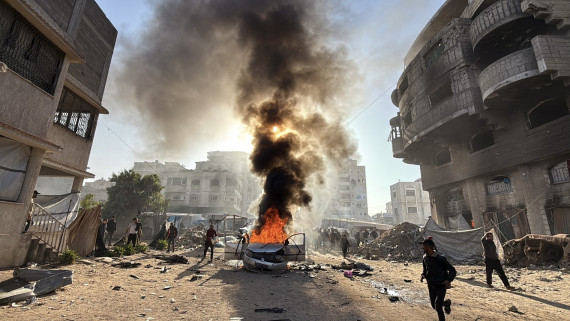
The Israeli Defence Forces (IDF) are allowing some aid into this area, but at levels far below what is needed. Similarly, some hospitals are still open, but they are seriously limited in what they can offer. The World Health Organisation is reporting multiple problems across the whole of the Red Zone, such as trauma and injuries, malnutrition, infections, mental health conditions and complications with maternal and neonatal health.
Moreover, it is now winter. The rain, wind and cold are making living conditions for Palestinians appalling, especially since many are crowded into tents or hastily constructed shelters in ruined buildings.
Beyond the Red Zone is the Yellow Zone, a narrow strip of land. Beyond that is the Green Zone, which makes up the majority of the Gaza Strip but which Israel has largely depopulated, with few Palestinians remaining. The Green Zone is under full IDF control, and any Palestinians trying to move there from the Red Zone are likely to be killed. The IDF is also now slowly encroaching on the Red Zone, further restricting the area into which the Palestinians are crowded.
Adding to the catastrophe, IDF air strikes continue. Over 12 hours on 20 November, Israel killed 33 people, mainly women and children, and wounded many more in attacks in Gaza City and Khan Younis, a city in the south of the Gaza Strip, according to local medical officials. Since the ceasefire started last month, Gaza authorities have reported close to 500 ceasefire violations, which have killed 339 Palestinians and wounded 871.
The overall picture is that Israeli prime minister Binyamin Netanyahu can do what he chooses, with the tacit agreement of the Trump administration, regardless of what both leaders are saying in public.