If someone forwarded you this email you can subscribe. View in web browser.

Hi ,

As world leaders gather in Belém for COP30, much of the focus is on cutting greenhouse gas emissions. But one crucial issue remains overlooked: the surge in mining for the minerals that power the green transition.

Nickel, cobalt, and lithium are essential for electric vehicles and renewable energy — yet their extraction is already devastating communities and ecosystems worldwide. From Indigenous water shortages in Argentina’s salt flats to deforestation in Indonesia and child labour in Congo’s cobalt pits, the cost of ‘clean’ energy is anything but clean.

Read more below.

- openDemocracy

 
EDITOR'S PICKS
 
1
Thirty years after execution of the Ogoni Nine, the fight for justice continues

‘When your environment is polluted, it’s destroyed, and you no longer have the right to live’ – Ken Saro Wiwa Read more...

2
‘An indictment of the trade union movement’: Why no one is organising seasonal workers

Farm workers go on unofficial strikes as their temporary visas create barriers to union membership Read more...

3
PODCAST: How Labour is reducing consumer protections | With Ethan Shone

What can we learn about the future of consumer rights from the merger between Microsoft and Call of Duty publisher Activision Blizzard? Spotify | Apple


FEATURED STORY

The missing piece in COP30’s climate plan

Emily Iona Stewart

This week, thousands of activists, politicians and scientists have arrived in Brazil for COP30, the annual climate summit. As global temperatures rise, and the world experiences flash flooding, the pressure is on for world leaders in Belém to forge a unified plan to stop the climate crisis.

But while most of COP will rightly focus on the effects of greenhouse gas emissions on global warming, a new issue is emerging that has, as yet, been overlooked: the mining of critical minerals that are key to the green transition.

A decade after the Paris Agreement, the world’s shift away from fossil fuels has triggered a new global race; this time, for the critical minerals that underpin renewable technologies. From electric vehicles to wind turbines, minerals such as nickel, cobalt, and lithium are essential to manufacturing these technologies. But unless mineral extraction is governed in line with climate, environmental and human rights goals, the so-called ‘green’ transition risks deepening inequality, driving deforestation, and undermining the very climate objectives it seeks to achieve.

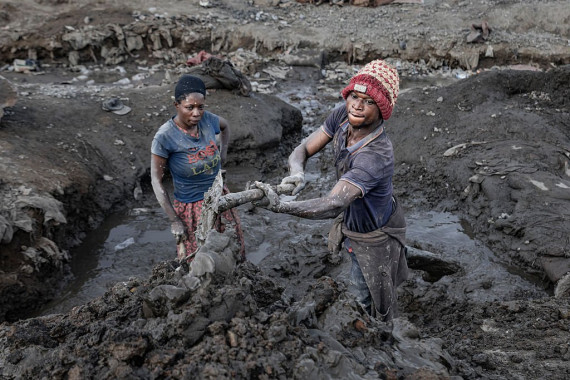
Around the world, communities, the environment and our climate are already paying the price of our demand for ‘clean’ energy. In the high Andean salt flats of Argentina, Indigenous communities have seen their water supplies depleted by lithium brine extraction. In Indonesia, expanding nickel mines threaten fragile forests that store vast amounts of carbon. In the Democratic Republic of Congo, children as young as five work in extremely dangerous conditions in cobalt pits that have displaced entire communities and contaminated local water sources. These are not isolated stories; they are symptoms of a system that is based on extractivist practices.


Will you help defend democracy?

A world in turmoil needs fearless, independent investigative journalism that can overcome censorship and hold power to account. 
That’s the kind of media you deserve – and you can support it when you donate to openDemocracy today. When you give today, you can:
  • Keep openDemocracy free to read for everyone
  • Provide our team with the support they need to work safely in a dangerous world
  • Deliver the reporting that matters to you – and that reaches as many people as possible
Please support independent non-profit journalism by donating today.
Please donate now
 

That is why civil society is calling for a new tool, the Belem Action Mechanism, to be proposed under the UN’s Just Transition Work Programme. The ‘BAM’ would unite Just Transition efforts, coordinating them and turning them into real action. But it must not become another symbolic gesture. It should serve as a global accountability framework – linking governments, companies, and civil society to monitor how transition minerals are sourced, traded, and used. This mechanism should help countries design national plans for responsible mineral production and processing, incorporating emissions targets, human rights, and environmental safeguards into every stage of the supply chain.

But accountability must also be forward-looking. Brazil has suggested that this COP will move us away from ‘negotiation’ and into ‘implementation’. A proposed roadmap should look not just at how minerals are mined, but also how they are recycled, shared, and substituted. Investing in circular economy models, strengthening transparency, and the previously promised transfer of technology to lower-income countries are essential steps. Without this, the transition risks entrenching the same global inequalities that defined the fossil fuel age.

 

FILM SCREENING

openDemocracy is thrilled to present COLOSSAL WRECK, a feature documentary following filmmaker Josh Appignanesi as he journeys into the depths of the COP climate conference in Dubai.
 
Are these enormous get-togethers all about false promises that hinder change? Or are they the only hope we've got for world-saving unity?
 
Join us for a film-screening at the Castle Cinema, followed by a conversation between Appignanesi and openDemocracy’s Editor-in-Chief, Aman Sethi.
 
To get your special openDemocracy discount please use the code COP28 at checkout.
Click here to book while tickets are still available
 

We will achieve true decarbonisation only if the world agrees on pathways for responsible mineral use; pathways that ensure there is enough to go around, that resource-rich countries can reach their own electrification goals, that protect the rights of those living closest to extraction sites, that prevent new and excessive CO2 emissions, and the destruction of fragile ecosystems like the Amazon itself.

This is a story about avoiding the mistakes of the fossil fuel era, ensuring the clean energy revolution doesn’t repeat the same extractive injustices that got us here. As COP30 convenes in the heart of the Amazon, there is no better moment to connect climate ambition with the justice and governance needed to make it real.


COMMENTS

Sign in 💬

Our award-winning journalists can now respond directly to your comments underneath the articles on our site!

Just sign in or register underneath any of our articles to start leaving your thoughts and questions today.

Sign in and join the conversation

MORE FROM OPENDEMOCRACY

Weekly Newsletter
The Dark Arts
Beyond Trafficking and Slavery 
Bluesky Facebook X / Twitter Mastodon Instagram YouTube


openDemocracy, 18 Ashwin Street London, E8 3DL United Kingdom

Unsubscribe