If someone forwarded you this email you can subscribe. View in web browser.

Hi ,

In Hull, a city once powered by ships and industry but now struggling with high unemployment, a youth centre in an old fire station has become an unlikely front line in the fight against far-right radicalisation.

At the Warren, youth workers are seeing a sharp rise in attempts by extremist groups to recruit disaffected young men — a trend fuelled by online influencers like Andrew Tate and political movements such as Reform UK.

As founder JJ Tatten tells us, the far right is "more targeted in the demographics they’re trying to reach".

Read more below.

- openDemocracy

 
EDITOR'S PICKS
 
1
‘We are all Charlie Kirk,’ said Nairobi vigil’s organisers. Kenyans disagreed

After two venue cancellations, a Nairobi vigil gathered barely a dozen people. So why did hosts delete posts about it? Read more...

2
He built a far-right men’s rights group, then he killed his ex

Pablo Laurta’s far-right Varones Unidos group had the support of national politicians. Then he went on a killing spree Read more...

3
PODCAST: Now that we have to say 'genocide' | With Lila Hassan
Did Western media manufacture consent for Israel's ongoing genocide of Palestinians in Gaza? Listen now...


FEATURED STORY

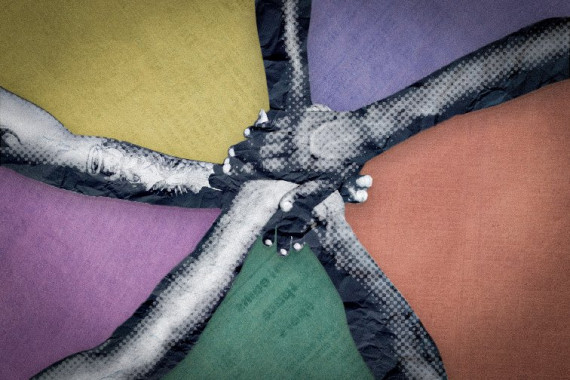
The former fire station fighting the far-right radicalisation of young men

Sian Norris

It’s 10am on a Thursday, and young people are already eagerly waiting outside the front door of an old Victorian fire station in central Hull. Inside is the Warren youth project, which has been supporting young people in the East Yorkshire port city for more than four decades. In recent years, though, it’s faced a new and growing challenge.

“We’ve always had the far right,” youthworker JJ Tatten tells openDemocracy. “But in the past six to seven years, we have seen a significant rise in far-right organisations being more targeted in the demographics they’re trying to reach.” One demographic is particularly vulnerable to these groups’ grooming efforts, he says: teenage boys.

From the influence of toxic ‘manosphere’ influencers such as Andrew Tate, who tells followers that women should “bear responsibility” for sexual assault, to the rise of far-right groups including Students Against Tyranny, and the increasing attempts by Reform UK to woo Gen Z male voters, concerns about the far-right radicalisation of young men in the UK are growing.

This pattern can be seen across much of the world. Donald Trump won last year’s US presidential election in part due to the votes of young men, whom he attracted with a MAGA message that fed on white male grievance and valorised a brutish form of masculinity. In Germany, a quarter of young men voted for the far-right Alternative für Deutschland party, and just over a fifth of the same demographic supports far-right parties across Europe.


Will you help defend democracy?

A world in turmoil needs fearless, independent investigative journalism that can overcome censorship and hold power to account. 
That’s the kind of media you deserve – and you can support it when you donate to openDemocracy today. When you give today, you can:
  • Keep openDemocracy free to read for everyone
  • Provide our team with the support they need to work safely in a dangerous world
  • Deliver the reporting that matters to you – and that reaches as many people as possible
Please support independent non-profit journalism by donating today.
Please donate now
 

In Hull, Tatten has seen the most extreme consequences of this trend. The city’s once-thriving fishing and shipping industries have been in decline since the 1970s, and today it faces high levels of deprivation, child poverty and youth unemployment. Against this backdrop, far-right gangs lure in young men by offering money, drink, drugs and clothes, as well as the promise of status and belonging, while far-right politicians vow to help them reclaim the power they believe they have lost.

The manipulation works, Tatten says, “because many young men do feel powerless. They are often, although they would not admit it, lonely. They are often not doing very well at school. They often find it difficult to communicate with their parents and guardians and women.” The far right plays on these insecurities, blaming women and minorities for the feelings of disempowerment. It tells “young men that women do not want you to have any power, that they’re trying to crush masculinity and don't want men to be men,” Tatten adds.

With a common enemy established, far-right political parties and gangs not only promise their young male recruits restored male power, but a community where they will be understood and can ask questions without being called stupid or air toxic views without feeling judged.

The politicians then scoop up their votes, often with little in the way of policy proposals, as was seen with Reform UK’s success across England’s local and mayoral elections in May this year. (In Hull and East Yorkshire, Reform candidate and former Olympic boxer Luke Campbell was elected mayor.) The gangs, on the other hand, demand their members follow orders, from committing criminal acts to bringing in new recruits to the cause.

Tatten believes this grooming is becoming more sophisticated, as the far right “become more considered and more forensic in the detail they take in enabling their manipulation of young men”.

It’s a bleak picture. But the Warren is a place of hope borne from effective solutions.

Building trust and community

The Warren offers a safe space for young men to discuss their emotions, express their fears and difficulties without being judged, and find a new community where they are valued for who they are, not for how they can be exploited. Its teams, including young people who have left extremist movements, build long-term, strong and trusting relationships with disenfranchised young men, helping them escape the trap of radicalisation.

 
Is MAGA a religion? Why has protest been criminalised in England and Wales? Who is profiting from anti-immigration sentiment? And how can we engage with young men who’ve fallen down the alt-right pipeline? 
 
These are just a few of the questions that we’ve put to leading thinkers, frontline activists, and global experts on our new podcast, In Solidarity, over the past six months.
 
In Solidarity is a podcast for people who understand that politics doesn’t just happen in the halls of power. Every show, we tackle a new theme to uncover how authoritarianism spreads, who is benefiting from fear, and how solidarity is evolving into resistance movements around the world.
 
To ensure you never miss an episode of In Solidarity, subscribe to get an email notification whenever a new one is released. 
Subscribe to episode notifications
 

“When a young man comes to us with these views, we do not initially say, ‘you’re wrong,’” Tatten explains. “We just say, ‘well, we don’t agree with that, but let's talk about something else.’ We talk about things like sports, gaming, music, social media. We build that trust and we address the other issues they have going on in their lives. Then once that relationship is established, we flip that extreme view. We say, ‘actually, do you know what? We've got a different view.’”

Everything the Warren does is centred on building a community where a young person has a place they belong. Crucially, that community is diverse: the Warren supports young people of all genders, sexualities, and from a range of ethnicities and nationalities.

“If you're spending time as a young person with somebody of a different ethnic background, somebody of a different gender, somebody of a different viewpoint, somebody with a different taste in music, somebody who likes to play a different game that you play, it's impossible to come to hate them,” says Tatten. “Propaganda doesn’t work on you anymore, because you've seen the real thing, and it enables you to see that it’s ridiculous. When you push that nonsense away, suddenly, these extremists have no foundation.”

The approach has won the Warren national attention. Next month, young people from the project will travel to 10 Downing Street to meet prime minister Keir Starmer’s team. Starmer put tackling the far right at the centre of his Labour Party conference speech in September, stating: “If you say or imply that people cannot be English or British because of the colour of their skin… then mark my words, we will fight you with everything we have.”

But Tatten has no illusions about the scale of the challenge in pushing back against far-right manipulation and exploitation of young men. This challenge is heightened by the impact of more than a decade of austerity on youth work and the growth of inequality and deprivation, particularly in former industrial and fishing hubs like Hull. Since 2011, youth clubs and youth workers in England and Wales have been cut by 69%, while the clubs that have survived report a growing number of young people seeking out such projects. Last year, the Warren helped more than 1,500 young people, which Tatten says is more “than the numbers we were getting through our doors before the pandemic”.

“The drastic cuts to youth services in the 2010s left many teenagers without the places and trusted adults to turn to in order to build relationships, keep them safe and inspire them,” Baroness Anne Longfield, executive chair of the Centre for Young Lives and former Children’s Commissioner for England, told openDemocracy. “Sadly, some young people are particularly vulnerable to adults who groom them into believing they are providing relationships they are sometimes missing elsewhere in their life.”

Projects such as the Warren can help to tackle that vulnerability. “The building of long-term, trusted, sustainable, and impactful relationships with vulnerable children, their families and communities doesn’t happen overnight,” said Longfield. “But it is one of the foundations of diverting young people away from the criminal justice system and keeping them safe from radicalisation, exploitation or violence.”

Nearly 200 miles away from Hull, in a swanky club in Knightsbridge, an affluent district in London’s West End, two artists from the Warren’s in-house record label perform at an event organised by one of the youth project’s funders, the Global Fund for Children.

Non-binary indie artist Moss sings of learning to accept themselves, while MC Yxungmind leads the smartly dressed crowd into a lively chant of “I just want to praise you.” His enthusiasm is infectious as he dances across the make-do stage, rapping about his relationship with his faith. Both are from marginalised backgrounds, both are ambitious, talented and full of energy. The Warren has given them a place to develop and express their voices in a safe and supportive environment.

“With patience and time, and that building of a relationship with a young person, a trusted relationship with somebody who is not chaotic, is not aggressive, and who is understanding, is willing to give their time to you, you can't fail to engage with that,” says Tatten. “And that’s what youth work is all about.”

 

COMMENTS

Sign in 💬

Our award-winning journalists can now respond directly to your comments underneath the articles on our site!

Just sign in or register underneath any of our articles to start leaving your thoughts and questions today.

Sign in and join the conversation

MORE FROM OPENDEMOCRACY

Weekly Newsletter
The Dark Arts
Beyond Trafficking and Slavery 
Bluesky Facebook X / Twitter Mastodon Instagram YouTube


openDemocracy, 18 Ashwin Street London, E8 3DL United Kingdom

Unsubscribe