And while Trump’s peace plan was cautiously welcomed by leaders of countries across the Islamic world, it leaves many questions unanswered, in particular over its relevance to a future independent Palestine.
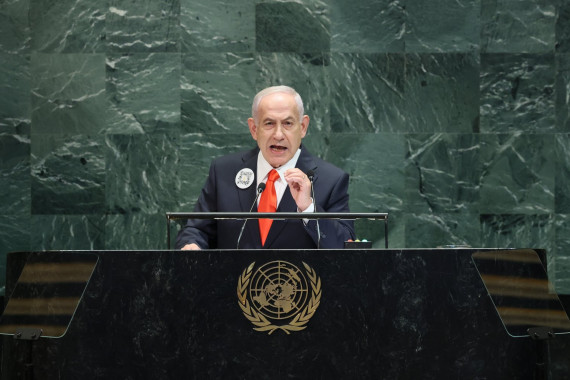
Given Binyamin Netanyahu’s government’s fundamental opposition to a two-state solution, Trump’s plan is hardly helpful in saying: “While Gaza redevelopment advances and when the Palestinian Authority reform program is faithfully carried out, the conditions may finally be in place for a credible pathway to Palestinian self-determination and statehood, which we recognise as the aspiration of the Palestinian people.”
In any case, Netanyahu’s record of breaking ceasefires – not to mention Israel’s attack on Hamas negotiators in Qatar last month – means the chances of any lasting end to the conflict are low. Indeed, the Israeli PM has since announced that even if the hostages are released, the IDF will remain in “most” of Gaza, rather than withdrawing. Trump, meanwhile, stated that Hamas had three or four days to accept the deal in full or “pay in hell”.
So, two years on from its start, the war on Gaza seems set to continue – and will likely worsen as Netanyahu pushes ahead with his aim of the complete “destruction” of Hamas.
Israel wants to remain “impregnable in its insecurity”, as it has been virtually from the start of the Zionist project in the 1890s. In 1882, there were 24,000 Jewish people in what is now known as Israel and the occupied territories, and ten times as many non-Jews. By 1947, 30 years after the British promised Jews a homeland in the Balfour Declaration, the area’s Jewish population had risen to 630,000, although non-Jews still numbered more than twice that.
In the almost 80 years since, Palestinians have been under near-constant pressure and increasingly rigorous control, most notably with the Nakba in 1948, the Six-Day War of 1967, the response to the second Intifada in the early 2000s, as well as the many conflicts over Gaza and the current assault.
As to the future, there are serious problems ahead for both Israel and Palestine, even if the conflict in Gaza ends. The Netanyahu government’s decision to kill thousands of Palestinians and imprison and torture many more has trashed Israel’s international reputation; the country is now widely seen as a pariah state, and increasingly as a terrorist state.
One consequence of this is the rise in antisemitism across the world. Last week, two people were killed in a horrific terrorist attack at a synagogue in Manchester, in the north of England, on Yom Kippur, the holiest day in the Jewish year. There has also been a rise in antisemitic attacks in the US and Europe, and this trend is likely to continue as long as Palestinians are being persecuted.
Meanwhile, support for Palestinians will also remain high, including in countries that have been sympathetic to Israel in the past. This may even include the one country where Israel needs continuing support: the US. There, that support is ebbing away, with even some MAGA supporters now changing their minds.
Perhaps the most damning result of what is happening is the mass radicalisation of young Palestinians and of future Palestinian generations. As Israeli and US security experts have acknowledged, talk of Hamas being defeated is delusional – Hamas is as much an idea as a movement, and that idea will not only persist but will grow.
In short, the greatest threat to the security of Israel comes not from Hamas and its successors but from the Netanyahu government itself.