If someone forwarded you this email you can subscribe. View in web browser.

Hi ,

The fight over marriage equality is back in the spotlight. In the US, the Supreme Court is weighing whether to hear a case that directly challenges its 2015 ruling granting same-sex couples the right to marry.

Although legal experts doubt the court will take it up, figures like Hillary Clinton warn that the nationwide right could eventually fall, just as abortion rights did in 2022. At the centre of the latest challenge is Kim Davis, the Kentucky clerk who once refused to issue marriage licenses to same-sex couples, backed by Liberty Counsel, a group long focused on evangelical Christian lawsuits.

In the UK, campaigners warn that complacency is not an option.

Read the full opinion piece below.

- openDemocracy

 
EDITOR'S PICKS
 
1
Gaza diary: How I risk death to feed my family

Every morning when I head out to sea, I know that today may be the day I don’t return. But what choice do I have? Read more...

2
How Nigel Farage’s biopolitics captured Westminster
Reform UK’s migration proposals prove that the party hasn’t just joined the debate – it owns it Read more...
3
PODCAST: What has Labour done for women? With Penny East

A year into the Labour government's tenure how have they lived up to their pledges to tackle misogyny and improve the lives of women across the country? Read more...


FEATURED STORY

As US far-right attacks marriage equality, UK must not be complacent

Charlotte Galpin

The US Supreme Court is for the first time considering hearing a case that seeks to overturn its 2015 landmark ruling that extended marriage rights to same-sex couples.

While experts doubt the court will agree to hear the case, high-profile figures such as Hillary Clinton have warned that they expect it to overturn the nationwide right to gay marriage eventually, just as it did with the constitutional right to abortion in 2022.

Such cases are often examples of strategic litigation, in which political groups pursue their agenda through targeted court battles. Long used as a mobilisation strategy by progressive movements, the courts are now a key target for the US religious right.

The petitioner in the case to undo marriage equality, for example, is Kim Davis, a former Kentucky county clerk who in 2015 refused to issue marriage licenses to same-sex couples, citing personal religious objections. Her lawyer, Mat Staver, is the chair of the Liberty Counsel, a Southern Poverty Law Center-designated anti-LGBTIQ hate group that specialises in lawsuits relating to evangelical Christian values.


FOLLOWING THE FLOTILLA

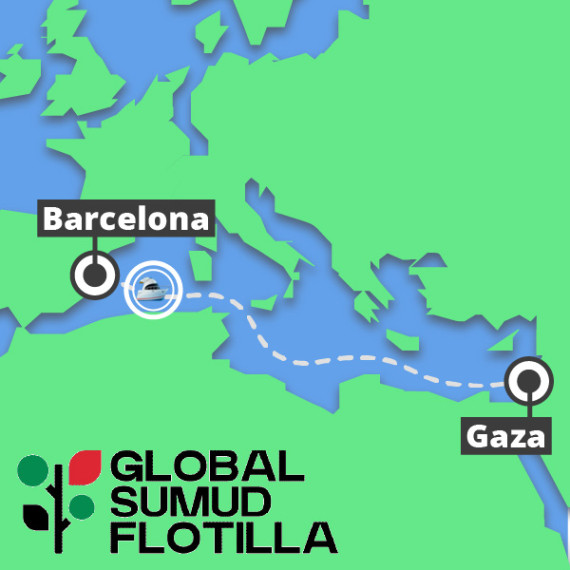
openDemocracy stands in support of the Global Sumud Flotilla that is currently sailing to Gaza to deliver medical and food supplies. We will be tracking its progress every day in our newsletters, and sharing photos from its journey. To find out more about the flotilla and see how you can get involved and support its efforts, click the button below. 

Find out more about the flotilla here
 

It is easy for those of us in the UK to think that we are relatively insulated from these trends unfolding in courtrooms across the Atlantic. A decade ago, we were leading Europe on LGBTIQ rights. Our government regularly proclaims its commitment to advancing global LGBTIQ rights. The idea that the UK is historically committed to individual liberties is, while largely mythical, central to our national identity.

But we must not be complacent: LGBTIQ rights are under threat here, too. In the past ten years, the UK has fallen from first place to number 22 in ILGA-Europe’s Annual LGBTI Ranking â€“ and things are only getting worse.

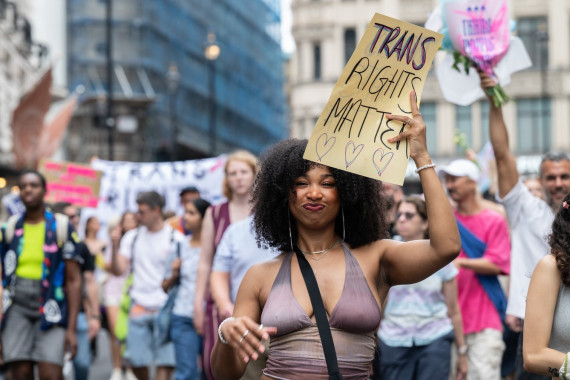
Trans rights under attack

In the coming months, the UK government is expected to mandate a full ban on trans people using public toilets that align with their lived genders.

Ministers announced the so-called ‘bathroom ban’ in April, and it will likely be enshrined into law soon after the Equality and Human Rights Commission presents them with its updated Code of Practice on the Equality Act. The updated code also looks set to ban trans people from essential services, such as hospital wards, and gendered clubs and associations.

This rollbank on trans rights in the UK is the result of strategic litigation like that used in the US. In 2022, so-called ‘gender critical’ groups, including For Women Scotland, launched a legal challenge against the Scottish government’s inclusion of transgender women in quotas to ensure gender balance on public sector boards.

The case, which was partially financed by billionaire author JK Rowling, was eventually escalated to the Supreme Court, which ruled in the groups’ favour this April. Judges said that under the Equality Act, ‘sex’ should be interpreted as determined at birth.

This is far from the only example of strategic litigation against trans people in the UK. While some groups involved in these lawsuits distance themselves from the US far right, journalists and campaigners have identified a range of connections.

In 2020, the High Court voted to restrict access to puberty blockers for trans children in England and Wales after a case supported by lawyer Paul Conrathe. Although the Court of Appeal later overturned these restrictions, the Labour government has since indefinitely banned the blockers.

According to the Daily Beast, Conrathe has “direct links” to the Alliance Defending Freedom, a US anti-LGBTIQ legal organisation that has played a key role in the undoing of abortion rights in the US. In recent years, the ADF has ramped up its campaigning efforts in the UK, targeting trans rights, abortion access, and assisted dying cases.

The Trans Safety Network also revealed Conrathe’s law firm has received funding from UK-based ‘gender-critical’ groups, while a Byline Times investigation exposed his connections to the UK Christian right.

Why Brexit is important

Soon after Donald Trump took office earlier this year, the American Civil Liberties Union warned of his ambition to ‘dismantle’ global justice frameworks. His administration wasted no time in withdrawing the US from international human rights bodies that could have held it accountable and protected human rights.


TELL US YOUR THOUGHTS

As Spain’s prime Minister says that Europe has failed on Gaza, and a global coalition of citizens act to break the siege again, ordinary citizens are stepping up to confront Israel’s genocide and famine.

We want to hear from you, what do you think are the most effective peoples’ actions for Gaza? Select responses will be included in an up-coming piece.”

Email us
 

What many people don’t realise, because it was largely excluded from referendum debates, is that Brexit has achieved something similar in the UK.

The Amsterdam Treaty that amended the EU's foundational treaties in 1997 led to the introduction of lesbian, gay and bisexual rights in the UK, such as protection against sexual orientation-based discrimination in the workplace. EU equal treatment directives also underpinned the protections against sex discrimination, gender reassignment, sexual orientation, and pregnancy and maternity under the UK’s 2010 Equality Act.

The European courts have also been instrumental in advancing the rights of LGBTIQ people, after they were denied by successive governments in Westminster. The European Court of Justice, for example, ruled in 1996 that trans people were protected under EU sex discrimination legislation, while the European Court of Human Rights (ECtHR) determined that trans people had a right to legal gender recognition in 2002.

The ECtHR also required the decriminalisation of private homosexual acts in Northern Ireland, the equalisation of the age of consent, the overturning of a ban on LGBT people serving in the British armed forces, and more. Many of the cases that led to these developments were examples of strategic litigation by LGBTIQ groups, which turned to international courts when domestic routes had failed.

With UK courts no longer bound by EU law, Brexit has closed off this avenue for the protection of rights. EU legal scholars have warned that equalities legislation is now ‘vulnerable’, as ministers can now revoke EU-derived rights without parliamentary approval. Some have recently suggested the April Supreme Court ruling restricting trans rights would have been incompatible with EU law.

 
Will you help defend democracy?
 
A world in turmoil needs fearless, independent investigative journalism that can overcome censorship and hold power to account. 
That’s the kind of media you deserve - and you can support it when you donate to openDemocracy today. When you give today, you can:
  • Keep openDemocracy free to read for everyone
  • Provide our team with the support they need to work safely in a dangerous world
  • Deliver the reporting that matters to you – and that reaches as many people as possible
Please support independent non-profit journalism by donating today.
Please donate now
 

The next targets

So, is marriage equality now under threat in the UK, too? While the legalisation of gay marriage in the UK 12 years ago was unrelated to EU legislation, the British right-wing press has long connected its Euroscepticism to the expansion of LGBTIQ rights.

In 2013, Daily Mail journalist Andrew Pierce (now also a presenter on GB News) accused Conservative prime minister David Cameron of “deserting the Tory faithful” by legalising same-sex marriage and supporting the UK remaining in the EU.

The following year, UKIP leader Nigel Farage also stated his opposition to same-sex marriage being legalised while the UK was in the EU and “under the auspices of the European Court of Human Rights”, claiming churches would be forced to hold gay marriage ceremonies against their will. Farage, now the leader of Reform UK, repeated this view as recently as this year, saying Cameron had been “wrong” to legalise same-sex marriage without including it in his manifesto.

While marriage equality is broadly popular in the UK and is unlikely to be directly targeted by any political party, leaving the EU and the oversight of its court has made us more vulnerable to both strategic litigation and domestic legislation that seeks to erode anti-discrimination protections.

We can already see this happening. Having previously pledged to restrict the rights of trans people, the Conservative Party used its 2024 election manifesto to promise to limit spending on Equality, Diversity and Inclusion initiatives in the public sector. Reform UK, meanwhile, has announced its intention to scrap the Equality Act altogether.

Some MPs are also trying to get ahead to prevent rights from being restricted down the line. This is the case with abortion, which is still not entirely safe despite being partially decriminalised in England and Wales in June. Journalists, including those at openDemocracy, have exposed how US anti-abortion groups are pouring money into the UK to advance their cause, including by funding so-called â€˜pregnancy crisis centres’ that attempt to dissuade people from seeking abortion care.

Earlier this year, Labour MP Stella Creasy introduced an amendment to the Crime and Policing Bill that would have enshrined abortion as a human right and protected people who help somebody to have a termination, such as medical professionals. Explaining her amendment, which in the end did not go to a parliamentary vote, Creasy referenced the experiences of US pro-abortion campaigners and said she wanted to protect abortion rights from a “future regressive government”.

Attacks on Article 8

Across the board, the greatest threat to our rights concerns the European Convention on Human Rights (ECHR). The treaty guarantees certain fundamental civil and political rights to people in Europe and is under attack both across the EU and in the UK, including by the Christian right, according to Martijn Mos of Leiden University in the Netherlands.

In the UK, right-wing politicians and pundits frequently criticise Article 8 of the ECHR, which concerns the right to respect for private and family life. In 2010, the European Court of Human Rights confirmed that this article protects those in same-sex relationships, and it is often invoked by people seeking asylum who are at risk of persecution for their sexuality in their home country.

Before the referendum, the Daily Mail suggested that Brexit was a first step to leaving the ECHR, which EU member states are required to sign up to. Even Labour MPs are now calling for reforms to Article 8 or the UK's withdrawal from the convention, as the government seeks to take a tougher stance on migration to appease the right.

Either option would affect not only vulnerable would-be asylum seekers, but also LGBTIQ people, whose rights have previously been advanced by landmark rulings that found the UK in violation of Article 8. A trans woman – the UK's first trans judge – has already launched a legal challenge against the UK in the European Court of Human Rights to argue that the Supreme Court's ruling on the Equality Act breached her rights under Article 8 (as well as two other articles).

That case will undoubtedly be exploited by the press as another reason to leave the convention, not least since the British press, like many US news outlets, has in recent years waged a deeply hostile, anti-trans campaign. A 2022 report by the Council of Europe cited ‘vitriolic’ media campaigns and rising online abuse in its warning about rollbacks of trans rights in the UK.

It’s no coincidence that this anti-trans moral panic has intensified since the 2016 referendum; leaving the European Convention and further eroding the Equality Act are the next steps in a plan shaped decades ago. Brexit was not the end, but the means – the first step to unpicking equalities and human rights protections in the UK.


Charlotte Galpin is an associate professor at the University of Birmingham
 

COMMENTS

Sign in 💬

Our award-winning journalists can now respond directly to your comments underneath the articles on our site!

Just sign in or register underneath any of our articles to start leaving your thoughts and questions today.

Sign in and join the conversation

MORE FROM OPENDEMOCRACY

Weekly Newsletter
The Dark Arts
Beyond Trafficking and Slavery 
 Facebook  X / Twitter  Linkedin  Instagram  Youtube


openDemocracy, 18 Ashwin Street London, E8 3DL United Kingdom

Unsubscribe