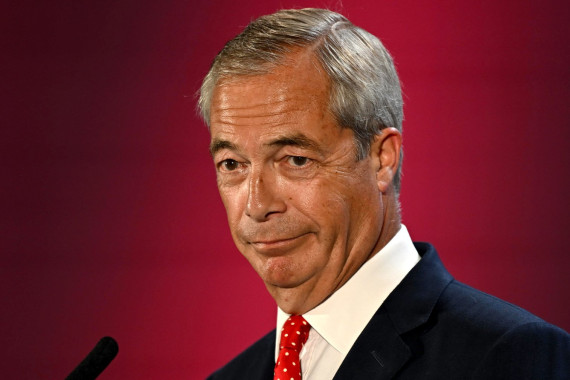
In modern Britain, biopolitical techniques circulate not only through the formal machinery of the state but across media ecosystems, party war rooms, banks, and cultural institutions. Farage and his allies are riding that network to yank the Overton window ever further to the right. To do so, they’re aided by other political parties, which play along, laundering the language until punishment sounds like policy.
The Labour government, for example, has met Farage’s claims with triangulation; adopting, bleaching and redeploying key themes. From Keir Starmer’s Powell-echoing ‘island of strangers’ speech to the bigotry of his party’s arguments over what is a woman, sideshows have become centre stage.
At the same time, Labour ministers have overseen the hardening of protest policing, with counter-terrorism powers around pro-Palestine marches stretching the law and freezing dissent. That’s the machinery in motion: manage the population, marginalise the unwanted, then badge it as moderation.
None of this would have succeeded without the Conservatives’ simultaneous repositioning under Kemi Badenoch’s leadership. Over the past year, Badenoch has lurched from gaffe to gaffe as she strains to outflank Farage on the right, even distancing herself from aspects of her own Nigerian heritage in efforts to do so. The party is not a coherent alternative to Reform, but its shadow.
In place of a governing prospectus, Badenoch’s party has fallen back on culture war polarities paired with promises to scrap equality laws. One could even argue that the Conservatives’ latest trial balloon – a plan to build camps to detain migrants – primed, if not inspired, Reform’s migration plans.
Mainstream pivots hand Farage a perfect foil: his programme reads as the original, everyone else as knockoffs. And that matters. Far-right projects are cumulative and path-dependent – built through organisation, repetition, drilled populist lines, and, above all, a durable anti-establishment pose, even when the cheques come from billionaires.
Voters drawn to this politics pick the architect over the imitator. Farage has hammered these positions for years, and copycats rarely manage to dethrone a brand that’s been so carefully engineered.
In this environment, the media aren’t bystanders; they’re accelerants. On Monday, as Farage unveiled his plans, the BBC’s rolling 24-hour news channel handed him 58 minutes of oxygen. Talking points were platformed with scant contextual challenge, helping drive dehumanisation and normalise the most extremist rhetoric. Live, no interruptions – and we all know how that ends.