If someone forwarded you this email you can subscribe. View in web browser.

Hi ,

As the planet heats up, labour conditions are shifting in dangerous and often unsafe ways. Climate change is accelerating exploitation while corporations continue to put profits ahead of workers’ rights and wellbeing.

In this opinion piece, anthropologist Denise Brennan argues that without a major restructuring of entire sectors, workplaces will become increasingly coercive and hazardous, threatening the workers we rely on most.

Read the full article below.

- openDemocracy

 
EDITOR'S PICKS
 
1

Global leaders must finally stand up to Israel before it’s too late for Gaza

It’s clear that Netanyahu’s ‘messianic fantasy’ is full control of the territory. Staying silent is complicity Read more...

2

The UK finance lobby’s growing influence is threatening all our interests

The government is overlooking the lessons of history – and the financial sector’s tendency to cause harm Read more...

3
British soldiers still paying for sex in Kenya, three years after ban

Inquiry raises questions about MoD failure to stop soldiers exploiting women after it told us it issued no sanctions Read more...


FEATURED STORY

Forced to work on an overheated planet

Denise Brennan

As the planet heats up, labour conditions are rapidly shifting. Climate change is supercharging exploitation and normalising unsafe work as corporations continue to prioritise profits over workers’ rights and wellbeing.

This new era needs more than just new kinds of labour protections. Entire sectors of the economy need to be restructured before they become even more lethal. Treating workers as expendable assets is as grotesque as it is economic folly. As one farmworker organiser told me, if companies continue on this path they “will go belly up”.

This is not hyperbole. The signs are clear in agriculture, construction, food service, even bag handling at airports. But policymakers and managers – not to speak of boards and shareholders – show little interest in the warning. They have long presided over environmental harms and forms of production that are incompatible with decent labour conditions and human flourishing. Now, extreme heat and other consequences of climate change are transforming workplaces into sites that meet the legal, US definition of trafficking (labour under force, fraud or coercion).

 
Will you help defend democracy?
 
A world in turmoil needs fearless, independent investigative journalism that can overcome censorship and hold power to account. 
That’s the kind of media you deserve - and you can support it when you donate to openDemocracy today. When you give today, you can:
  • Keep openDemocracy free to read for everyone
  • Provide our team with the support they need to work safely in a dangerous world
  • Deliver the reporting that matters to you – and that reaches as many people as possible
Please support independent non-profit journalism by donating today.
Please donate now
 

This gives rise to some thorny questions. As old forms of exploitation grow and new forms of abuse emerge, what will count as severe enough to warrant prevention, protection and prosecution (known in anti-trafficking policy circles as the 3 P’s) in the future? Do we resign ourselves to a dystopia where ‘ever worse’ becomes the norm? Or do we, as a society, undertake the large-scale restructuring necessary to ensure decent working conditions for workers?

If we choose the latter, it will require a new understanding of trafficking that includes a vastly larger population of workers, along with new commitments to workers’ protections. The current political climate is hardly conducive to this – the Trump administration’s avaricious, anti-science, and short-term policymaking is instead intensifying a race to the bottom. Nonetheless, we must continue to push for a reimagined economy that prioritises the dignified and safe treatment of workers, or the sectors we need to survive may well come to a sudden stop.

Labour conscription and coercion

As an anthropologist, I have been speaking with labourers working on the front lines of climate change, particularly in places that recently flooded or burned. Heat, and climate change more broadly, have exposed a deep contradiction within many sectors of today’s carbon-based economy.

While jobs in agriculture for example are essential to sustaining life, workers are treated as easily replaceable. They are. Criminalising unauthorised immigration has created a pool of workers with few job opportunities other than those that are the most dangerous, dirty, and dehumanising.

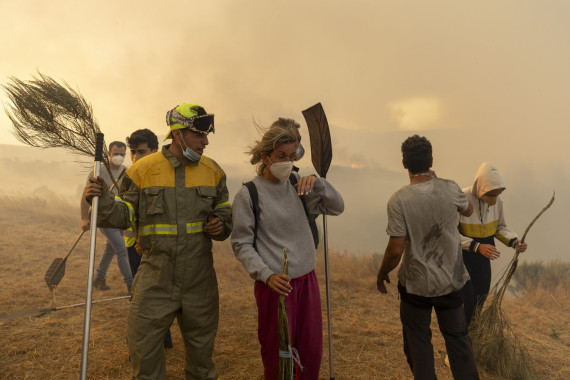
Climate change has further accelerated low-wage workers’ exploitation, such as labouring through toxic wildfire smoke, active evacuation zones, and contaminated flood waters. To convince anyone to work in these harmful sites, employers must effectively conscript workers and coerce labour out of them.

They do this by leveraging factors that make workers vulnerable. For decades the US’s immigration system, a defacto deportation regime, has made all unauthorised workers – as well as those with work visas – vulnerable to exploitation, including trafficking. Trump’s cruel obsession with immigration enforcement has deepened the pool of precarious workers. Other factors, such as poverty, linguistic limitations, and working alongside extended family and friends from one’s home village, further compromise workers’ ability to call out mistreatment.

This includes sexual assault. Women stay quiet because they fear retaliation not only for themselves, but also against their coworkers who are family and friends. And I’ve heard, time and time again, that workers cannot afford even one day without work. In short, workers are strongly disincentised to walk away or report abuse while, at the same time, extreme heat is further worsening their daily working conditions.

 
Is MAGA a religion? Why has protest been criminalised in England and Wales? Who is profiting from anti-immigration sentiment? And how can we engage with young men who’ve fallen down the alt-right pipeline? 
 
These are just a few of the questions that we’ve put to leading thinkers, frontline activists, and global experts on our new podcast, In Solidarity, over the past six months.
 
In Solidarity is a podcast for people who understand that politics doesn’t just happen in the halls of power. Every show, we tackle a new theme to uncover how authoritarianism spreads, who is benefiting from fear, and how solidarity is evolving into resistance movements around the world.
 
To ensure you never miss an episode of In Solidarity, subscribe to get an email notification whenever a new one is released. 
Subscribe to episode notifications
 

Let’s look, for example, at what is happening in the grape fields of northern California. Famed for its wine, this region also regularly experiences wildfire (all of California is referred to as a wildfire zone). Many agricultural workers in that area are poor, undocumented and indigenous. In interviews they said employers put substantial pressure on them to continue working through toxic wildfire smoke, even in active evacuation zones.

Workers described vans sent to pick up workers who had evacuated to shelters. They said growers didn’t always explicitly tell them they must work, but when the vans showed up they felt they couldn’t say no. As one organiser explained: “It’s not really a choice. They were being forced to pick when smoke and fire were everywhere.”

Workers’ expendability is unmistakable. From jerry rigging their own bandanas into makeshift PPE, to feeling coerced to work no matter the conditions, workers accede to working during and after disasters in large part out of fear of being reported to Immigration Customs Enforcement (ICE).

An emergency governance regime takes over during disasters that suspends the few protections low-wage workers might have. In the midst of raging fires and mandated evacuation, for example, localities often issue â€œaccess passes” to agricultural workers. Growers also pressure workers to sign liability waivers. While these waivers – and fire insurance – protect growers, workers risk heat exhaustion, exposure to toxins, and the terror of encroaching fire and emergency evacuation.

Workers’ fear of deportation also leads them to eschew government assistance after their own losses to fire or floods. An attorney in Northern California recounted, for example, how agricultural workers slept on beaches after a fire ravaged their community because they feared that ICE would arrest them in shelters.

Climate canaries

Heat isn’t just transforming agricultural work. A whole range of workers not traditionally understood as vulnerable are learning that they are quickly becoming so as temperatures rise.

This includes people in manufacturing plants and restaurant kitchens, where cooling systems cannot keep pace with spiking temperatures; airport workers in literal hotspots like Phoenix and Las Vegas, where planes are grounded because of the heat; and delivery workers, who retrieve packages from inside trucks that heat-up like ovens.

What these workers have in common is that they labour in sites being grievously altered by climate change. In interviews, such workers have told me that they have experienced breathing difficulties, fainting, and complications with pre-existing conditions like diabetes. These are early warnings – a kind of climate canary in the coal mine – not just about worker safety but about the harmful future that capitalism is driving us to enter.

We are at a tipping point in the struggle for worker justice. If we don’t begin to prioritise people over profits, even more workers will perish alongside the planet.

There is still time to challenge – legally and politically – the normalisation of heat-related harms. In the 20 years that the US has offered anti-trafficking assistance, it has awarded only a paltry number of visas to exploited workers. It would be imprudent to imagine that it could simply be expanded to account for climate dangers. As many activists, scholars, and attorneys around the globe have noted, anti-trafficking policies and programmes have been far more effective as punitive anti-sex work and migration controls than in assisting exploited, undocumented individuals.

The current anti-trafficking regime cannot possibly address the sheer number of workers whose livelihoods will, sooner or later, depend upon them risking their lives in the lethal working conditions created by incessant carbon emissions. A new template for anti-trafficking that combines worker safety with mandated fossil fuel reduction is needed to both drive down rising temperatures and to ensure dignified and safe work.

COMMENTS

Sign in 💬

Our award-winning journalists can now respond directly to your comments underneath the articles on our site!

Just sign in or register underneath any of our articles to start leaving your thoughts and questions today.

Sign in and join the conversation

MORE FROM OPENDEMOCRACY

Weekly Newsletter
The Dark Arts
Beyond Trafficking and Slavery 
 Facebook  X / Twitter  Linkedin  Instagram  Youtube


openDemocracy, 18 Ashwin Street London, E8 3DL United Kingdom

Unsubscribe