If someone forwarded you this email you can subscribe. View in web browser.

Hi ,

British Army soldiers in Kenya are still paying local, "vulnerable" women for sex, despite a ban introduced in 2022.

An internal inquiry found 35 allegations between July 2022 and March 2025, including nine incidents after the ban came into force.

The findings raise serious questions about accountability and transparency within the armed forces.

Read more below.

- openDemocracy

 
EDITOR'S PICKS
 
1

The New Age of Sexism: AI impact on sex workers overlooked

Laura Bates’ new book is distracted by sexbots. AI’s power to surveil and marginalise sex workers is the real story Read more...

2

Paranoia, misinformation, and glee: inside Bristol’s far right protest

The numbers were small. But at a far right protest in Bristol, we saw a movement that believes it’s winning. Read more...

3
PODCAST: Planet Patriarchy with Rahila Gupta

Patriarchy stretches to every corner of the world. Rahila Gupta takes us from Riyadh and Russia to Rojava to spotlight the women who dare to resist. Read more...


FEATURED STORY

British soldiers still paying for sex in Kenya, three years after ban

Sian Norris

British Army soldiers stationed in Kenya are still paying “vulnerable women” for sex, an internal service inquiry has confirmed, despite the military banning “transactional sex” in July 2022.

The report identified 35 allegations of troops stationed at the British Army Training Unit Kenya (BATUK) paying local women for sex between July 2022 and March 2025. Nine of these alleged incidents took place after the ban came into effect in November 2022.

The military redacted the number of proven instances from its report, suggesting that at least one soldier has been sanctioned for violating the ban. Soldiers who violate the army’s policy face an automatic discharge.

The findings raise questions about the Ministry of Defence’s failure to hold soldiers to account for paying for sex, and its lack of transparency about the situation. In October, the MoD released data to openDemocracy that said no soldiers had faced sanctions since the ban was introduced.

 
Will you help defend democracy?
 
A world in turmoil needs fearless, independent investigative journalism that can overcome censorship and hold power to account. 
That’s the kind of media you deserve - and you can support it when you donate to openDemocracy today. When you give today, you can:
  • Keep openDemocracy free to read for everyone
  • Provide our team with the support they need to work safely in a dangerous world
  • Deliver the reporting that matters to you – and that reaches as many people as possible
Please support independent non-profit journalism by donating today.
Please donate now
 

The MoD also repeatedly refused to answer our Freedom of Information requests about the number of men investigated for paying for sex. The inquiry now proves this practice continues with impunity, as Kenyan campaigners and the family of Agnes Wanjiru, a 21-year-old sex worker who was allegedly killed by a British soldier in 2012, told us last year.

Reacting to the inquiry’s findings, Wanjiru’s niece, Esther Njoki, said that “no action is ever taken” against BATUK soldiers who commit sexual abuse and harassment. She added: “The report has recommendations, but we are not sure they will be followed.”

Some 238 soldiers told the inquiry that they knew of colleagues taking part “in any sexual activity with the local nationals in Kenya in exchange for money, favours or goods” since the ban.

Twenty-seven soldiers said they had had sex with local women, but that no transaction took place. The report’s authors highlighted that this was unlikely to be accurate, noting that at least three of the 27 said they had visited local brothels.

The authors warned that the military’s failure to properly investigate and prove allegations means soldiers “may take away the wrong messages, in particular that nothing is likely to happen to them if they breach the policy”.

They recommended that allegations of transactional sex be passed on to the Service Police, saying the practice “is harmful to vulnerable women”, in part due to a power imbalance between Kenyan women and British soldiers.

The report also recommended that soldiers receive more training about the ban during their annual behaviour training requirements before being deployed overseas. Currently, this includes only a “passing reference” to transactional sex.

This “is unlikely to have the training effect [...] we would wish to see,” the inquiry said, although it praised the leadership’s reminders about the ban once soldiers arrived at BATUK.

 
Is MAGA a religion? Why has protest been criminalised in England and Wales? Who is profiting from anti-immigration sentiment? And how can we engage with young men who’ve fallen down the alt-right pipeline? 
 
These are just a few of the questions that we’ve put to leading thinkers, frontline activists, and global experts on our new podcast, In Solidarity, over the past six months.
 
In Solidarity is a podcast for people who understand that politics doesn’t just happen in the halls of power. Every show, we tackle a new theme to uncover how authoritarianism spreads, who is benefiting from fear, and how solidarity is evolving into resistance movements around the world.
 
To ensure you never miss an episode of In Solidarity, subscribe to get an email notification whenever a new one is released. 
Subscribe to episode notifications
 

The MoD introduced the ban on transactional sex the year after the Sunday Times published allegations that a British soldier stationed in Kenya had murdered Wanjiru and dumped her body in a septic tank.

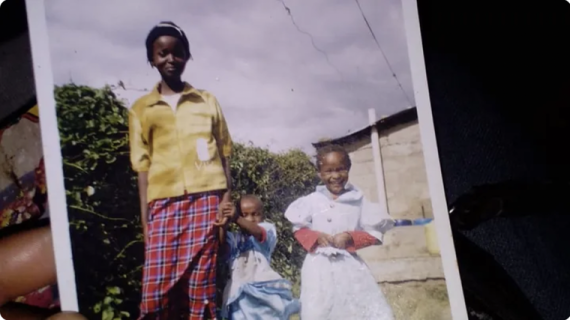
Njoki described her aunt to openDemocracy as “very cheerful”. “She was a joker, she was funny, hard working,” she added. “She was such a social person. Even now, if she was alive, she is who I would run to for help.”

She warned that: “Nothing seems to have changed since the ban. The only thing that can change is punishing those who are culpable, starting with the murderer of my aunt.”

While Labour defence secretary John Healey met Wanjiru’s family in April this year, little progress has been made on bringing her suspected killer to justice or getting compensation for the family.

“Healey criticised the Conservatives for sitting on their hands; now he is sitting on his hands,” Njoki said. “We feel that he used our family for political gain.”

She believes the UK government could do much more and is now fundraising to travel to the UK later this year. “I want to show people that something is wrong, that nothing is happening in Agnes’ case, that things are still the same,” she said.

“We are asking for compensation but they say they can do nothing until the [Kenyan] criminal investigation is done,” Nikoji added. The case was reopened in 2021, but “no progress is made on that”, she said. “For 13 years we have been waiting, and still you want to keep us waiting.”

Kelvin Kubai, a human rights lawyer in Nairobi, described the inquiry as “very welcome”, but said transactional sex is just one way British soldiers sexually abuse Kenyan women. He represents mothers who say their children have been abandoned by fathers who return to the UK from BATUK, often to their own families.

“Local women are therefore left vulnerable and forced to raise kids on their own after their fathers are discharged from duty in Kenya,” Kubai told openDemocracy. “In the past two years, we have documented 30 of these, mostly consensual, relationships but this is the tip of the iceberg.

“The most overarching challenge is men who sire children and avoid responsibility by taking advantage of absence of policy and mechanism to hold them to account.”

General Sir Roly Walker, Chief of the General Staff confirmed the MoD would be implementing the report’s recommendations in full, including with "new measures to prevent sexual exploitation and abuse. These include increasing the Army’s ability to discharge people for engaging in transactional sex, a new and specific training programme placing an obligation on everyone in the Army to prevent sexual exploitation and abuse, and increasing our oversight and assurance measures to ensure this is being taken as seriously as it warrants." He also acknowledged how the report "sets out a number of areas where we’ve already taken action, which will help tackle sexual exploitation and make Kenyan women safer."

“There is absolutely no place for sexual exploitation and abuse by people in the British Army," Walker said. "It is at complete odds with what it means to be a British soldier. It preys on the vulnerable and benefits those who seek to profit from abuse and exploitation.

"The findings of the Service Inquiry I commissioned conclude that transactional sex is still happening in Kenya at a low to moderate level. It should not be happening at all.

"We are fully committed to preventing sexual exploitation in any form and will continue to listen, step up, and take action when we need to, including working with the other Services to learn lessons and share best practice across Defence”.

COMMENTS

Sign in 💬

Our award-winning journalists can now respond directly to your comments underneath the articles on our site!

Just sign in or register underneath any of our articles to start leaving your thoughts and questions today.

Sign in and join the conversation

MORE FROM OPENDEMOCRACY

Weekly Newsletter
The Dark Arts
Beyond Trafficking and Slavery 
 Facebook  X / Twitter  Linkedin  Instagram  Youtube


openDemocracy, 18 Ashwin Street London, E8 3DL United Kingdom

Unsubscribe