If someone forwarded you this email you can subscribe. View in web browser.

Hi ,

In just six months, the US has cut crucial public health funding, slashed visa access for Nigerian citizens, and threatened tariffs over so-called “anti-American policies.”

But perhaps most concerning is Trump’s push to deport Venezuelan and other third-country nationals to Nigeria, a demand the Nigerian government has so far resisted.

This piece explores the escalating tensions between Washington and Abuja, and asks: can — and should — Nigeria chart its own course in a world of transactional geopolitics?

Read the full analysis below.

- openDemocracy

 
EDITOR'S PICKS
 
1

Only nationalisation can save England and Wales’ failing water sector

Privatisation means the public faces higher bills and pollution as shareholders cash in. Why won’t Labour admit that? Read more...

2

South America’s sovereignty is being lost in Big Tech’s clouds

US tech firms want to extract data, knowledge and natural resources from the region. Governments must stand up to them Read more...

3
PODCAST: Planet Patriarchy with Rahila Gupta

Patriarchy stretches to every corner of the world. Rahila Gupta takes us from Riyadh and Russia to Rojava to spotlight the women who dare to resist. Read more...


FEATURED STORY

Can – and should – Nigeria break with Trump’s transactional geopolitics?

Afolabi Adekaiyaoja

Six months after Donald Trump took office, Nigerian-American relations are at a low point, with the US administration having passed a number of policies that have negatively affected Nigeria.

These include cutting USAID funding to public health programmes in the country; threatening Nigeria and other BRICS+ members and partners with an additional 10% tariff for having “anti-American policies”; and reducing visa validity for applicants from Nigeria and three other African countries. While Nigerian applicants could receive up to five-year, multiple-entry visas to the US as recently as May 2025, they will now be granted only single-entry visas valid for three months.

But the biggest draw of bad blood appears to be Nigeria’s refusal to accept Venezuelan deportees or third-country prisoners from the US. This demand is part of a new trend in American immigration policy, in which it seeks to deport people not to their country of origin – which are often accused of refusing or being slow to accept them – but further abroad. The US has reportedly made similar overtures to Benin, Eswatini, Libya and Rwanda.

Nigeria is right not to acquiesce to Trump’s demands. There is a clear mandate for a country such as Nigeria, with hegemonic aspirations of its own, to stand up to the US.

 
Will you help defend democracy?
 
A world in turmoil needs fearless, independent investigative journalism that can overcome censorship and hold power to account. 
That’s the kind of media you deserve - and you can support it when you donate to openDemocracy today. When you give today, you can:
  • Keep openDemocracy free to read for everyone
  • Provide our team with the support they need to work safely in a dangerous world
  • Deliver the reporting that matters to you – and that reaches as many people as possible
Please support independent non-profit journalism by donating today.
Please donate now
 

Nigeria’s foreign policy has historically been a voice for African self-determination, having taken on leadership roles in the Economic Community of West African States’ (ECOWAS) peacekeeping and against apartheid-era South Africa. Standing up to Trump would also prove popular across Africa; the US’s reputation on the continent is a downward spiral, and citizens would be supportive of a firm but measured pushback.

Given its stature, Nigeria is in pole position to push back at a growing move by Western powers to use Africa as a dumping ground for so-called ‘undesirables’. In 2022, the United Kingdom and Rwanda struck a £240m deal that would see asylum seekers deported from the UK to the East African country, but the scheme was scrapped after the UK Supreme Court ruled it unlawful. Denmark agreed a similar deal with Rwanda in the same year, though that plan is also on hold.

African states need to see these deals for what they are: neocolonial impositions by a few right-leaning governments, often representing increasingly right-leaning electorates, which are seeking to restrict immigration from African countries owing to negative stereotypes. It’s no surprise that most of the countries the US has reportedly approached to take in deportees are African.

Even beyond continental aspirations, accepting Trump’s offer and deferring to the US would not bode well domestically for Nigeria’s government, which is already fairly unpopular and reportedly plans to seek re-election in 2027, given that the country and the wider region are being swept by a wave of anti-neocolonialism.

Then there’s the optics of where the deportees would be placed. Trump has repeatedly claimed the deportees are “dangerous criminals” serving time in American prisons, despite most having only broken immigration laws. Nigeria perpetually exists along tenuous ethnic fault lines, so the question of whether these people would be freed upon deportation or continue to be detailed in Nigeria – and if so, where – could become kindling for inflammatory rhetoric and ammunition for the opposition ahead of the next elections, particularly if domestic media and government outlets echo the US president’s narrative.

Aside from political problems, there are structural ones too. Nigeria has a well-documented issue with overcrowded prisons, which have seen a rise in major jailbreaks in recent years, leaving open the possibility that the third-country prisoners could easily find themselves free in a country with stretched law enforcement.

It remains to be seen how absolute or long-standing Nigeria’s rejection of the deportees’ offer will be.

 
Is MAGA a religion? Why has protest been criminalised in England and Wales? Who is profiting from anti-immigration sentiment? And how can we engage with young men who’ve fallen down the alt-right pipeline? 
 
These are just a few of the questions that we’ve put to leading thinkers, frontline activists, and global experts on our new podcast, In Solidarity, over the past six months.
 
In Solidarity is a podcast for people who understand that politics doesn’t just happen in the halls of power. Every show, we tackle a new theme to uncover how authoritarianism spreads, who is benefiting from fear, and how solidarity is evolving into resistance movements around the world.
 
To ensure you never miss an episode of In Solidarity, subscribe to get an email notification whenever a new one is released. 
Subscribe to episode notifications
 

Since his campaign for office in 2023, President Tinubu has been dogged by accusations of being embroiled in an investigation by US law enforcement agencies for alleged drug trafficking. While he continues to deny this, these allegations make him susceptible to US pressure.

Nigeria has also not had any ambassadors since September 2023, when it recalled all of its diplomats around the world with immediate effect. This reduces its ability to effectively engage with governments, and is now a particular problem in the US, where ambassadors could help with negotiating new trade or bilateral agreements and liaising with lobbying groups to manage tariffs, as well as leveraging connections and appealing to key insiders within the Trump White House.

Although there are valid reasons why Nigeria should reject the US president, there are valid, potential downsides to doing so, too.

His administration has made an example of South Africa in recent months, showing how it is prepared to act against countries it sees as “un-American”. Trump has expelled South Africa’s ambassador, ambushed its president during an Oval Office meeting, denied its special envoy a diplomatic visa, threatened to boycott the G20 summit in Johannesburg in November, and announced it will impose a 30% tariff, which the governor of South Africa’s central bank estimates will put 100,000 jobs at risk. His cabinet appointees have also shunned meetings with South African foreign and finance ministers, while last month the US took in Afrikaner refugees and spread a hoax about a ‘white genocide’.

South Africa has so far weathered the storm, but this could change after the new US tariff comes into effect on 1 August. In any case, Nigeria may not be able to withstand a similar barrage, having recently introduced market reforms to stabilise the Naira, which have unduly affected poorer citizens. The World Bank estimates that as of April 2025, 56% of Nigerians live below the poverty line.

While Nigeria’s inflation has reduced, in part due to a rebase of the GDP, there are still prevalent cost of living issues that will require more policies and investment. The Nigerian government was forced to allocate $200m to the health sector after the USAID cuts, but a targeted US onslaught could force an end to programs such as intelligence sharing, with widespread ramifications for ongoing work. Higher US tariffs and a diplomatic stand-off would also affect Nigeria’s oil and gas trade with the US – one of its largest trading partners – further worsening its economic fortunes, while being caught in the crosshairs of a major power like the US would do little to assure foreign direct investment from elsewhere.

Nigeria, ultimately, cannot hold off Trump alone; a coordinated continental response is needed. Nigeria must use its considerable diplomatic weight to push for an African Union-led framework to counter the US’s deportation demands. This will involve addressing Eswatini and South Sudan, which have already accepted US deportees, as well as Angola, Rwanda, Benin, Equatorial Guinea and Libya, which the Trump administration is lobbying to do so. To achieve this, Nigeria will need to be more proactive with diplomatic engagement, including promptly appointing new ambassadors who are experienced, rather than politically motivated.

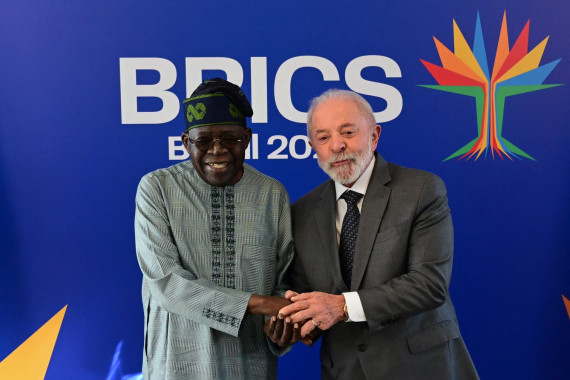
Nigeria also needs to ensure it is in sync with other African BRICS+ members and partners – South Africa, Egypt and Ethiopia – affected by Trump’s push against the intergovernmental grouping. Particularly key to their collaboration is giving life to an African free trade agreement (AfCFTA), which was signed into law in 2018 to unite all 55 African Union nations into a single market, but has faced significant implementation challenges and slow progress.

AfCFTA aimed to help wean African countries away from trade dependence on foreign countries – the importance of which has been made clear by the Trump tariffs – as well as boosting domestic economies, creating new manufacturing hubs and enabling states to invest in building their logistics and transportation capacities.

The agreement’s false start reflects the limitations of African collaboration: most states are prepared to give up their leverage over foreign powers for short-term gain at the expense of long-term independence. This dilemma highlights the issues with standing up to a major power and requires the more established economies to lead this pivot.

The risk of failing to get a wider consensus across Africa is far more than just diplomatic and economic: it’s also practical. The nature of contiguous and often porous borders is that neighbouring states are affected by the policy of another. Standing up to the US is not just a matter of Pan-African solidarity; it also makes sense to Nigeria and other countries from a domestic perspective.

Afolabi Adekaiyaoja is a research analyst and a writer on the politics of policy, institutions, and governance

COMMENTS

Sign in 💬

Our award-winning journalists can now respond directly to your comments underneath the articles on our site!

Just sign in or register underneath any of our articles to start leaving your thoughts and questions today.

Sign in and join the conversation

MORE FROM OPENDEMOCRACY

Weekly Newsletter
The Dark Arts
Beyond Trafficking and Slavery 
 Facebook  X / Twitter  Linkedin  Instagram  Youtube


openDemocracy, 18 Ashwin Street London, E8 3DL United Kingdom

Unsubscribe