If someone forwarded you this email you can subscribe. View in web browser.

Hi ,

In England and Wales, more than a trillion litres of water are lost each year, tonnes of untreated sewage flow into waterways, and over £85bn has flown to investors, most of whom are based overseas.

Industry regulations aren't going to be enough to fix the water industry. It's time for the government to take a lesson from the dramatically different water situation in Scotland and bring the sector under public ownership.

Read the full story below.

- openDemocracy

 
EDITOR'S PICKS
 
1
Israel’s atrocities have destroyed its reputation and its security

Starving children to death won’t win Binyamin Netanyahu the war. It will ensure it lasts for decades. Read more...

 
2
openDemocracy uncovers missed evidence in British Army child sex abuse case

Victims accuse military of ‘cover-up’ after it closed investigation without checking archives or interviewing suspect. Read more...

 
3
🎧 PODCAST: Planet Patriarchy with Rahila Gupta

Patriarchy stretches to every corner of the world. Rahila Gupta takes us from Riyadh and Russia to Rojava to spotlight the women who dare to resist Read more...


FEATURED STORY

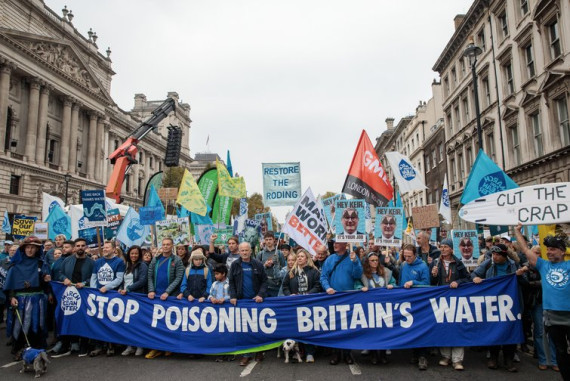
Only nationalisation can save England and Wales’ failing water sector

Eleanor Shearer

It’s no secret that England and Wales’ water system leaks. More than a trillion litres of water are lost each year, tonnes of untreated sewage flow into our waterways, and over £85bn has flown to investors, most of whom are based overseas, since privatisation.

This is a system in deep crisis. Yet the government has refused to even consider returning water companies to public ownership, commissioning an independent review of the sector that was not given a mandate to look into nationalisation.

The Cunliffe Review published its findings last week, recommending that water firms be issued fines to finance the replacement of Ofwat with a new regulator that will try to tackle ever-increasing pollution and spiralling bills.

But attempting to fix the water industry through regulation is like trying to fix a burst pipe with a small piece of duct tape; it cannot stem the tide when the root cause of the problem is privatisation itself.

In other sectors, the Labour government has made tentative moves towards public ownership. It is renationalising passenger train operators in England (though not the rolling stock companies, which own and lease out the actual trains), and has created Great British Energy to support greater public ownership in clean energy projects.


WE RECOMMEND

Hoping to keep track of all the ludicrous shenanigans happening in the U.S…. without losing your mind?

We’ve got you covered at the What A Day newsletter. 

It’s the daily newsletter brought to you by Crooked Media, home of Pod Save America and Pod Save the UK. The What A Day newsletter gives you a clear, concise breakdown of the biggest stories happening in the U.S. every weekday — including both the sharp analysis and context you need to go deeper than the headlines, with enough quirky humor and light to keep you sane in these unhinged times. 

What A Day helps readers around the world make sense of America’s particular brand of political nonsense — from the Supreme Court’s latest outrage to Donald Trump’s latest buffoonery — and break down what really matters. 

Whether you're starting your day in London, ending it in Sydney, or just trying to keep up with the chaos across the pond (certainly no shortage of that here), What A Day delivers a smart, critical snapshot of the news that actually matters. Sign up at crooked.com/daily.


Yet ministers have from the outset refused to countenance the same in the water sector, even as Thames Water has teetered on the brink of financial collapse and required a £3bn bailout. This is a baffling choice when the case for putting an end to decades of profiteering in this sector is so clear.

When Margaret Thatcher’s Conservative government privatised water in England and Wales in 1989, it promised that this would unlock more investment. This investment has failed to materialise, as companies have prioritised boosting returns for shareholders over building and maintaining vital infrastructure. No major new reservoirs have been built since privatisation, and our sewage and water pipes are now crumbling, increasing the risk of rapid flooding and waterborne parasites.

The water companies have tried to use these failing assets as an argument for hiking bills, claiming that this is the only way they can afford to fix things. This is a particularly bold claim given you only have to look to Scotland, where water is publicly owned, to see how different things could be.

Had English water firms invested at the same rate as Scottish Water in recent decades, we would have £28bn more for our water infrastructure. Scottish consumers also pay lower bills and, despite environment secretary Steve Reed’s claims that Scottish waterways are more polluted, the Cunliffe Review found that 66% of Scotland’s water bodies are of good ecological status, compared to only 16% in England and 30% in Wales.

Regulation has tried and failed to correct the failures of privatisation. It’s true that regulatory reforms are needed, especially to better fund environmental protection, as the money ringfenced for this has been cut by 80% since 2010. But ultimately, tougher regulation is always going to be in tension with the drive to attract private investment.

 
Will you help defend democracy?
 
A world in turmoil needs fearless, independent investigative journalism that can overcome censorship and hold power to account. 
That’s the kind of media you deserve - and you can support it when you donate to openDemocracy today. When you give today, you can:
  • Keep openDemocracy free to read for everyone
  • Provide our team with the support they need to work safely in a dangerous world
  • Deliver the reporting that matters to you – and that reaches as many people as possible
Please support independent non-profit journalism by donating today.
Please donate now
 

Shareholders and creditors don’t want harsher fines for polluting or caps on dividends to get in the way of their profits. Labour rightly resisted calls from Thames Water’s creditors to exempt the company from key environmental laws, but has failed to see the implications of this for its entire strategy.

The harder that ministers try to crack down on profiteering and underinvestment, the less private investors will want to put their money into the water industry. Only public ownership can deliver a more patient, long-termist approach to running the water industry for the public good, not private gain.

So why has Labour repeatedly refused to nationalise water? Reed has leaned heavily on affordability, claiming it would cost £100bn. But this scaremongering figure comes from a report commissioned by the water companies and was calculated using the firms’ assumed market value at the time of privatisation in 1990, which is far higher than their real value today.

In reality, by law, the government could nationalise water at a cost even below that of the firms’ market values by factoring in returns already paid to shareholders and bondholders and the cost of environmental failures.

Ultimately, the public is paying the price for the failed privatisation of our water industry. We’re paying in the form of polluted rivers and seas and elevated risks of flooding and waterborne pathogens. We’re paying in terms of higher bills, which are due to rise by 36% over the next five years. And we’re paying again in terms of the money that leaks out to shareholders and creditors from every bill: from September every year, your money stops paying for the running of the water system and starts paying for dividends and debt interest payments.

Labour’s current approach is sticking-plaster politics of the worst kind. With 90% of freshwater systems worldwide in public control, England and Wales remain the extreme outlier. It’s time to bring us back in line with the vast majority of the world and take back control of our water industry.


Eleanor Shearer is a senior research fellow at Common Wealth, a think tank reimagining ownership to build an economy that works for everyone.

COMMENTS

Sign in 💬

Our award-winning journalists can now respond directly to your comments underneath the articles on our site!

Just sign in or register underneath any of our articles to start leaving your thoughts and questions today.

Sign in and join the conversation

MORE FROM OPENDEMOCRACY

Weekly Newsletter
The Dark Arts
Beyond Trafficking and Slavery 
 Facebook  X / Twitter  Linkedin  Instagram  Youtube


openDemocracy, 18 Ashwin Street London, E8 3DL United Kingdom

Unsubscribe