If someone forwarded you this email you can subscribe. View in web browser.

Hi ,

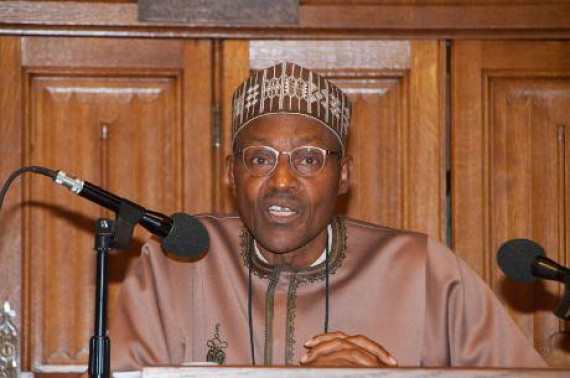
Nigeria’s former president Muhammadu Buhari died on 13 July 2025 in a London hospital. His rule should be remembered as one in which freedom of expression, the rule of law and the free press were all eroded.

Buhari’s legacy will take years to unravel. In some cases, such as the avoidable loss of life caused by his administration’s vicious crackdowns on protest, his actions can never be undone.

Even if you were never directly affected by his reign, Buhari’s presidency shows the dangers of allowing power to go unchecked – we should all be aware of it.

Read the full story below.

- openDemocracy

 
EDITOR'S PICKS
 
1
How a new Corbyn/Sultana-led party can win voters as Labour flounders

Ambassador of anti-rape company Enough took to stage after Tommy Robinson ally who called for ‘re-migration’. Read more...

 
2
Exclusive: Watchdog probing Starmer aide’s secret lobbying of Tory ministers

Reeves’ Mansion House speech shows the corporate takeover of Labour is complete. Read more...

3
🎧 PODCAST: The tech start-up targeting sexual assault victims

Tech start-up Enough hopes to be a revolutionary force in combatting rape, but students who have interacted with the company have serious concerns. Read more...


FEATURED STORY

Nigeria’s former President Buhari is dead. Here’s what he took with him

Saratu Abiola

It is hard to pick the most urgent damage that President Buhari’s leadership wrought in Nigeria, but the harms he inflicted on freedom of speech and the rule of law deserve special attention.

Economic holes can eventually be dug out of with careful and thoughtful leadership. Global reputations can also be mended. But harms to freedom of speech and regressions in the rule of law, especially in a democracy as fragile as Nigeria’s has historically been, affect citizens’ trust in institutions and each other, making it harder for well-meaning attempts to build systems that work.

Media suppression was a hallmark of Buhari’s first term (2015 to 2019), despite his promise in his inaugural address that “the law-enforcing authorities” in the country “will be charged to operate within the Constitution”. One of the final acts of power of his presidential predecessor, Goodluck Jonathan, was to sign into law the Cybercrimes Act of 2015, as part of a larger effort to address criminal activity using digital platforms. Buhari and some state governors used the law, though, to arrest journalists.

 
Will you help defend democracy?
 
A world in turmoil needs fearless, independent investigative journalism that can overcome censorship and hold power to account. 
That’s the kind of media you deserve - and you can support it when you donate to openDemocracy today. When you give today, you can:
  • Keep openDemocracy free to read for everyone
  • Provide our team with the support they need to work safely in a dangerous world
  • Deliver the reporting that matters to you – and that reaches as many people as possible
Please support independent non-profit journalism by donating today.
Please donate now
 

Invoking the law, in July 2016, the country’s State Security Service arrestedJones Abiri, the publisher and chief editor of Weekly Source newspaper in Bayelsa State, for alleged militant sympathies, then released him two years later. He was then re-arrested in March 2019, this time spending more than half a year in prison before being granted bail.

Another journalist, Samuel Ogundipe, who at the time worked with Premium Times, was arrested for five days in August 2018 for being “a threat to national security”. The following year, the government also arrested Ibrahim Dan-Halilu, an editor at the Daily Trust newspaper, while the publisher of Cross River Watch news site, Agba Jalingo, was arrested in 2019, 2021 and 2022 – even after the Economic Community of West African States’ Court ordered the government to release him and pay damages in 2021.

By 2021, seven years into Buhari’s rule and two years into his second term, the Nigerian Union of Journalists had recorded 300 violations, affecting about 500 journalists, media workers and media houses. In July of that year, as journalists faced personal intimidation, Nigeria’s broadcast regulator, the National Broadcasting Commission (NBC), issued a letter telling the media to stop reporting insecurity in too much detail. The same body later fined Channels TV for an interview with an opposition leader during the run-up to the 2023 election.

All of this, of course, came in the same term in which Buhari banned Twitter access in the country for seven months. The social media platform had deleted a post the president had made threatening Igbo people with violence over the destruction of public infrastructure in their region, invoking Nigeria’s 1965 Civil War that saw the mass murder of over one million people, mostly from the country’s southeast.

This suppression of freedom of expression and the media was the most stark it had ever been in Nigeria’s democratic era. Rather than being the “reformed democrat” he had been marketed as, Buhari brought some of the darkness and regression of the military era to a new generation.

Millions of young Nigerians had formed part of his base, believing in his ability to help Nigeria shed its corrupt skin and emerge as a nation capable of achieving its vast potential. But by the time he left office in 2023, another generation had been cruelly educated in the Nigerian Way, learning that ethnic allegiance, money and might are the currencies of power, and this country cannot work for more than one group at a time. Buhari made clear he was a president who thought of the country as a bus full of disobedient children who there was no point talking to, who for whatever maddening reason could not simply keep quiet and do what they were asked.

Few occasions better demonstrate Buhari’s draconian policies – media suppression, restricted speech and the weaponising of the justice system – than the youth-driven #EndSars protests of 2020. A video of the extrajudicial killing of a man in Delta State by police officers from the infamous Special Anti-Robbery Squad (SARS) went viral, sparking protests that spread across nine states from 3 October 2020, stopping traffic and gripping media attention.
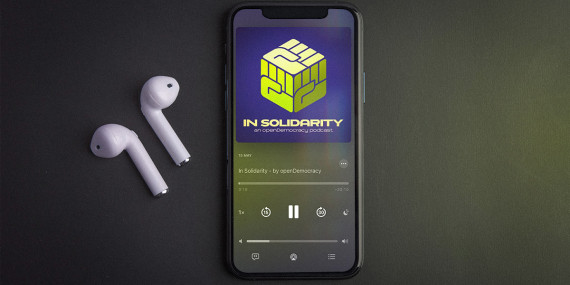
 
Is MAGA a religion? Why has protest been criminalised in England and Wales? Who is profiting from anti-immigration sentiment? And how can we engage with young men who’ve fallen down the alt-right pipeline? 
 
These are just a few of the questions that we’ve put to leading thinkers, frontline activists, and global experts on our new podcast, In Solidarity, over the past six months.
 
In Solidarity is a podcast for people who understand that politics doesn’t just happen in the halls of power. Every show, we tackle a new theme to uncover how authoritarianism spreads, who is benefiting from fear, and how solidarity is evolving into resistance movements around the world.
 
To ensure you never miss an episode of In Solidarity, subscribe to get an email notification whenever a new one is released. 
Subscribe to episode notifications
 

These protests were marked by incidents of police violence throughout, but the situation came to a head on 20 October 2020, when the Lagos State Governor, a member of Buhari’s political party, announced a 24-hour curfew and urged all protesters to go home. The streetlights and CCTV around the Lekki tollgate were turned off, and under the cover of darkness, the protesters who remained at the tollgate were met with gunfire from Nigeria’s armed forces. Witnesses say the government took the bodies of those they shot with them when they left the scene. A leaked memo soon after revealed the mass burial of 103 people by the Lagos State government, but the federal government denied that they were protesters and maintains that nobody was killed in the unrest. An inquiry panel later found the army had shot and killed unarmed protesters.

The government’s cruelty towards these protesters did not end there. On 20 October 2020, the same day the army killed protesters in Lagos, a Federal High Court judge, Justice Ahmed Mohammed, gave the Central Bank of Nigeria the nod to freeze the bank accounts of 19 people who took part in protests across the country. That evening, NBC also released a statement asking broadcasters to be careful not to report in such a way that would “aggravate the situation or adversely affect those emotionally involved”. Media outlets that covered the protests, such as Arise News, Channels TV, and AIT, were eventually fined for doing so.

Many protesters were also arrested and detained without charge, with some held for years. Nine people from Rivers State were held without charge until 17 February 2021, according to a Cable Newspaper report, while in 2023 Amnesty International reported that at least 15 protesters were still being held in Kirikiri prison in Lagos, many of whom had been tortured. Twenty-two protesters were only released in October 2024 – four years after the unrest. Notable figures such as Modupe Odele, a lawyer who provided legal support for protesters, also faced intimidation and even detention by members of the Nigerian Immigration Service when they tried to leave the country.

The problem with setting these precedents is how difficult they are to reverse. Buhari’s successor, President Tinubu, followed his playbook on minimal media engagement during the 2023 election campaign, eschewing media chats and debates that could have offered scrutiny. Tinubu also amended the Cybercrimes Act of 2015 in 2024, not to address the problems of the original bill, but to allow a new levy to take effect. Intimidation of journalists is now so commonplace that it is barely commented on.

With the next general election taking place in two years, much of the political conversation in Nigeria has already turned to the wrangling over party affiliations and calculations over who will win what state. But regardless of who wins, the rule of law and institutions that give citizens a fighting chance are all the protection that citizens can have in a democracy – and that is what Buhari has done: stripped each layer of protection, one by one.

This is how we must remember him.

*Editor's Note: Muhammadu Buhari died 13 July 2025 in a London hospital. He was 82. During his eight-year tenure, he spent 230 days abroad in London receiving medical care. Yet, his government underfunded Nigeria's healthcare sector, allocating only 4.6% of its national budget to healthcare, well under 15% recommended by the African Union.

Saratu Abiola is a writer and a project manager based in Abuja. 

COMMENTS

Sign in 💬

Our award-winning journalists can now respond directly to your comments underneath the articles on our site!

Just sign in or register underneath any of our articles to start leaving your thoughts and questions today.

Sign in and join the conversation

MORE FROM OPENDEMOCRACY

Weekly Newsletter
The Dark Arts
Beyond Trafficking and Slavery 
 Facebook  X / Twitter  Linkedin  Instagram  Youtube


openDemocracy, 18 Ashwin Street London, E8 3DL United Kingdom

Unsubscribe