If someone forwarded you this email you can subscribe. View in web browser.

Hi ,

What does justice look like when it’s only applied selectively?

This week, the US imposed sanctions on four ICC judges, not for misconduct, but for daring to pursue war crimes charges against Israeli and Hamas leaders alike. 

Humanitarian practitioner Michael Gumisiriza lays out how these sanctions, along with Trump’s recent rhetoric, reveal a broader strategy: undermining international justice when it challenges powerful allies.

Read the full analysis below.

- openDemocracy

 
EDITOR'S PICKS
 
1
🛢️ Weak UK lobbying laws let fossil fuel giants influence climate policies

Oil and gas firms were able to water down or change Conservative policies without scrutiny, new report finds Read more...

 
2
🔴 Nearly 400,000 kids at risk of domestic abuse in England & Wales

Exclusive: Investigation reveals the extent of child domestic abuse victims, and systemic failures to protect them Read more...

3
🎧 PODCAST | A momentous day for reproductive rights
MPs voted to decriminalise abortion in England and Wales, what does this mean and what's next?
Read more...
 

FEATURED STORY

US sanctions on ICC judges highlight pursuit of selective justice

Michael Gumisiriza

On 5 June, I watched as US secretary of state Marco Rubio announced fresh sanctions against four judges of the International Criminal Court (ICC), who now face asset freezes and travel bans to the United States.

Their crime? Investigating potential war crimes and crimes against humanity in Gaza and the West Bank.

In late 2024, the judges – who hail from Benin, Peru, Slovenia and Uganda – had issued arrest warrants for Israeli prime minister Benjamin Netanyahu and defence minister Yoav Gallant, as well as senior Hamas leaders Yahya Sinwar, Mohammed Deif and Ismail Haniyeh – a rare attempt at parity in international justice.

To me, the US government’s response was not just another geopolitical spat. It was another stark reminder of a deeper, long-standing pattern: the consistent undermining of multilateral justice when it threatens the interests of powerful states or their allies.


WHAT WE'RE READING

The Spark is your weekly dose of impact—stories showing how journalism can drive real, lasting change.

Every Wednesday, Impact Producer Lucy Nash brings you conversations with people around the world who’ve sparked or experienced transformation through investigative reporting.

Because the smallest sparks can ignite the biggest shifts.

Sign up here. 


The US has never been comfortable with the reach of the ICC. In 2020, when the court attempted to investigate American military actions in Afghanistan, Washington responded with hostility, revoking visas and threatening sanctions.

That reaction was a warning shot. Now, with the ICC daring to hold Israeli leaders accountable, the same playbook is back in use; this time with added venom. And yet, when the same court applies scrutiny to Hamas, whose actions are widely condemned as terrorist, there is no protest from Washington. In fact, the selective applause for prosecuting Hamas highlights the central issue: it is not justice the US defends, but control over where and how justice is applied.

Thinking back to President Donald Trump’s 21 May meeting with South African President Cyril Ramaphosa, I began to piece together a broader pattern of retaliation and narrative control. What might have appeared as a routine diplomatic visit seemed, in retrospect, like a calculated spectacle.

Trump presented Ramaphosa with photographs meant to depict violence against white South African farmers. These images, which turned out to be from unrelated conflicts in the Democratic Republic of Congo, were clearly designed to fuel the far-right narrative of ‘white genocide’ in South Africa – a conspiracy theory long debunked but still recycled in certain ideological circles. That this narrative resurfaced during a period of increasing international condemnation of Israel’s military actions in Gaza cannot be ignored.

Trump’s framing, in my view, was not rooted in concern for South Africa’s rural communities. It was a retaliatory response to the country’s bold stance at the International Court of Justice (ICJ), where in December 2023 it filed a genocide case against Israel for its ongoing military campaign in Gaza.

South Africa stands virtually alone among African nations in using international law as a tool to challenge what it views as mass atrocities. That legal stance, rooted in South Africa’s own painful history of apartheid and state violence, posed a direct threat to the moral high ground claimed by Israel and its allies. Rather than respond through legal counter-arguments or open debate, the US president chose to discredit South Africa through distortion and racialised fear-mongering.

For a man who allegedly once referred to African nations as “shithole countries”, it was an unsurprising move, but one that is still enraging.

 
Will you help defend democracy?
 
A world in turmoil needs fearless, independent investigative journalism that can overcome censorship and hold power to account. 
That’s the kind of media you deserve - and you can support it when you donate to openDemocracy today. When you give today, you can:
  • Keep openDemocracy free to read for everyone
  • Provide our team with the support they need to work safely in a dangerous world
  • Deliver the reporting that matters to you – and that reaches as many people as possible
Please support independent non-profit journalism by donating today.
Please donate now
 

This was not merely rhetorical posturing. It revealed a dangerous trend: when Global South nations assert their legal and moral agency, particularly in ways that challenge dominant Western narratives, they are swiftly targeted. Delegitimised. Silenced. In this context, South Africa’s action at the ICJ is not only a legal challenge but a moral provocation – one that forces the international community to confront the double standards that have long defined global justice.

And the backlash, from Trump’s media theatrics to the sanctions against ICC judges, underscores the discomfort that powerful nations feel when the instruments of justice are used against them or their allies.

As I reflect more deeply, what troubles me most is the glaring moral inconsistency. When Israeli bombs reduce hospitals to rubble and kill thousands, including children, pregnant women and the elderly, these acts are defended as self-defence. When international institutions attempt to investigate those very acts, their officials are punished. The message is clear: justice must not interfere with geopolitical interests. Yet when Hamas commits atrocities, the response is immediate and unequivocal. Israel is granted full license for retribution, total war, blockade and siege, with little regard for the civilian toll. Gaza is left in ruins, and the principle of proportionality is discarded.

This is not a defence of Hamas. It is a defence of consistency. It is a cry against the notion that some deaths are more grievable than others, that some crimes are more prosecutable depending on who commits them. Justice, if it is to mean anything at all, cannot be a matter of convenience. And yet, it is precisely this convenience that defines our current world order. The powerful claim the moral high ground, using the language of human rights to justify their wars, while the powerless suffer in silence, labelled as extremists or collateral damage.

I would like to assume that institutions such as the ICC and the United Nations Security Council were established with noble intent. They were designed to ensure that no one – no matter how powerful – could commit atrocities with impunity. So, how come these institutions have been ensnared in the machinery of geopolitical privilege? The ICC has pursued African leaders with unmatched speed, yet when it turns its gaze toward Israel, the US, or any of their allies, it is met with resistance, threats, and sanctions. The message is unmistakable: international law is for others, not for us.

The US veto in the Security Council remains one of the most potent shields for impunity, ensuring that its allies are never held accountable in any meaningful way. Legal norms that were once considered sacrosanct now bend and break under political pressure. Sovereignty, a foundational principle of international law, is respected only when convenient, especially when countries like South Africa use it to push back against dominant Western narratives.

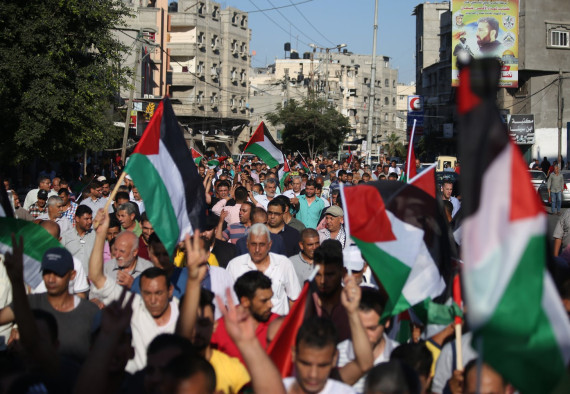
This trend is not abstract. It has real and devastating consequences. In the shattered refugee camps in Rafah, southern Gaza, the erosion of justice is lived every day. Children wonder if their tents will still stand the next morning. Pregnant mothers give birth in the rubble of bombed-out clinics. Humanitarian aid is throttled, journalists are killed, and entire families vanish beneath the debris – all while the world debates whether these lives are even worthy of protection under international law. Meanwhile, in courtrooms far away, the evidence is clear, but the response is muted, the accountability absent.

This moment demands clarity. It demands moral courage and a radical recommitment to justice that transcends alliances, race, wealth, and political loyalty. Justice must not be reserved for those who are easy to prosecute or politically irrelevant. It must not be defined by who can or cannot retaliate. If international law is to mean anything at all, it must be rescued from the grip of great powers and returned to its founding promise: that no life is more valuable than another, and no perpetrator is above the law.

If we accept this imbalance, we do not just erode the credibility of international institutions – we dismantle the very idea of global justice. We reduce it to performance. We reduce it to power. And in doing so, we betray those who depend on it most: the victims, the survivors, the stateless, the voiceless.

Disclaimer: The opinions expressed in this article are the author's own and do not necessarily reflect the views or official position of Cohere, the author's employer.
 

COMMENTS

Sign in 💬

Our award-winning journalists can now respond directly to your comments underneath the articles on our site!

Just sign in or register underneath any of our articles to start leaving your thoughts and questions today.

Sign in and join the conversation

MORE FROM OPENDEMOCRACY

Weekly Newsletter
The Dark Arts
Beyond Trafficking and Slavery 
 Facebook  X / Twitter  Linkedin  Instagram  Youtube


openDemocracy, 18 Ashwin Street London, E8 3DL United Kingdom

Unsubscribe